Sunday, June 14, marked the 33rd anniversary of the historic referendum when Malawians elected democracy over one-party rule. In this interview, our Staff Writer KONDWANI KAMIYALA engages former president Bakili Muluzi, one of the iconic poster faces of the pro-democracy pressure groups and the president who defeated long-time dictator Kamuzu Banda in 1994, for throwbacks to the struggle that galvanized a nation yearning for change. Excerpts:
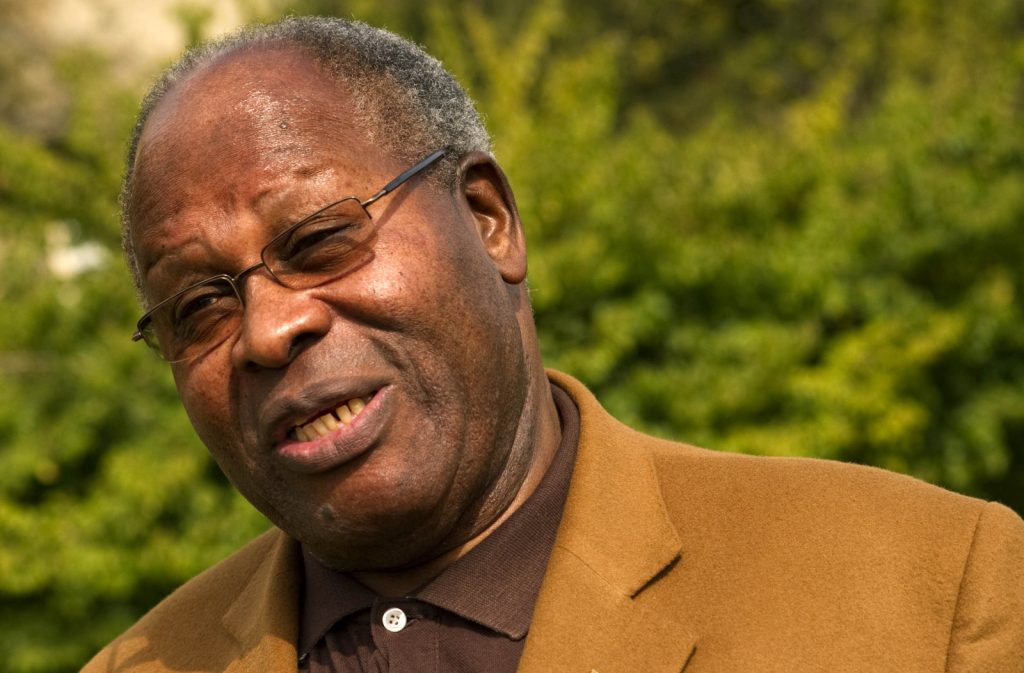
Q:As the president who defeated Kamuzu on May 17 in 1994 and the only one to finish the constitutional two consecutive terms, what do you say about 33 years of democracy?
A: June 14 will remain a very important day in the history of our country. It is a day when Malawians rejected the one-party State and voted for a multiparty system of government. Being elected in the first democratic election later on May 17 1994 and serving those first constitutional five years and being reelected in 1999, that was really important.
Q:You took over as secretary-general of the Kamuzu-led Malawi Congress Party (MCP) on May 30 1977 and the party’s former administrative secretary Albert Muwalo Nqumayo was to be executed for treason on September 3 of that year. Further, Dick Matenje, who took over from you was murdered in the Mwanza Accident in 1983. How did you feel to work in that position that appeared to be a poisoned chalice despite being second in command after Kamuzu?
A:I can only thank God that I was able to come out of that system alive. The word ‘alive’ must be underlined when you consider that the late Muwalo and Matenje were killed. These were senior people running that party. I really thank God that I am alive.
It was also very important that after the three ministers and a member of Parliament were killed in 1983, my colleagues and I said that Malawi needed democracy. We wanted a system of government where people would be free. That is when we formed an underground movement, to which I was elected chair.
I resigned from MCP in 1981 and that was a very critical time. Real difficult time that when I look back, I ask myself how it all happened. It was only God who made it possible.
Q: Soon after your ascendency in 1994, you instituted a commission of inquiry into the Mwanza Accident. What really motivated you to take that decision as your rallying point?
A:It was obvious for all of us that those three ministers and a member of Parliament were killed. It was obvious that it was not an accident and from the information that we were gathering from people that were complaining, it came out that those people were murdered. If you remember that information coming out of that commission that was chaired by Justice Michael Mtegha, especially from police officers, was that they were instructed to kill. Some even used hammers. We said no; let us invest in the inquiry so that Malawians could know what really happened. Those that loved their loved ones in that accident also needed closure on what happened.
Courts can decide in ways they want and they decide in the course of everything.
Q: What can you say about the transition to multiparty democracy in 1993 when Malawians elected the iconic lamp in the June 14 Referendum?
A: When I speak to young people today, they often ask me why was it necessary to fight Dr Kamuzu Banda? Why fight Dr Banda? It was not about fighting Dr Banda, but the one-party system of government. We wanted democracy, where people could express themselves and have human dignity. They were saying that Dr Banda was someone we could not talk to about democracy and multiparty. That is why we came up with an underground movement.
Q: What hardship did you endure in the fight for democracy?
A: At the time, in 1992, I was arrested seven times. I was detained at Chichiri Prison, sent back, but we were resilient that change must come. The young people must understand that it was a difficult time. We said enough is enough.
Q: The messaging from the pro-Kamuzu camp at the time was democracy is war. You were called abongololo, millipedes. What did this mean to you?
A:Ha-ha-ha! Abongololo osapola pa mchombo! We knew all along that that was intimidation. Many people were arrested at the time. When they were calling us millipedes with untreated belly buttons, we understood it. My colleague Chakufwa Chihana spent two years on trial for standing up against the one-party State. It is important that we, as a nation, must understand where we are coming from and the circumstances that led us into this struggle. There were unnecessary taxes and people were forced to buy party membership cards. Even pregnant women were being forced to buy MCP cards for unborn babies! Without a card, there was no access for you to get medical attention in public hospitals.
Q: Is there something that you could look at if Malawians got you back in the presidency?
A: When we got into government, our priority was to alleviate poverty. That is why we set up the Malawi Social Action Fund (Masaf) and free primary school education because we thought that was important. But then, when I look back, I see that we needed to do more. Although we had community-driven programmes under Masaf, there was more that we needed to do than just infrastructure.
Q: The political fight in 1992 had many fronts: The Catholic bishops on the religious front, trade unions joining in and human rights activists marching. Was it all coordinated?
A: People may think that we formed the underground movement in 1993, no. It all started after the three ministers and the parliamentarian were murdered in 1983 that we decided to do more. We started out sensetising even students at the University of Malawi and the organisations that were there then, which were established after 1994 when the constitution was set out.
Q: What direction would you like to take it?
A: Malawi has been in three phases: The pre-independence and post-colonial eras. Then came the democratic era. But democracy alone is not enough. People have to eat. We have to work on liberalizing our economy, since our poverty levels at this moment are very high. Our people are living in poverty and we must look at how that must be changed..