“I just want to work without fear.”
The plea captures an experience many people with albinism in Malawi and across Africa know too well.
While most workers worry about finding jobs, earning promotions or growing their businesses, some people with albinism must first contend with discrimination, exclusion and concerns for their own safety.
A new report by Human Rights Watch and the Africa Albinism Network suggests these barriers continue to deny many the chance to earn a living alongside others.
Launched ahead of International Albinism Awareness Day on June 13, the report, I Just Want to Work Without Fear, examines how prejudice and insecurity continue to limit economic opportunities for people with albinism in Malawi.
The findings go beyond employment.
They raise a bigger question about whether people with albinism can fully belong and enjoy the same rights as everyone else.
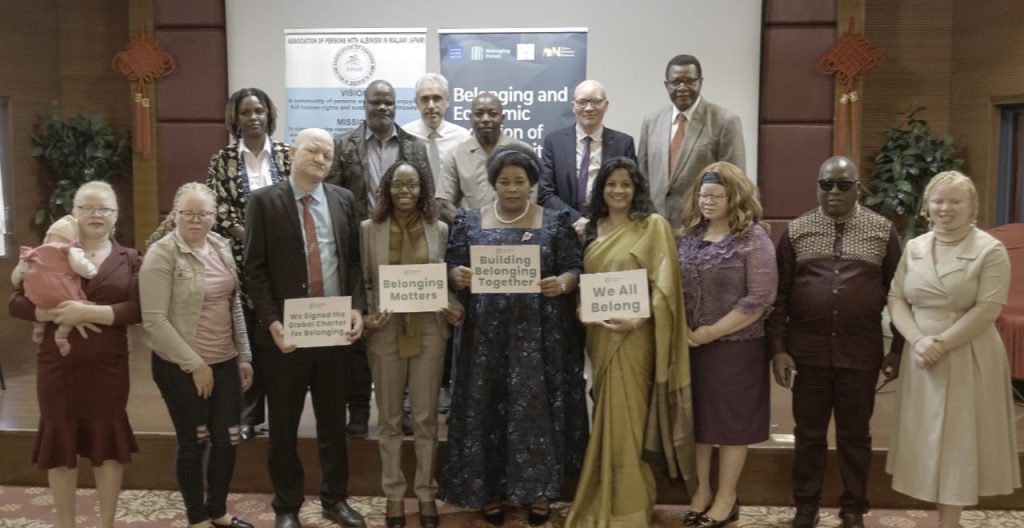
Against that backdrop, advocates, community leaders and development partners gathered in Lilongwe last week to sign the Global Charter for Belonging, a pledge to advance the rights, safety and inclusion of people with albinism.
Belonging is not an idea people with albinism can take for granted.
It means being able to walk to school, find work, access healthcare and live without fear of discrimination or violence.
But across parts of Africa, that reality remains out of reach for many.
Despite efforts by several countries to address attacks, abductions and killings targeting people with albinism, recent cases in Madagascar, Malawi and Uganda show that the threats have not disappeared.
Deep rooted myths continue to fuel the belief that people with albinism are different or that their bodies carry special powers.
For some, these beliefs have turned into real danger, with claims that their body parts can bring wealth or good fortune driving attacks and abductions.
This follows them into everyday life.
A child who cannot walk to school safely loses more than a lesson. A family forced to live behind locked doors loses more than freedom.
And when attacks go unpunished, trust in protection under the law begins to disappear.
People with albinism deserve more than survival. They deserve the chance to live, work and belong.
The struggle does not end with safety.
For many people with albinism, it continues into the search for work, education and economic independence.
When they are shut out of jobs, training, financial services or leadership roles, they lose more than income. They lose the chance to build secure lives and contribute fully to their communities.
The challenge is especially serious in Malawi, where people with albinism make up an estimated 0.8 percent of the population, about 135 000 people.
Yet about 85 percent live in poverty.
Advocates say stigma, insecurity and limited access to opportunities continue to reinforce each other, leaving many trapped in a cycle that is difficult to escape.
True inclusion, they argue, means more than protection from violence.
It means access to healthcare, including protection from skin cancer and support for low vision. It means schools where children with albinism learn without bullying or lowered expectations. It means workplaces where ability matters more than appearance.
It means communities that reject superstition and recognise people with albinism as neighbours, leaders, parents and citizens.
The Global Charter for Belonging seeks to turn these ideas into action.
For its supporters, the charter is not just a document but a commitment to change systems, listen to people with albinism and ensure that their voices shape the solutions meant to protect them.
In Malawi, this work is being led by people with albinism, together with advocates and community organisations who have long been building belonging from the ground up.
Governments, employers, schools, community leaders and the media also have a role to play.
By signing the Global Charter for Belonging, these stakeholders pledge to play their part in ensuring that people with albinism can participate fully in society, work with dignity and live without fear.
As we mark International Albinism Awareness Day, we cannot claim to honour human rights until every person with albinism is granted the peace of mind that they belong—wholly, safely, and inherently—among us.