Malawi’s women’s football story is one of persistence, sacrifice and a refusal to accept that football belongs only to men.
From modest beginnings on dusty community pitches in the late 1990s to the bright lights of the Women’s Africa Cup of Nations and Fifa Women’s World Cup qualification in 2026, the journey of more than two decades has been built by pioneers who kept the game alive when resources were scarce and recognition was limited.
Organised women’s football began taking shape in Malawi in late 1998.
But among the earliest stars to capture the public imagination was Maggie Chombo, who emerged at a time when organised women’s football was still in its infancy, in 1996.
Chombo’s breakthrough came through a social football match used as a curtain-raiser for the Cosafa Cup tie between Malawi and South Africa at Kamuzu Stadium.
Playing among boys and men, the young Chombo’s talent immediately stood out. Supporters began calling for the ball to be passed to her, and her skill and confidence quickly made her an attraction.
Early pioneers in women’s football administration, including Flora Mwandira, who later became involved in the game in 2004, Suzgo Ngwira, Emmie Mphande and David Dube, were instrumental in establishing and promoting women’s football.
The first Blantyre Women’s District League was established in 1998 with 11 teams before developing into a regional competition and eventually inspiring similar structures elsewhere.
Blantyre Zero immediately stood out as a top club, with Chombo as their star player.
Dube’s Lilongwe-based DD Sunshine emerged as a force in the Central Region. He provided a serious platform for girls to develop their football.
By 2000, women’s football was taking shape and, two years later, the Malawi Women’s National Football Team participated in the Cosafa Women’s Championship.
The Scorchers made their international debut at the inaugural competition in Zimbabwe.
Their first recorded international was an 8-0 defeat by Zambia on 20 April 2002.
In 2003, the Scorchers participated in their debut Women’s Africa Cup of Nations qualification, which was then called the African Women’s Championship.
They were eliminated in the first round of the 2004 championship qualifiers, losing 9-0 on aggregate.
A three-year break from international football gave Malawi ample time to develop the game.
In 2006, Malawi returned to international football at the Cosafa Women’s Championship in Lusaka, Zambia.
They lost to South Africa and Angola but registered their first victory after beating Lesotho 3-0.
In 2008, Malawi withdrew from the Cosafa Women’s Championship as the National Women Football Association opted to use available funds for the FAM Cup.
By this time, a new generation of players had emerged, with DD Sunshine and Blantyre Zero leading the evolution.
The Scorchers began showing greater competitiveness regionally and reached their first-ever semi-final at the 2011 Cosafa Women’s Championship in Zimbabwe.
They beat Lesotho 5-2, drew 1-1 with Mozambique and lost 8-2 to Zimbabwe.
The Chawinga sisters, Temwa and Tabitha, immediately became a sensation.
It was Dube’s DD Sunshine that was behind the beginning of one of Malawi’s greatest football stories.
Tabitha, discovered while playing football with boys in her village in Rumphi, was brought to Lilongwe after Dube recognised her potential.
Her emergence demonstrated the extraordinary talent that existed outside the established football centres.
She became Malawi’s first female footballer to play in Europe in 2014, scoring 39 goals in 14 matches in Sweden.
Temwa subsequently followed in her sister’s footsteps into Europe and later established herself as an international star in the US.
More players followed the Chawinga sisters. Apart from Temwa and Tabitha, the 2026 Wafcon Malawi squad has Rose Smith Kadzere, who plays for Montpellier in France; Faith Chinzimu, who plays in Sweden with BK Häcken; Chimwemwe Madise, who represents TP Mazembe in the Democratic Republic of Congo; Vanessa Chikupila, who plays in Egypt; while Tendai Sani, Chisomo Banda and Sarah Mulimbika are based in Zambia.
The Scorchers’ international breakthrough arrived in 2023 when Malawi won its first Cosafa Women’s Championship under head coach Lovemore Fazili.
Temwa was named Player of the Tournament and Golden Boot winner, scoring nine goals.
The Scorchers also recorded their biggest victories during 2023, beating Seychelles 17-0.
The triumph established Malawi as a serious force in Southern African women’s football.
It was followed by an even greater achievement in 2025, when the Scorchers qualified for their first-ever 2026 Wafcon after defeating Angola 2-0 in Lilongwe.
After Congo withdrew in the first qualifying round, Malawi faced Angola in the second round.
The first leg in Luanda ended 0-0 before Malawi won the return leg 2-0 at Bingu National Stadium in Lilongwe, with Chinzimu scoring both goals late in the match.
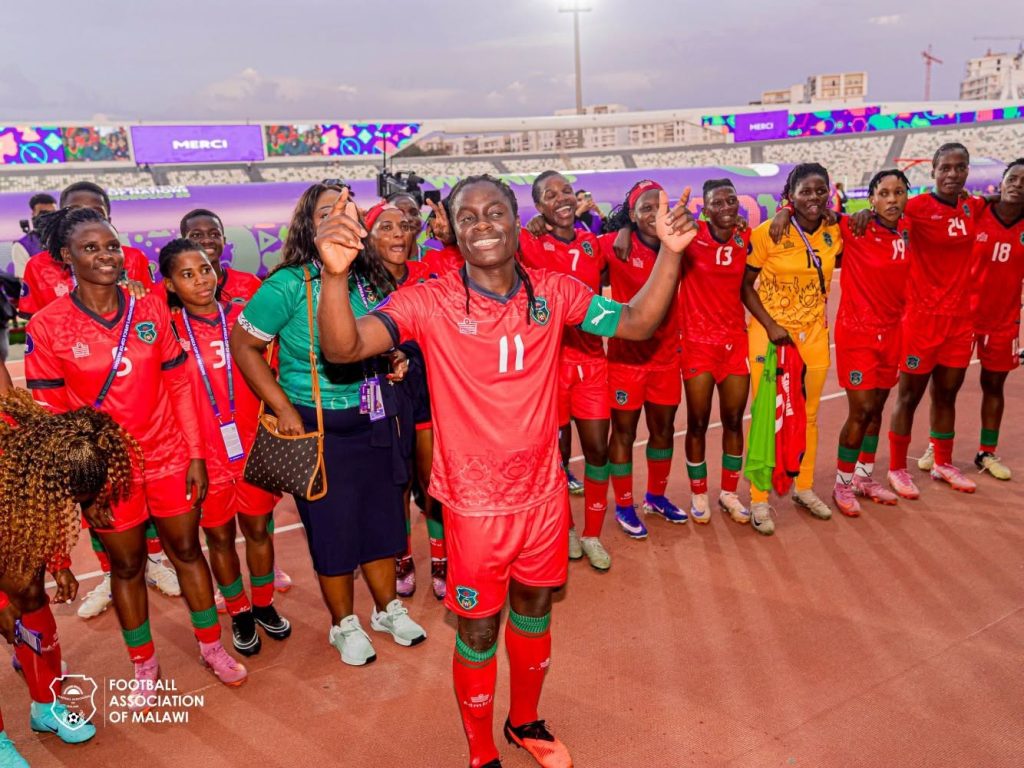
The Scorchers entered the 2026 Wafcon in Morocco as debutants. It was the first time Malawi had reached the tournament.
But the Scorchers have defied expectations. They beat defending champions Nigeria 3-2, Egypt 3-1 and only lost to Zambia 2-1 in the group stage to finish as winners and make it to the quarter-finals.
Ghana stood in their way, but that did not faze them as they defeated the Black Queens 2-1 to reach the semi-finals and, in doing so, secure qualification for the 2027 Fifa Women’s World Cup in Brazil.
In the semi-finals, Algeria did not stand a chance as the Scorchers easily hammered the Fennecs 3-1.
This evening, the Scorchers will be gunning for yet another upset as they face Cameroon in the Wafcon final.
Win or lose, the Scorchers have already proved that they can take Malawi to the biggest stage.