Coal Mines Association of Malawi has urged the government to facilitate investment in large-scale coal mining projects to enhance domestic coal products and ensure import substitution.
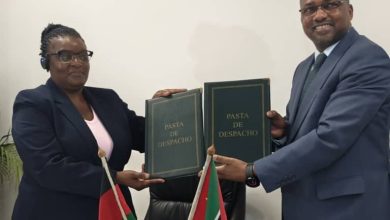
The association’s chairperson Hastings Jere said this on Thursday in Lilongwe when the grouping made a courtesy call on the newly appointed Mines and Minerals Regulatory Authority (MMRA) director general Lloyd Muhara.

He said the association, which has just been registered, seeks to bring together sector players and lobby for deliberate financing to enable local coal miners to access mining technology to boost production.
The grouping comes at a time local industries such as cement producers rely on imported coal for their energy solutions, a situation that consumes foreign exchange despite the country sitting on huge coal deposits that need significant investment to tap.
Said Jere: “We believe Malawi has a lot of coal and there is also a lot of coal that is coming from outside countries.
“The problem is that we don’t have the financial muscle and financial institutions don’t want to listen to us because we don’t have collateral.”
He said they want is to have a single voice and lobby financial institutions for support.
“We need credible joint ventures for the benefit of the country and the benefit of the rural masses, as such, we look up to government as a bridge,” said Jere.
Commenting on assertions that local firms import coal because of the comprised quality of the locally produced product, Jere downplayed the concern, saying Malawi’s coal is one of the best globally, but mining technologies are the issue.
In a separate interview, geologist Grain Malunga said there is need for the government to invest in coal exploration and mining to substitute imports, saying the country sits on huge reserves of the mineral resource.
He lamented that government has left exploration works to the private sector, which is interested in high-value minerals.
Malunga, who is also Chamber of Mines and Energy national coordinator, said: “Our coal mining is on small-scale and the technology is not up-to-date. The problem is that one cannot invest in expensive technology without knowing the quantities.
“We need to evaluate how much coal is available in the country.”
He acknowledged that coal imports are necessitated by the quality demanded by some industry players, adding that local quality is compromised by the mining technologies and processes.
“If you look at our coal, it is used straight from the mine.
The coal from Mozambique is mined and washed and that gives it high energy value which is demanded by some industries,” he said.
MMRA inspection and enforcement manager Chimwemwe Bandazi commended the grouping for forming the association, saying it will simplify its regulatory efforts.
She said: “As an authority we are encouraged by the initiative that they have taken for organising themselves into this association.
“It’s the right step for the industry to be moving forward and we are glad that as an authority we will have a partner in the industry.”
The 2026 Malawi Government Annual Economic Report shows the country has about 22 million metric tonnes (MT) of coal reserves and in 2023, the firms mined about 62 000MT, which demonstrates limited capacity.
According to the global mining industry data, Malawi’s average coal imports between 1980 and 2022 was recorded at 25 000MT.
The Coal Mines Association of Malawi has 14 members from 14 coal mines although some are not active enough due to lack of financing for mining technology, which requires significant investment.
Mining contributes about one percent to the country’s gross domestic product, according to the 2026 Malawi Government Annual Economic Report.