Malawi’s four central hospitals are struggling to cope with mounting pressure on maternal and newborn services with overcrowding, shortages of specialist healthcare workers and inadequate neonatal care capacity threatening the quality and timeliness of care.
Representatives of Mzuzu Central, Queen Elizabeth Central (Qech), Zomba Central and Kamuzu Central (KCH) hospitals told the Parliamentary Women’s Caucus in Lilongwe yesterday that growing patient numbers, limited infrastructure, inadequate equipment and weak emergency referral systems are stretching their capacity.
The hospital officials asked Parliament to intervene, with Qech in Blantyre and KCH in Lilongwe calling for district hospitals for the two main cities to help decongest the central facilities and enable them to focus on complicated cases.
At Qech, the pressure is reflected in maternal and newborn outcomes, with the hospital recording 519 neonatal deaths between April and December 2025, equivalent to 50 deaths per 1 000 live births, against a facility target of 17 per 1 000.

us a picture. | Esnart Tembo
Qech deputy director general William Peno said the hospital was under significant pressure as a tertiary referral facility serving the South West Zone while also functioning as a secondary referral facility for Blantyre District.
He said the pressure is also evident in the labour ward, which handles an average of 30 deliveries a day despite having only 24 beds. The hospital conducts an average of nine caesarean sections daily.
Of particular concern, he said, is the absence of a Neonatal Intensive Care Unit (Nicu) at Qech despite the large number of complicated newborn cases it receives.
At Mzuzu Central Hospital, director general Doris Kayambo said the facility was also frequently congested despite being the smallest of the country’s four central hospitals.
Mzuzu serves the entire Northern Region and is handling patients at both primary and secondary levels, putting additional pressure on its already limited infrastructure.
The shortage of specialists is particularly acute, with Mzuzu having only one paediatrician, who is also its only obstetrician.
“I am the DG and it’s not possible to cater for every patient who needs help,” said Kayambo.
She said attracting specialists to the Northern Region remained a challenge, although the hospital currently has two anaesthesia specialists, one nursing and midwifery specialist and two gynaecology specialists.
At Zomba Central Hospital director general Saulos Nyirenda said the facility was also under pressure from complicated maternal and neonatal cases referred from district hospitals.
KCH director general Amos Msekandiana said inadequate space and staff shortages were also limiting the hospital’s ability to provide maternal and neonatal services.
He said KCH, like Qech, does not have a Nicu despite handling complicated newborn cases. The hospital also needs well-equipped ambulances to improve emergency referrals, he said.
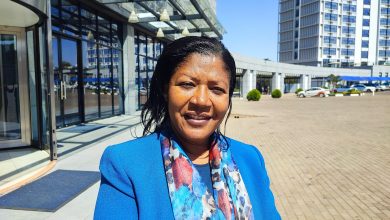
Parliamentary Women’s Caucus chairperson Mary Maulidi Khembo said the engagement had given the committee first-hand information on the challenges facing central hospitals, including congestion, transport problems and resource shortages affecting maternal and neonatal care.
She said the caucus will take the concerns to Parliament and relevant authorities to push for practical interventions to address the challenges and prevent further loss of mothers and newborns.