Water tariffs have pushed up the cost of living in August, with non-food expenses rising by 4.18 percent as households faced sharply higher water bills despite a decline in food costs, data show.
According to the Employers Consultative Association of Malawi (Ecam) August 2026 Cost of Living Analysis Report, non-food expenditure increased from K305 607 in July to K318 369 in August while food expenditure fell by 1.08 percent from K663 264 to K656 109.
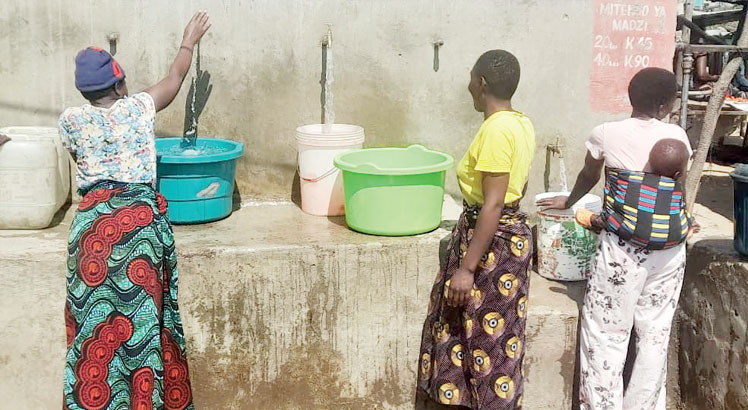
The Ecam report attributes the increase in non-food costs largely to the water tariff adjustments implemented during the month, which pushed the average monthly water bill from K27 300 to K38 856, representing a 42.33 percent increase.
“The raise in water tariffs across the country significantly contributed this increase,” reads the report in part.
During the month under review, the price of maize increased from an average of K45 000 per 50 kilogramme (kg) bag in July 2026 to K55 000 per 50 kg bag in August 2026.
On the other hand, the price of tomatoes decreased from K2 899 per Kg in July 2026 to K2 000 per kg in August 2026 and the prices of beans and rice remained constant in August 2026 as they were in July 2026.
Overall, the basic needs basket increased by 0.58 percent from K968 871 in July to K974 478 in August.
The water tariff adjustments were approved by the Ministry of Agriculture, Irrigation and Water Development during the review period, with increases ranging from 11 percent to 69.99 percent across the country’s five water boards.
Central Region Water Board implemented the largest domestic tariff increase at 69.99 percent, followed by Southern Region Water Board at 50 percent, while Northern Region Water Board increased its kiosk and domestic tariffs by 36.32 percent and 35.64 percent respectively.
Blantyre Water Board raised its domestic tariff by 36 percent and commercial and industrial tariffs by 60 percent, while Lilongwe Water Board increased its tariff by 20 percent.
In an interview yesterday, Consumers Association of Malawi executive director John Kapito, whose organisation opposed the increases, said the higher charges were coming at a time many Malawians were struggling with a severe cost-of-living crisis.
“The current economic situation pushed Malawians into serious abject poverty,” he said, citing high unemployment, limited access to foreign exchange, corruption and what he described as a lack of changes in economic policies.
Minister of Agriculture, Irrigation and Water Development Roza Mbilizi, however, said the tariff increases were approved on condition that the water boards improve service delivery and guarantee consumers safe water.
She said President Peter Mutharika had initially rejected the proposed increases because of concerns over inefficiencies in the water boards, but the final approval was tied to performance measures, including reducing high levels of non-revenue water.
The latest cost-of-living figures come against a backdrop of persistent price pressures, with non-food inflation rising from 32.10 percent in June to 32.20 percent in July, even as headline inflation eased from 21.10 percent to 20.80 percent.
The cost of living portrays the cost of essential food and non-food items that comprise the minimum basket of goods needed for an urban household of six to survive with a decent and healthy standard of living.