In 2004, Femia Dulani Mpombwe was going from school to school, inspecting teaching and learning standards in Phalombe District.
In almost every school she visited, the primary school education adviser found a child or two sitting alone at the back row, copying what others wrote, but understanding nothing.
“The learners were deaf,” she says. “Teachers were trying their best, but there was no sign language in the class.”
The gap meant that these children were present in body, but absent from learning.
“They were failing not because they could not learn, but due to lack of inclusive education,” Mpombwe recalls. “So, I asked myself: what will become of these children?”
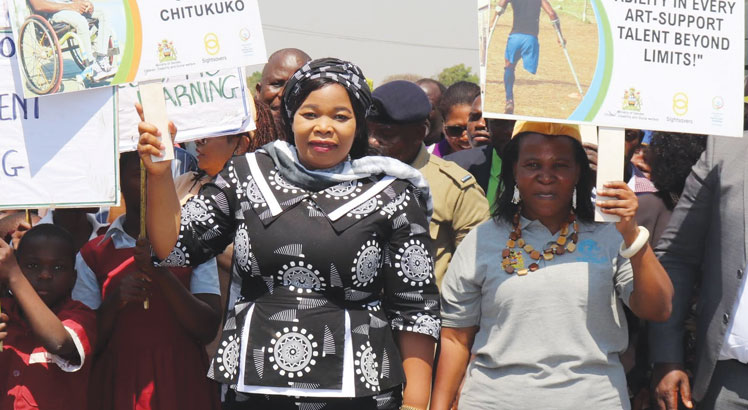
What she did next was not part of her job description.
Moved by the common sight, Mpombwe used her personal savings to construct Migowi School for the Deaf, which she donated to the Ministry of Education, Science and Technology.
Since 2005, government has deployed and paid teachers at the rural school.
For 21 years, the seasoned teacher has continued to use her own resources and mobilise support to keep the school running.
Her contribution mostly covers boarding, food, maintenance and other necessities for deaf learners from remote areas.
“I handed it over to government to make it sustainable and belong to Malawians. I am grateful that government now pays our teachers, but I cannot leave the children to suffer,” she explains.
Migowi School for the Deaf provides specialised sign language classes and inclusive pedagogy.
Its boarding facilities accommodate deaf learners from remote villages, who would otherwise drop out due to long travels.
The learners are no longer left behind like the silent child at the back.
Some are star performers, debaters and promising citizens who understand and seek to be understood.
Malawi Council for Disability Affairs (Macoda) district officer Pius Chilewani describes Mpombwe as a rare champion of inclusive service delivery at community level.
“What Madam Femia has done is extraordinary. For over two decades, she has used her own resources and mobilised well-wishers to feed the learners and run the boarding. That is true, selfless inclusion,” he says.
Chilewani commends her for creating a safe space for children with special needs.
“She is not just teaching deaf children. She created and sustained an entire system that protects their right to education. In Phalombe, she is our champion,” he states.
Migowi School for the Deaf personifies Malawi’s commitments to persons with disabilities.
In 2024, Parliament passed the Persons with Disabilities Act, which domesticates the African Disability Protocol (APD), affirming that persons with disabilities have the right to access inclusive, quality education in an environment that guarantees human dignity.
“Leaving no one behind” is the core of the global Sustainable Development Goals that require governments, individuals and communities to remove barriers to learning, well-being and progress of persons with disabilities.
Mpombwe’s 21-year journey is a living example of how individuals can help nations fulfil the legal obligation and guarantee human dignity.