Continued power outages and shortages of liquefied petroleum gas (LPG) have fuelled a booming charcoal market, raising urgent concerns that the deepening energy crisis could severely undermine ongoing forest conservation efforts.
Lackson Shumba, a resident of Area 50 in Lilongwe District, has made repeated trips to local gas stations to refill his cylinder, to no avail. The persistent gas shortage has forced his household to revert to charcoal, despite prices having soared out of reach.
“It’s almost three weeks now without gas,” Shumba said.
Conversely, for Mirriam Kunthochi, a charcoal vendor at Mgona in Lilongwe, the energy crisis has unlocked a lucrative market and expanded business opportunities. She noted that a single bag of charcoal now commands K70 000, with desperate consumers continuing to buy regardless of the steep cost.
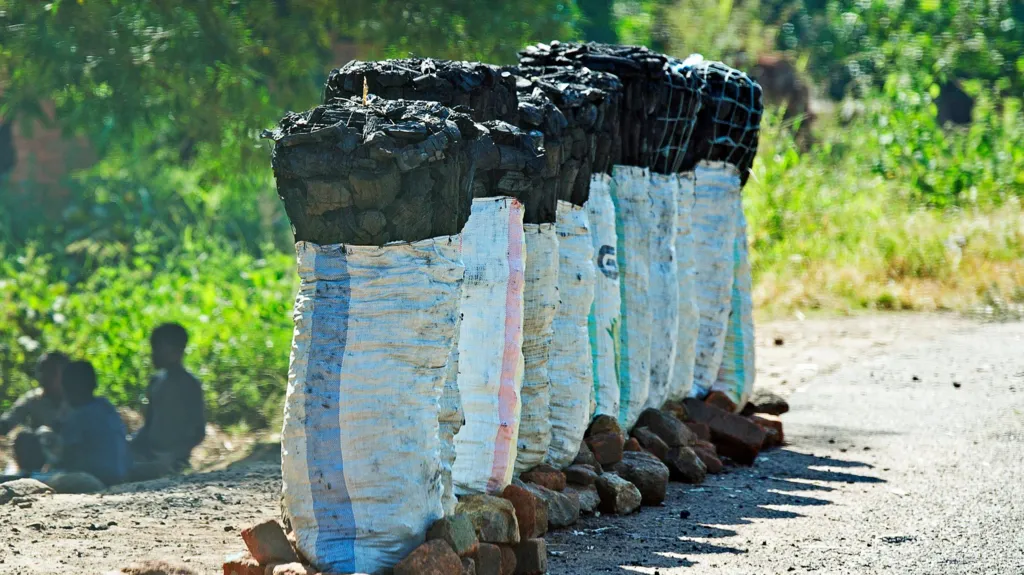
“Business here is booming. The blackouts and gas shortages have given us a major advantage,” Kunthochi said.
Meanwhile, in Blantyre and Mzuzu, a bag of charcoal sells for an average of K60 000.
Civil Society Network on Climate Change (Cisonecc) National Coordinator Julius Ngoma warned that compounding power and gas shortages will accelerate deforestation.
He explained that clean energy technologies remain scarce, inaccessible and prohibitively expensive for the majority of Malawians.
“This makes charcoal and firewood more attractive for household use. In addition, there have been reversals in gains made toward promoting alternative fuels, including clean energy technologies, largely due to foreign exchange shortages that make sustaining market supplies difficult. Although charcoal has become more expensive, demand continues to grow because of its multiple uses,” Ngoma said.
In a recent interview, Ministry of Natural Resources spokesperson Tikondane Vega acknowledged that charcoal consumption remains widespread nationwide.
He said government is implementing measures to curb the country’s overreliance on charcoal by promoting cost-effective alternative energy options.
These concerns are reinforced by study findings published on July 29 in Frontiers in Sustainable Cities, which warn that increasing charcoal prices alone will not be enough to drive Malawi’s transition to cleaner cooking fuels.
The study, conducted by Samuel Chiumia and Betchani Tchereni of the Malawi University of Business and Applied Sciences, alongside Hope Chamdimba of the Malawi University of Science and Technology, found that eight in every 10 urban households in Malawi continued to rely on biomass fuels for cooking despite rising prices.
Specifically, 82.8 percent of households surveyed across Blantyre, Lilongwe, Mzuzu and Zomba continued to use biomass, primarily charcoal.
According to the findings, rising charcoal prices are prompting some households to combine charcoal with cleaner fuels rather than abandoning biomass altogether.
Average charcoal prices have risen from K176 per kilogramme in the 2022 baseline to K340/kg and K497/kg in the 2024 CMR for charcoal with dust, and from K185/kg to K348/kg and K507/kg over the same period for charcoal without dust.