Malawi’s El Niño preparedness is faltering, with researchers cautioning that delays in mobilising funds could leave millions exposed to hunger and economic disruption.
Chief Secretary to Government Justin Saidi, who chairs the Ad Hoc Cabinet Committee on El Niño, reported in early September that only K163.7 billion of the K488.5 billion required has been secured.
And in their joint publication published on Tuesday titled ‘El Nino is coming and time for Malawi to prepare is running out’, the researchers say while Malawi has extension officers, weather services, social protection officers, weather services, social protection programmes and agricultural input delivery systems, funding will be the main constraint in mitigation of El Nino-induced effects.
The researchers include National Planning Commission’s acting director of knowledge and learning Andrew Jamali, director of development planning Grace Kumchulesi, International Food Policy Research Institute (Ifpri) Development Strategy and Governance (DSG) Unit research fellow Jan Duchoslav and DSG senior research coordinator Joseph Nagoli.
“Although several financing mechanisms are available to support disaster response, much of the money can only be accessed once the impacts of drought have become visible,” reads the publication published on Ifpri’s website.
“This makes early planning, especially important. Decisions about priorities should be made before a crisis develops rather than in the middle of one.”
The researchers say El Nino is fundamentally a reminder that weather shocks remain one of the greatest threats towards Malawi’s development, emphasising that a poor agriculture season can erase hard-won gains in food security, incomes and poverty reduction.
Yet, the publication states that the impending weather phenomenon also presents an opportunity to demonstrate the value of preparedness.
El Nino is linked to a delayed start of rainfall, below-normal precipitation and dry spells.
Ifpri simulation models predict that depending on the severity of weather impacts and market disruptions, the combination of El Nino and the Gulf-related price shock could reduce Malawi’s Growth Domestic Product by between one percent and seven percent.
According to the researchers’ publication, two out of three previous El Nino-induced disruptions have negatively affected food production, reducing maize harvests by an average of 22.5 percent in the affected years.
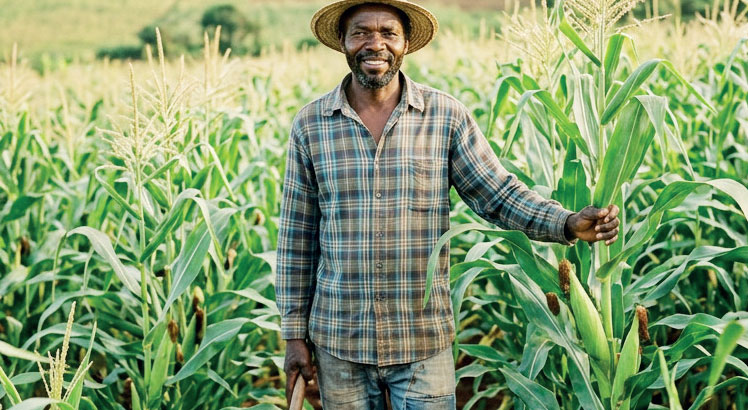
They say the risk is acute considering how Malawi remains heavily dependent on rain-fed agriculture and how rain-fed maize is the country’s dominant staple crop, adding that when rains fail, consequences extend far beyond the farm.
“During the 2023/24 El Nino, for example, national maize output fell by about 23 percent, from 3.5 million to 2.7 million metric tonnes (MT), leaving production below the country’s annual needs.
“Lower harvests reduce household food stocks, raise food prices and increase the number of families needing public assistance. Following the last El Nino-affected harvests, 5.7 million people [26 percent of Malawi’s population] faced acute food shortage,” further reads the publication.
Currently, the Malawi Vulnerability Assessment Committee estimates that 2.6 million people will be food insecure during the 2026/27 consumption period. The figure represents 14 percent of Malawi’s economy.
And according to the researchers, whether El Nino becomes a manageable shock or a humanitarian crisis for Malawi will depend in part on decisions made in the coming months.
The researchers state that measures that can soften the impacts of El Nino must be put in place well before crops are planted or food shortages materialise.
“This will require rapid mobilisation across government, development partners, agribusinesses and farming communities,” the researchers say.
“Government agencies should urgently communicate practical drought-resilience measures to farmers and support their implementation, while policymakers and programme managers prepare to scale up social protection if food supplies fall short.”
The researchers further state that success will likely not mean avoiding all impacts of El Nino, but rather, it will mean reducing those impacts, protecting vulnerable households, and ensuring that climate shocks do not become a humanitarian crisis.”
As part of preparations to mitigate potential El Nino disruptions, President Peter Mutharika established the Ad Hoc Committee on El Nino.
And in a statement in September, Saidi said the preparedness plan is anchored on two pillars of preparedness and resilience, adding that it covers 14 priority clusters, including agriculture, food security, nutrition, health, water and sanitation, energy, protection and logistics.
Nation on Sunday reached out to Saidi on Friday seeking an update on the funds mobilised so far, but he is yet to respond.
But in his earlier statement, Saidi said the plan focuses on strengthening early warning systems, safeguarding food and water security, pre-positioning supplies and ensuring rapid response capacity.
He said key measures include securing 440 000MT of maize to strengthen national food reserves, investing in livestock resilience, drought insurance, water security and pre-positioning essential supplies.
While the energy sector is flagged as vulnerable, with below-normal rainfall likely to affect water levels for hydropower generation, 23 drought prone districts will receive priority attention while the Department of