The Malawi Mining Investment Company (Mamico) plans to start mining and processing gold next year to curb rampant smuggling and increase foreign exchange earnings from the country’s mineral resources.
Mamico executive director Grey Kalindekafe announced on Friday that geological investigations have identified seven primary gold-bearing deposits, paving way for the state-owned enterprise to venture into direct mining and processing alongside its upcoming gold-buying operations.
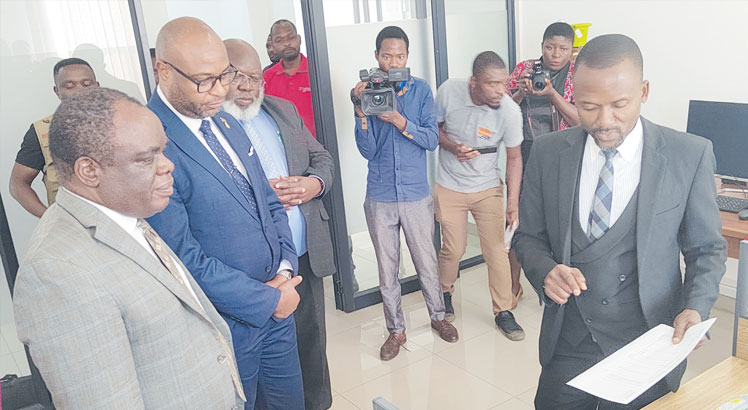
He was speaking when Minister of Mining Thoko Tembo toured Mamico’s gold-trading facility in Lilongwe to assess its readiness to buy gold from registered cooperatives and licensed artisanal miners.
“We have discovered seven sites across the country with mother bodies for the gold. We are studying mining and processing models in Zimbabwe and South Africa, including technologies for extracting gold from ore, as we prepare to establish our own operations hopefully next year,” Kalindekafe said.
The planned investment coincides with government preparations to establish a formal gold market to channel locally mined product through official buying arrangements and staunch heavy revenue losses caused by illicit smuggling.
Kalindekafe estimates that Malawi loses about $700 million annually in gold proceeds, although the true scale of informal trade remains difficult to quantify independently.
While studies have identified artisanal gold mining activities at more than 100 sites across 26 districts, most miners lack access to reliable formal markets, driving them straight into the hands of smugglers.
“Of all those 100-plus sites, fewer than five are selling to the government through the Export Development Fund [EDF] at the Reserve Bank of Malawi [RBM]. The good news is that the majority of miners say they are not interested in selling to smugglers,” Kalindekafe noted.
Mamico’s immediate priority is establishing gold-trading centers where artisanal miners can sell their output directly to the company for onward sale to RBM.
Kalindekafe reported that the company already possesses equipment for three initial centers and is awaiting final documentation from the central bank confirming its role as the official gold off-taker.
While NBS Bank and FDH Bank have committed initial financing, Mamico estimates it will require K85 billion to purchase gold during its first three months of operations, scaling to approximately K300 billion over the full year. These capital requirements highlight the heavy financial muscle needed to establish a formal market capable of competing with entrenched informal buyers.
In an interview, Tembo said government is collaborating with financial institutions, the Ministry of Finance, EDF, and Mamico to create a competitive and attractive formal trading ecosystem. He added that authorities have benchmarked prevailing market prices and are confident their proposed buying rates will rival—and potentially exceed—those offered by alternative buyers.
“The challenge at this point is not financing, but rather how we work together to ensure that this happens,” Tembo said, adding that the government will also inject direct funding into the initiative.
The minister noted that authorities are simultaneously tackling the severe environmental hazards associated with artisanal gold mining, particularly the use of toxic illegal substances during extraction.
His ministry is collaborating with the Ministry of Natural Resources to tighten environmental protection frameworks while engaging commercial banks to provide loans that help miners acquire safer, more efficient equipment.
Tembo urged Mamico management to fortify security measures at its trading facility before commercial operations officially commence.
Principal Secretary in the Ministry of Mining Rodwell Mzonde confirmed that Mamico is set to begin purchasing gold, with initial trading hubs slated for Kasungu, Lilongwe, and Nkhotakota. The government ultimately intends to expand the network to seven centers following the pilot phase.
Despite widespread artisanal activity, Malawi’s formal gold market remains in its infancy. According to the government’s Annual Economic Report 2025, the RBM, operating through the EDF, bought 293 kilogrammes of gold valued at K34 billion by December 2024.
The study cautioned that these figures do not definitively confirm domestic production, suggesting that portions of the volume may have been smuggled or transited through Malawi from neighbouring jurisdictions.