Malawian farmers have grown groundnuts, pigeon peas, sorghum and millets for generations, but turning these traditional crops into dependable sources of income, food security and export earnings remains an unfulfilled promise.
The farmers contend with declining soil fertility, erratic rainfall, changing preferences and pests and diseases.
Poor processing capacity and quality-control problems also limit how much they earn from their harvests.
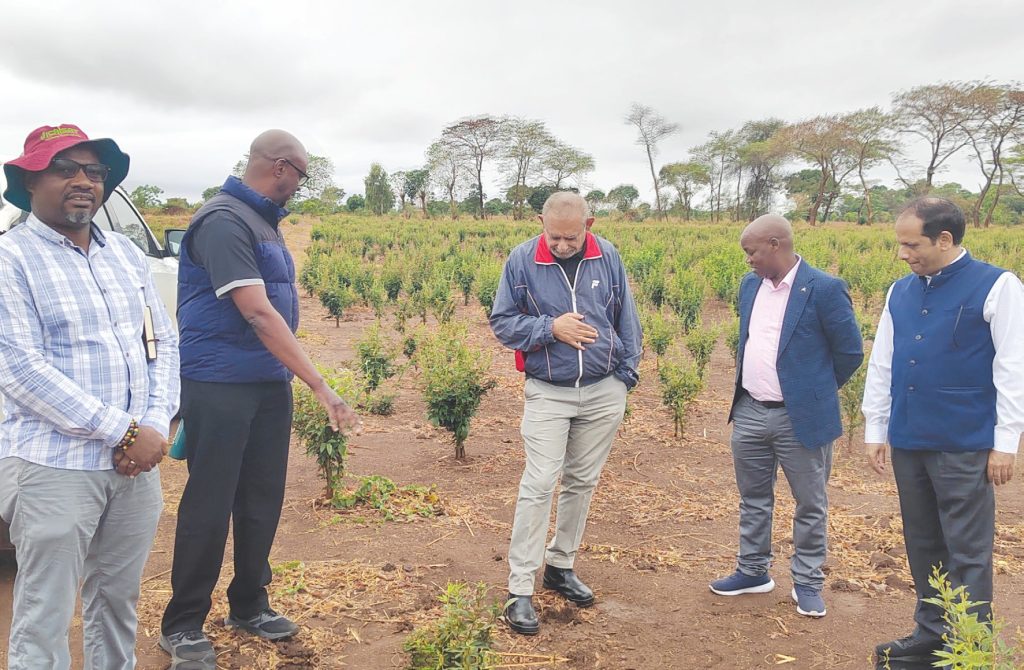
For seed multipliers such as Kakuyu Investments’ director Manzoor Bheda, unlocking the potential of these crops requires the country to rethink how it produces, handles and commercialises them.
“The real test is whether Malawi can transform its traditional crops into profitable commodities while ensuring that the benefits reach the farmers who produce them,” he says.
Speaking at his base in Namitete, Lilongwe, Bheda singled out aflatoxin contamination as a persistent threat to groundnuts.
The mould-like toxic substance compromises grain safety and harms human health, restricting access to export markets.
Yet, international trade figures demonstrate the commercial potential.
In 2024, Malawi exported shelled groundnuts worth $29.15 million mainly to Kenya, South Africa and Tanzania. Pigeon pea exports to India in the 2024/25 financial year generated $74.95 million, according to India’s High Commission in Lilongwe.
Sorghum and millets present further opportunities. China imported grain sorghum worth approximatel $2.59 billion in 2024, while European Union imports of millet reached $25.46 million although these figures represent total market demand, not guaranteed orders for Malawian produce.
However, their competitiveness on the world market depends on quality, prices, volumes and transport costs.
To address the challenges, India-based International Crops Research Institute for the Semi-Arid Tropics (Icrisat), which has worked with Malawi since 1982, is advocating investment in climate-resilient crops, soil fertility, water management and processing.
During a recent visit, its director general Himanshu Pathak revealed plans to develop improved varieties and hybrids of the four crops over the next one to two years.
“Groundnuts, pulses and millets have potential to serve both domestic and international markets, but improved productivity and quality are key to unlocking that potential,” he said.
Pathak said Icrisat also wants to expand soil and water management interventions across more than 5 000 hectares and is working with funders on post-harvest processing and value addition.
Icrisat’s Seed Revolving Fund, established in 1999, supplies seed that the institute says accounts for about 80 percent and more than 90 percent of Malawi’s certified groundnut and pigeon pea seed respectively.
However, better seed alone cannot guarantee higher earnings. Farmers also need accessible machinery, reliable buyers and processing facilities.
Lilongwe University of Agriculture and Natural Resources Vice-Chancellor Professor Emmanuel Kaunda says research must produce practical solutions.
“We want to move from research to solutions. Our focus must be on technologies that farmers can access, machinery that can be fabricated and adapted locally and value addition that creates jobs and increases the returns from agriculture,” he says.
Ministry of Agriculture, Irrigation and Water Development Principal Secretary Amani Mussa says Malawi needs to move beyond producing raw commodities.
He states: “Mechanisation, value addition and strong seed systems are central to building a productive and competitive agricultural sector.
“Research must reach the farmer. It is not enough to develop a superior variety in a research station; we must have systems that multiply, certify and distribute quality seed at scale.”
Bheda welcomed Icrisat’s training and business incubation initiatives, which support new products and value-added enterprises.
“The key is not simply to grow more crops, but to produce better-quality varieties and capture more value before they leave the farm,” he says.
For Malawi, the test is whether research, processing and market access can work together to secure better prices for farmers. Only then can traditional crops deliver more reliable livelihoods alongside food security and export earnings.