Various stakeholders, including the Muslim Association of Malawi (MAM) and the quasi-religious Public Affairs Committee (PAC) have censured Speaker of Parliament Sameer Suleman, for comments alleging that government is sidelining Muslims in public and Cabinet appointments.
The backlash follows remarks he made over the weekend during prayers organised by the Jamat Area 13 Mosque in Lilongwe.
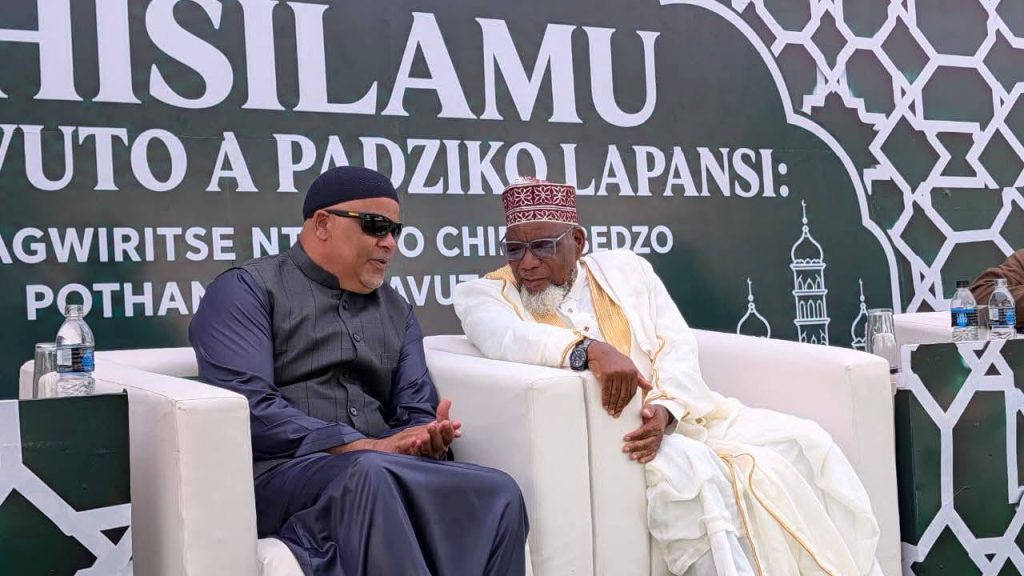
Monitored on TV Islam, the Speaker questioned why there was allegedly no Muslim representation in the current Cabinet, despite Muslims accounting for a significant portion of the population.
“We are about five million Muslims in the country, but we feel we are a minority. We should know that we are not a minority anymore. Today, you can have the whole Cabinet without a Muslim, and yet we seem happy about it,” said Suleman.
He further claimed that whenever a Muslim is appointed to a senior position, they are targeted for removal while the wider Muslim community remains silent. “The time has come for things to change,” he added.
However, his remarks have drawn widespread condemnation from religious leaders, governance advocates and human rights groups, who argue that the comments unfairly target President Peter Mutharika, who holds the sole constitutional power to appoint the Cabinet.
MAM spokesperson Sheikh Dinala Chabulika distanced the association from the Speaker’s aggressive stance, expressing gratitude instead for President Mutharika’s current appointments.
He said: “We would like to thank the leadership for appointing Muslims to senior positions, including the Attorney General and the Speaker himself, who heads one of the three branches of government.
“However, we humbly request the administration to continue considering Muslims for various public positions, including the Cabinet.”
PAC spokesperson Bishop Gilford Matonga warned that Suleman’s remarks risk creating a dangerous precedent where every religious group demands a quota in the executive, undermining the principle that ministers serve all Malawians regardless of faith.
He pointed out Malawi’s history of secular voting patterns: “Malawians supported a Muslim president, Bakili Muluzi, not because of his faith, but because he was a Malawian. Similarly, Muslims supported President Lazarus Chakwera, a Christian, because they believed in his ideologies. The Speaker was wrong to inject religion into this matter.”
Human rights groups also cautioned against fracturing the nation along religious lines.
Centre for Human Rights and Rehabilitation (CHRR) executive director Michael Kaiyatsa noted that while inclusion is important, meritocracy must come first.
He said: “Appointments should primarily be based on merit, integrity and the ability to deliver.”
“Framing public appointments around religious identity risks deepening divisions and encouraging citizens to view government positions as entitlements belonging to specific groups, rather than responsibilities entrusted to individuals on behalf of the nation.”
National Advocacy Platform (NAP) chairperson Benedicto Kondowe added that while the appointing authority should be sensitive to Malawi’s social diversity, public appointments should not be reduced to religious quotas.
He urged the Speaker to use formal, institutional channels rather than public platforms to address grievances.
Said Kondowe: “Public discussion is legitimate, but it should promote solutions rather than deepen religious sensitivities. Leadership requires the courage to confront exclusion and the wisdom to do so without dividing the nation.”
Political scientist Gift Sambo provided a nuanced perspective on the matter, validating the core substance of the Speaker’s concerns while questioning his tactical approach.
He argued that there is inherent merit to Suleman’s grievances when viewed through the lens of social cohesion.
Sambo noted that the inherent nature of party-based governments often makes it difficult for a president to strike a perfect balance between securing social cohesion and assembling a politically workable, loyal administration.
Under Section 92(1) of the Constitution of Malawi, the Cabinet consists of the President, the First Vice-President, the Second Vice-President and such ministers and deputy ministers as may be appointed by the President.
Furthermore, Section 94(1) empowers the President with the exclusive authority to appoint individuals to fill vacancies within the Cabinet.