For thousands of youth and women seeking to escape the pangs of unemployment and build sustainable livelihoods; the Reformed K5 billion Constituency Development Fund (CDF) has brought renewed hope for economic empowerment.
Government has earmarked K200 million per constituency for economic empowerment—K100 million for youth and K100 million for women—ring-fenced within the K5 billion CDF.
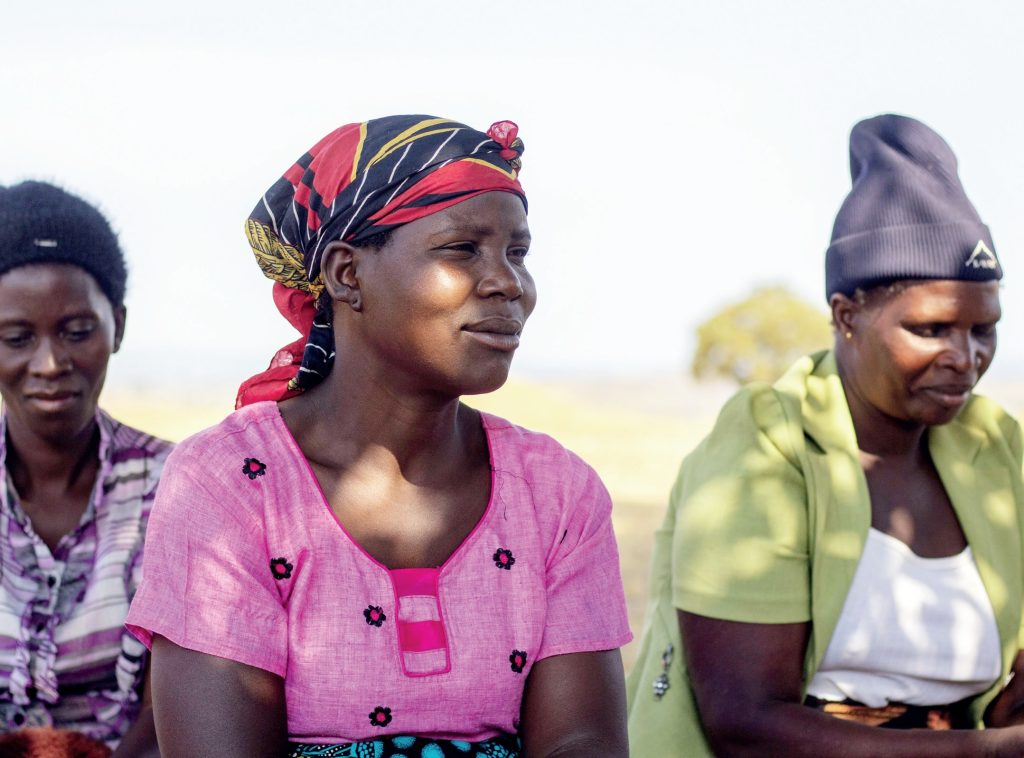
Under the programme, groups of five to 10 people can access individual loans ranging from K250 000 to K500 000 to start or expand small-scale businesses.
The process, however, is rather cumbersome.
Why?
Applicants are first identified by the Village Development Committee (VDC), screened by the Area Development Committee (ADC) and vetted by the newly-formed Constituency Development Committee (CDC).
The proposals are then scrutinised at council level before being forwarded to the Malawi Enterprise Development Fund (Medf) for final appraisal and disbursement.
On paper, the multi-layered process is meant to strengthen accountability and transparency.
In practice, however, it is raising questions over smooth implementation.
While many have welcomed the loans, some prospective beneficiaries feel the ceiling may not be enough to start and sustain a business in the current economy.
In random interviews, they said the cost of stock, equipment and transport can quickly eat into the capital before a business gets off the ground, making it difficult to generate enough profit to repay the loan.
An aspiring poultry farmer in Mzimba Perekezi Constituency, Chrispin Kaperemela of Mbenecho Youth Club, says the threshold is too small to enable one to establish a viable enterprise.
“For me, to start a chicken business, buy chicks and feed, I need more than K2 million.
“So, the amount being offered is a mockery and adds no value to the business I want to start,” he says.
His concerns are shared by Epmark Chavula, secretary of Ehehleni Youth Club in Mzimba South Constituency, who plans to invest in farming.
“A bag of fertiliser now costs more than K200 000. If you take K500 000 and buy two bags of fertiliser, what will remain for the other inputs?” queries the ambitious young man.
James Mlauzi, who runs a grocery shop at Mzimba Boma, says K2 million is now needed to establish a mini-grocery, while K500 000 can be swallowed by basic stock and transport alone.
For some prospective beneficiaries, however, access to the funds is the bigger challenge.
Mary Lungu, 61, of Chotha Shaba Village in Mzimba Solola Constituency, applied through her Tigawane Women’s Group in the first week of August.
At the time of the interview, in the fourth week of September, she was still waiting.
Lungu says she had already spent about K20 000 on transport during mobilisation and registration.
“When I was told you were coming [referring to this reporter], I thought you had brought the money,” she says while laughing.
A 66-year-old Temwanani Soko of Kavunguti Village in Mzimba South says her Penjani Club application was rejected for lacking a business plan.
“We have never heard of a business plan. Kodi ndi ka nyama kanji? [What kind of animal is it?]” she wondered.
On the other side, awareness of the programme also remains uneven.
Alesi Phiri, a mother of six from Magoda Village, also in Mzimba South, says she had never heard about the programme before this interview.
“I had never heard about the loan programme. Maybe they select each other through connections,” she says.
Her experience was not isolated.
During field visits for this investigation across Mzimba Solola, Mzimba Perekezi and Mzimba South, several other women and youths said they had little or no knowledge about the loans.
Yamikani Nyalugwe, youth development officer for M’mbelwa District Council, and a member of the District Economic Empowerment Committee, says the loans are intended for vulnerable youth and women.
He acknowledges concerns over the ceiling and delays, attributing the latter to the long chain of offices involved.
“Since this is a pilot phase, it provides an opportunity for the process to be reviewed and streamlined,” he says.
Nyalugwe adds that business plans remain another challenge.
He says the council has developed a template to assist applicants and that awareness activities are ongoing.
M’mbelwa District Council Commissioner (DC) Emmanuel Bulukutu could not give exact figures, but confirmed that most clubs in Mzimba South, Perekezi and Solola constituencies are yet to receive funds, with the process ongoing.
At the time of reporting, no group in the three constituencies visited had received a disbursement, as vetting was still underway.
Medf spokesperson Eliza Hara says CDF loans undergo a multi-stage vetting process before reaching the institution for final assessment and disbursement.
She says the system is intended to ensure proper screening of beneficiaries.
“While we have loan officers in almost all constituencies to speed up processing, delays often come from coordination challenges and incomplete documentation at local level.
“We continue to engage all involved structures to facilitate smooth processing and ensure eligible beneficiaries access the funds,” said Hara.
Ministry of Local Government and Rural Development, the lead Ministry for CDF, had not responded to a questionnaire on the K500 000 loan ceiling and lengthy approval chain by press time despite several reminders.
At constituency level, Mzimba Perekezi CDC chairperson Christopher Melele says they are under pressure, with some youths and women quitting because they fear they will simply use up the money.
“Another challenge is that most of the women and youth already have unpaid loans, which makes them ineligible for the component under CDF,” he says.
This leaves some of the very people the fund seeks to help stuck, with old debts blocking new opportunities.
Mzimba Perekezi legislator Fikani Nyirenda (Aford) says he shares the concerns raised by constituents and hopes the loan amount and delays will be reviewed after further consultations.
For Mzuzu University economics lecturer Christopher Mbukwa, the current group model, process and loan amounts are not transformative.
He proposes that instead of spreading the funds thinly to reach more youth and women, government should increase the funding envelope and target fewer beneficiaries with meaningful capital.
“I also propose prioritising existing youth and women groups already doing business, channelling funds through such groups rather than small individual loans,” he says.
Gender activist Emma Kaliya agrees, saying women empowerment requires a proper investment fund rather than trial-and-error loans.
She says the fund should allow women to decide the type and amount of capital they need for their businesses instead of offering them a predetermined figure.
“I do not like the set-up because these small political loans have over time failed to lift women out of poverty, leaving them stuck in a vicious cycle,” she said.
The intent behind the CDF youth and women loans is to promote economic empowerment.
However, the question whether the K500 000 ceiling becomes a springboard for enterprise or a burden of debt will depend on how government addresses the concerns and gaps emerging from the pilot phase.
Until the loan amount, awareness and approval chain are reviewed, the very groups the fund seeks to empower risk being left behind.