Ministry of Lands, Housing and Urban Development has contradicted GM Properties Limited’s position on compensation for households in 20 villages affected by the Kanengo Northgate Project, raising questions about the developer’s obligations and an alleged government cost-sharing arrangement.
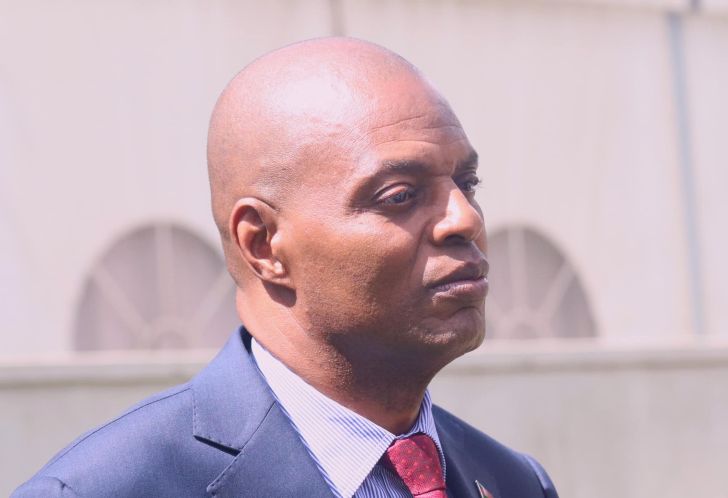
At a recent meeting with traditional and community leaders representing affected residents in Area 26, Lilongwe, the ministry’s Principal Secretary Bennett Nkasala said GM Properties, not government, was responsible for compensating the households because the project was a private commercial venture.
His position contrasts with arguments advanced by the company’s lawyer, Jefferson Luwa, during court proceedings that government should bear or share the compensation costs because the land was converted from public to private ownership before GM Properties acquired it.
In a November 2024 judgement in Civil Cause Number 60 of 2024, High Court Judge Howard Pemba identified government as being responsible for compensation under the Lands Acquisition and Compensation Act.
The court also established that GM Properties had undertaken, under a 2006 agreement with the State, to compensate affected villagers in phases.
The ruling has since raised questions about the relationship between government’s statutory responsibility and the company’s undertaking, particularly whether the two parties had agreed to share the financial burden.
Nkasala, however, ruled out government contributing towards the compensation, arguing that the project was commercial.
He said: “That’s not true! That is a commercial project. So, why would we share that responsibility as if we intend to build a public hospital there?
“It’s the obligation of GM Properties Limited to pay compensation and we have told them to meet that obligation.”
The court established that the disputed land was initially public land before government leased it to GM Properties for 99 years from September 1 2005. The lease was registered on October 24 2005 under Title Number Alimaunde 26/5.
While Justice Pemba found no evidence that the company had acquired the land fraudulently or illegally and declared it the rightful title holder, he acknowledged that some affected villagers remained uncompensated.
The judgement cited a March 23 2006 meeting between government and GM Properties, at which the company agreed to compensate affected people in phases, depending on the portions of land required for development.
The arrangement accounted for payments made to some residents, particularly those from Kwindanguwo Village, during the first phase.
However, citing sections 3 and 9 of the Lands Acquisition and Compensation Act, the judge concluded that government was responsible for the compensation exercise.
The court ordered that outstanding compensation be completed before residents could be compelled to vacate the land or demolish their structures. It further directed that payments should be based on applicable law and prevailing rates.
The affected residents’ lawyer Justin Dzonzi declined to comment on the latest dispute, saying he did not want his remarks to be construed as litigating the matter through the media.
“Since I am representing the community members, it would be unethical for me to respond to these questions because it will look like I am trying to litigate in the media. You may talk to Lands officials,” he said.
The dispute has persisted despite the court ruling. In June 2026, GM Properties issued eviction notices requiring some residents to vacate by July 4.
The company maintained that the notices targeted residents of Kwindanguwo who had already received compensation. But senior group village head Kwindanguwo disputed this, saying people from about 20 villages were still awaiting payment.
The matter resurfaced on October 21 2026 when Nkasala reportedly delivered a directive on behalf of President Peter Mutharika ordering GM Properties to compensate affected residents or risk losing its title.
The directive followed a government meeting involving senior officials from the Office of the President and Cabinet to review compliance with the November 2024 judgement.
Nkasala reportedly warned that government could revoke Title Number Alimaunde 26/5 if the company failed to meet its compensation obligations. The threat raises a further legal question about the basis for revoking a title the High Court had declared valid.
Over 15 000 households from communities under Traditional Authority Chitukula, including Kwindanguwo, Kuliyani and Mwambakanthu, remain uncertain about their future, more than two decades after the project was conceived.
The controversy also revives questions about the original acquisition of more than 100 hectares for the Northgate project, which was conceived in 2005 as an upmarket residential development reportedly modelled on Beverly Hills.
The original masterplan included about 1 800 executive houses, a shopping mall, an academy, a clinic, a business complex and a golf course.
The project was reportedly valued at $600 million but failed to take off as envisaged, with only one building reportedly constructed.
The Ministry of Lands’ position leaves unresolved the precise terms of the March 23 2006 agreement, the legal basis for assigning compensation obligations to the developer and whether government had committed to sharing the costs.
When contacted for clarification, Nkasala said he had referred the questions to the ministry’s legal counsel for guidance.
GM Properties and its lawyer, Luwa, were also asked to clarify the company’s compensation position and the alleged cost-sharing arrangement. They had not responded by press time.