Malawi’s ability to finance its national budget through tax revenue has weakened, with the contribution of tax collections declining between 2021 and 2024, published African Tax Administration Forum (Ataf) data show.
Data in the 2025 African Tax Outlook, show that Malawi’s tax-to-budget ratio fell from approximately 55 percent in 2021 to 50 percent in 2024, against an increase in the African average from 58 percent to 59.9 percent over the same period.
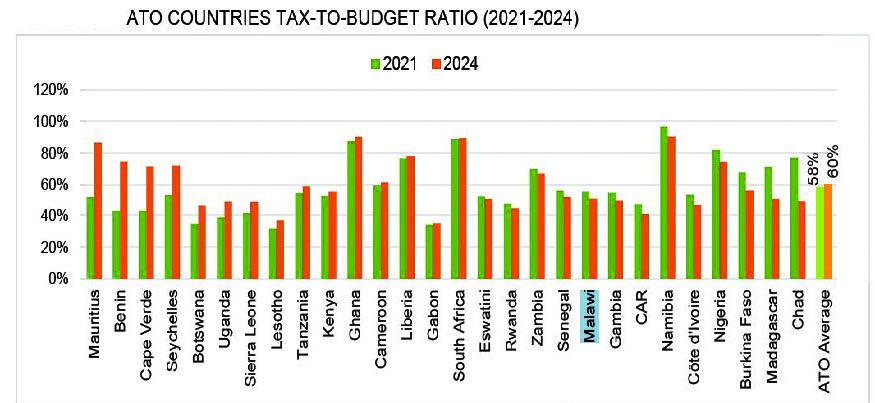
Malawi’s 2024 tax-to-budget ratio of about 50 percent was below Tanzania’s of approximately 60 percent and Zambia’s 65 percent, while South Africa recorded 89.4 percent, according to the report.
According to the data, customs revenue accounted for 72 percent of Malawi’s total tax collections in 2024 while domestic taxes contributed only 28 percent.
Ataf executive secretary Mary Baine observed that the disparities underscore the need for sustained reforms, tailored policy interventions, digital transformation and strengthened institutional capacity to unlock Africa’s full revenue potential.
She said: “While several countries have recorded improvements in revenue performance, the findings reveal significant disparities in tax-to-gross domestic peoduct (GDP) ratios, compliance outcomes and administrative effectiveness across countries and regions.
“Rising public debt, tightening global financial conditions, declining concessional financing, climate-related vulnerabilities and growing demands for quality public services are placing unprecedented pressure on government finances.”
Meanwhile, the Malawi Revenue Authority (MRA) 2026/31 Corporate Strategic Plan seeks to raise the country’s tax-to-GDP ratio from 16.83 percent to 20 percent by 2031, as part of efforts to strengthen domestic revenue mobilisation.
The authority also targets an increase in on-time tax filing from 71 percent to 90 percent and the recovery of collectible tax arrears from 89 percent to 100 percent over the five-year period.
The plan prioritises widening the tax base, digital transformation and improved compliance to increase revenue collection and reduce pressure on government finances.
Minister of Finance, Economic Planning and Decentralisation Joseph Mwanamvekha earlier said stronger domestic revenue mobilisation was critical to reducing reliance on external financing and providing resources for national development.
“Increased domestic revenue means more classrooms, better-equipped hospitals, safer roads and more opportunities for our youth,” he said.
MRA faces a K6.2 trillion domestic revenue collection target for this fiscal year ending March 31 2027.
The tax authority has so far collected K1.39 trillion in the first quarter against a target of K1.37 trillion, representing a K20 billion surplus.