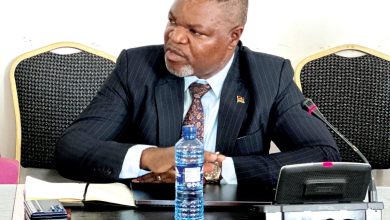
Parliament’s Public Appointments Committee (PAC) has demanded explanations from government over prolonged vacancies at the Anti-Corruption Bureau (ACB) and Financial Intelligence Authority (FIA), and the withdrawal of Malawi’s ambassadorial nomination to Kuwait after parliamentary scrutiny.
The committee wants government to explain delays in appointing substantive heads of the two institutions and why it reversed the diplomatic appointment after parliamentary confirmation proceedings.
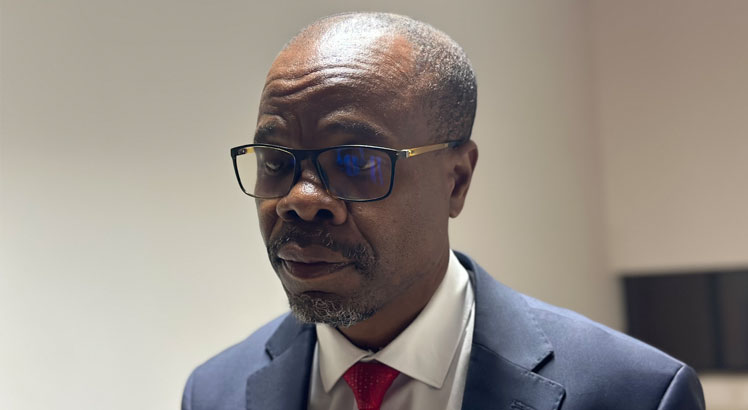
The concerns emerged when Chief Secretary to the Government Justin Saidi appeared before the committee, chaired by Felix Njawala, to account for the status of the appointments.
Njawala expressed concern that the ACB had operated without a substantive director general for almost two years despite its central role in fighting corruption.
“We are concerned that an institution as important as the Anti-Corruption Bureau should go for such a long period without a substantive director general.
“This is an institution that is expected to lead the fight against corruption, and it needs stable leadership to effectively discharge its responsibilities,” he said.
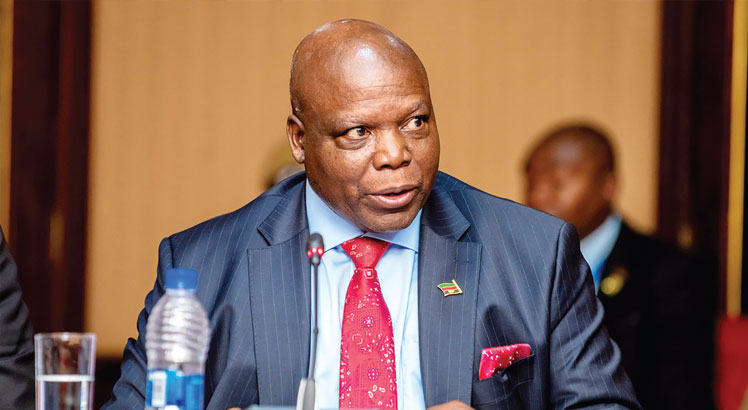
The committee also sought updates on the recruitment of substantive directors general for the ACB and FIA.
However, Saidi distanced the Office of the President and Cabinet (OPC) from direct responsibility for the recruitment exercises, saying the Ministry of Justice and Constitutional Affairs handles the ACB appointment while the Treasury is responsible for the FIA.
He said: “The recruitment of the director general for the Anti-Corruption Bureau is the responsibility of the Ministry of Justice and Constitutional Affairs, while matters concerning the Financial Intelligence Authority fall under the Treasury.
“These processes are guided by the relevant laws, and my office cannot bypass the institutions mandated to handle them.”
But committee members questioned where accountability lay when recruitment processes for critical governance institutions remained unresolved for extended periods.
Committee member and Lilongwe Msinja South MP Francis Belekanyama also criticised the prolonged use of acting appointments, saying keeping officials in such positions for months or years created uncertainty and raised questions about human resource management.
“We cannot continue having people occupying acting positions for such extended periods without knowing when substantive appointments will be made. There must be clear procedures and timelines,” he said.
Belekanyama further questioned the procedures government follows when withdrawing appointments, particularly where candidates have already undergone parliamentary scrutiny.
He wanted to know whether affected candidates were given an opportunity to be heard and whether government considered the possibility of legal challenges arising from such decisions.
The committee’s concerns also centred on the withdrawal of Allison Edson Liwanda’s nomination as Malawi’s ambassador to Kuwait after he appeared before PAC during parliamentary confirmation hearings in June 2026.
Liwanda, who had served as Malawi’s deputy ambassador in Kuwait, was among diplomatic nominees presented for parliamentary scrutiny.
However, on August 31 2026, the Ministry of Foreign Affairs notified the Kuwait government that Malawi had withdrawn his nomination without giving reasons in the diplomatic communication.
Njawala questioned why government had reversed the nomination after the candidate had gone through the parliamentary process.
“Parliament cannot be expected to participate in these appointments and then be left without an explanation when government decides to reverse the process,” he said.
The matter is further complicated by a dispute involving Malawi’s substantive ambassador to Kuwait, Younos Abdul Karim, whom government subsequently moved to recall.
Karim challenged the decision in the Industrial Relations Court and obtained an interim order restraining government from implementing the recall.
However, the court discharged the order in October 2026, allowing government to proceed with the recall while the substantive dispute remained unresolved.
During the proceedings, Attorney General Frank Mbeta argued that Karim had not been confirmed by PAC as required under the constitutional framework governing ambassadorial appointments.
Meanwhile, Saidi told the committee that government had identified another ambassador-designate for Kuwait and wanted PAC to interview the proposed candidate.
But committee members sought clarification on the withdrawal of Liwanda’s nomination before proceeding with the proposed replacement.
The ACB vacancy has remained unresolved since the departure of former director general Martha Chizuma in 2024.
In November 2026, the Ministry of Justice confirmed that seven candidates had been shortlisted for interviews for the position, signalling progress in a recruitment process that has faced prolonged delays.
Following the meeting, PAC resolved to summon officials from the Ministry of Justice and Treasury to explain the delays and provide updates on the recruitment of substantive directors general for the ACB and FIA.