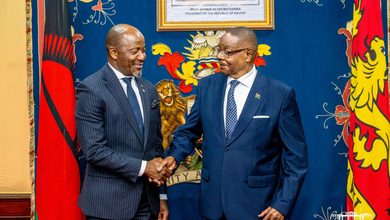
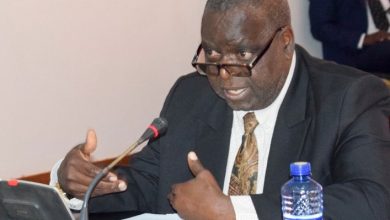
Newly appointed Minister of Justice and Constitutional Affairs Fahad Assani has defended the establishment of a Forfeiture Unit within the Anti-Corruption Bureau (ACB) and said people should not be alarmed as the unit will operate within relevant laws.
Assani said in an interview the unit should not alarm people or remind them of the draconian legislation, the Forfeiture Act, of the one-party State.
He said: “The difference between the Forfeiture Unit and Forfeiture Act will be that this time there will be a due process of the law preceding the forfeiture unlike in the past when property would be arbitrarily snatched and no judicial review would take place.”
Assani said the Constitution was clear that forfeiture could no longer be done without the backing of the law.
The unit is, among other things, expected to facilitate confiscation of property and money obtained through theft of public funds.
Forfeiture was an alarming monster during the 31 years of one-party rule under founding president the late Hastings Kamuzu Banda and the Malawi Congress Party (MCP). During that time, the repealed Forfeiture Act was widely used on those seemed as acting against the regime.
Reacting to plans to establish the unit, Democratic Progressive Party (MCP) spokesperson Nicholas Dausi, who worked as one of Kamuzu’s aides, yesterday said he was afraid of the plans because “even during the Kamuzu time, it was a good idea but was abused”.

He said: “We believe the formation of this unit will go through Parliament to regularise it and we hope it will not be used until it is laid bare before Parliament; otherwise, it raises fears on why it is being established now.”
MCP spokesperson publicist Jessie Kabwila said establishing the unit would not deal with structural inequalities breeding corruption in Malawi.
She also expressed doubt that it would be applied to high-profile people in politics, who have benefited from corrupt practices.
But lawyer Edge Kanyongolo, an associate professor of law at Chancellor College under the University of Malawi, yesterday agreed with Assani that the Constitution was there to protect the rights of people and the Forfeiture Unit would not target innocent citizens depending on the terms of reference of the unit.
He said: “Already, the Corrupt Practices Act has a provision for dispossession of property acquired corruptly. This forfeiture unit is being established to facilitate that particular provision.”
Section 37 of the Corrupt Practices Act states that when a public officer is convicted of an offence under the law, the court can order that “any money or other pecuniary resources, wealth, property, profit, asset, business interest or other advantage which the court ascertained to have been acquired through offence shall be forfeited to the government.”
The establishment of the unit is among the reforms that government plans to undertake in response to weaknesses identified in the public financial management system. Other reforms include review of the Anti-Money Laundering Act and tabling of the Assets Declaration Bill.
New revelations indicate that civil servants who have been arrested in the Capital Hill cash-gate scandal with millions of kwacha in their homes or vehicles own a lot of property, including houses and vehicles which police and ACB suspect were obtained using money stolen from government coffers.