Frustrated by prolonged dry spells that have left their crops dry, some farmers in the country have started uprooting their maize in the hope of replanting should rains start in earnest.
Most of the affected farmers are those who planted their crops with the first rains in November and December while others planted for the second time in mid-December 2024.
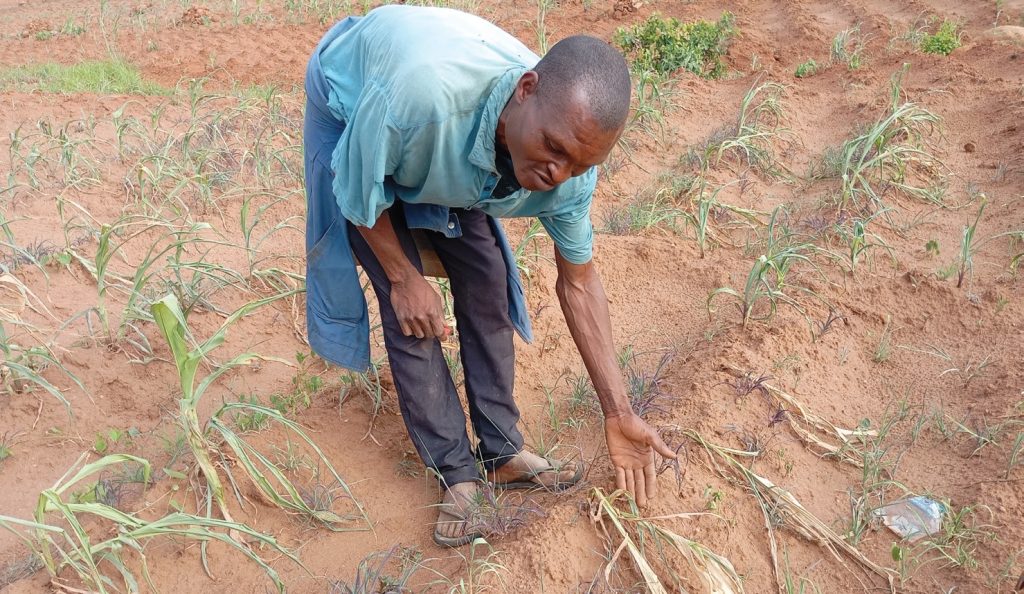
Maize in some of the affected fields wilted while in others it has prematurely tasselled, making it impossible to mature normally.
During a visit to Traditional Authority Mpama in Chiradzulu on New Year’s Day 2025, farmers said they decided to uproot the crops because they feel they would not do well under the circumstances.
One of the farmers, David Ngolingo of Matengo Village said he uprooted wilted crops in one of his maize fields and replanted with the hope that rains will come.
“I accessed the first maize seeds through a farm inputs loan programme which required me to pay a deposit of K40 000 and I bought the replacement seeds after doing piecework. But we have not received rain for two weeks so the seeds have not germinated,” he said.
Ngolingo, a 39-year-old father of five, has another one-acre field of maize, which he applied fertiliser, and beans.
A visit to his garden showed that the beans have permanently died while most of the maize appear to have little hope of surviving.
Eliza Mwitha, a farmer from Moffat Village in the same area, said there are many farmers who have replanted on two occasions because of the dry spell.
She said she invested over K300 000 by planting maize, beans and pigeon peas.
In an interview last month, Farmers Union of Malawi president Maness Nkhata said some farmers in the country have lost their second crop after the first one also wilted in early December 2024.
Since the onset of the 2024/25 rainfall season in November, rains have been erratic and a heat wave experienced in December dried up crops in various parts of the country.