From abundant wildlife and stunning streams splitting the postcard hills, Nyika Plateau in Rumphi is never short of stunning sights.
However, indigenous people who paved the way for the postcard game in Nyika National Park have long complained of water stress and chronic crop failure due to low rainfall.
The cry is fading as the district’s largest irrigation scheme takes shape along Lunyina River, from the northernmost wildlife reserve.
Covering about a third of the least densely populated district’s irrigated land, the 983-hectare Chipofya Scheme promises to transform the livelihoods of the semi-arid tobacco- growing community.
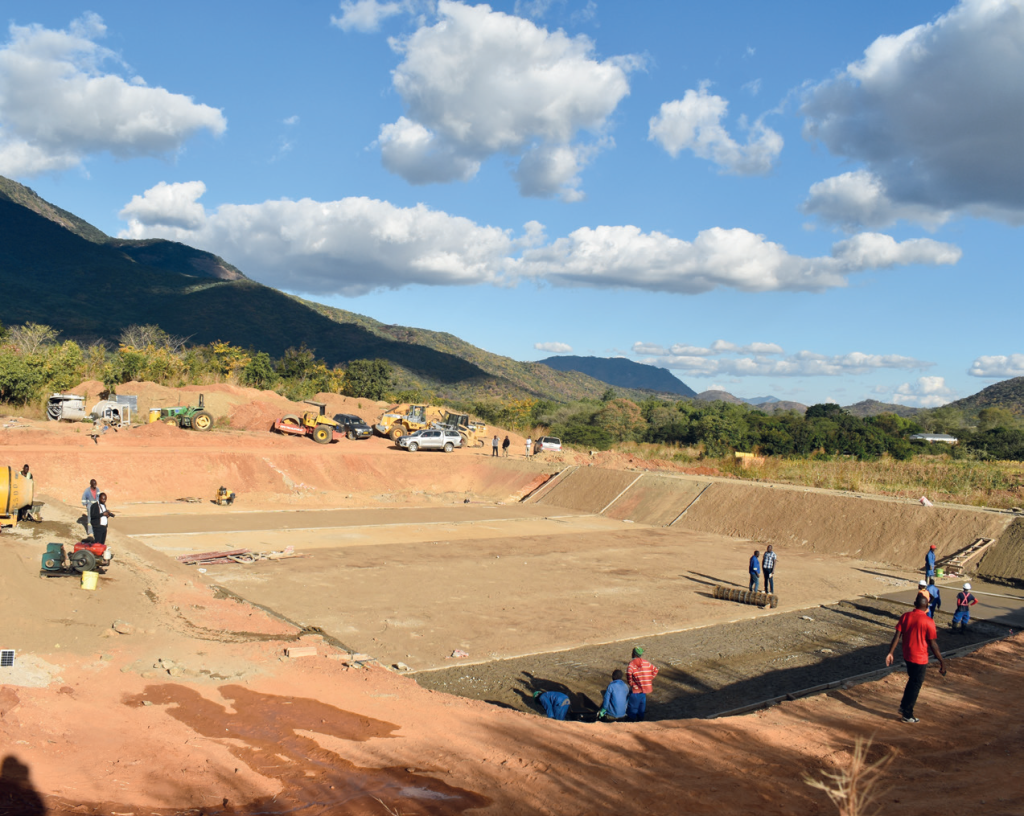
A concrete dyke diverts water from the all-weather river into a 15.2-kilometre (km) massive pipeline that lifts water into four hillside reservoirs, now taking shape. The concrete tanks will feed main pipelines that will pour into a network of smaller pipes on the way to the fields where crop yields keep dwindling due to erratic rainfall.
“Irrigation is the way to go as the rainy season gets shorter, often starting late and suddenly ending before crops mature,” says Wezi Mvalo, a mother of six who lives along the pipeline.

Farming all year round
She cannot wait for the completion of Chipofya Irrigation Scheme, one of the 10 being constructed in eight districts with funding from the International Fund for Agricultural Development (Ifad) through the Programme for Irrigation Development.
From Bolero Trading Centre to Lunyina River, pipes scattered like matchsticks in the hills, construction machines opening tunnels, blue-suit workers constructing tanks and water points mushrooming in the crop fields proclaim an ambition to switch from rain-fed agriculture.
Site engineer Jailos Sichula states: “From the intake at Chipofya Village, a 15.2km conveyance pipe will fill four night storage reservoirs, from where the main pipelines totalling about 27km will supply secondary pipes. At the receiving end, the farmers will get the water for their crops from the 1 295 hydrants.”
He visualises the tobacco-growing community ending hunger and poverty.
“The river flows all year round, so about 5 500 hardworking farmers will grow high-value crops three times a year, harvesting enough for their food requirements and surplus for sale,” Sichula says.
Construction started on August 11 2025 and was planned to end in August this year.
However, the deadline has been extended to February 2026 due to payment hiccups.
“We’ve completed 97 percent of the intake and 61 percent of the pipeline. The whole project is at 38 percent, but we’ll meet the new deadline,” says Sichula.
The project employs 181 workers from local communities and 21 skilled labourers.
Mbachi Chirambo, irrigation agronomist at Rumphi District Agricultural Development Office, says the multimillion dollar investment is a dream come true for farmers hit hard by climate change.
“Rumphi has a great irrigation potential. However, we only irrigate about 3 000 hectare of our irrigable land, estimated at about 10 000 ha. There is no bigger scheme than Chipofya. We need such investment to utilise our land and water,” Chirambo explains.
According to Chirambo, the scheme is a big economic boost for the semi-arid community.
“The community in the rain shadow will supplement maize with high-value crops for sale and extension officers have already started giving them tips on how to maximise crop yields and profits,” he says.
Ready for irrigation
Mvalo and her husband, Alfred, started diversifying away from maize and tobacco in readiness for the green revolution. The parents of six grow bananas, oranges and tangerines around their homestead.
For three years, Pride has been preparing the family and their neighbours for irrigation farming.
“We received seedlings for these fruits after successfully making bunds, digging swales and planting vetiver grass in our gullied crop fields. These structures trap rainwater to sink into the ground for the benefit of our crops instead of washing away fertile soil,” says the woman.
Their harvest has more than tripled.
“We used to fill just two oxcarts, but now it’s eight. Each oxcart gives us seven 50kg bags,” Wezi brags.
Most importantly, they produce their own bananas using piped water from Lunyina through Chikulamayembe Water Users Association and manure from their six cows, pig and goats.
“We no longer buy bananas from the neighbouring Karonga and Nkhata Bay districts or import them from Tanzania. We got our first harvest in 2022 when we sold 30 bunches at K300 000. We sold 50 bunches at K20 000 each last year and 70 bunches at the same price this year. Besides, we sell seedlings at K1000 to K1500 each.”
Busy and prosperous
What started as a demonstration plot has become an eye-opener.
“Irrigation can unlock the country’s agricultural potential amid climate change,” says Alfred. “If we invest in facilities that give us the power to decide where and when to water our crops, we can feed the nation and export to our neighbouring countries the same way they export bananas to our nation.”
Irrigation boosts agricultural productivity and commercialisation, a pillar of the Malawi 2063 vision to transform the country into a self-reliant, industrialised middle-income economy by the centenary of self-rule.
“Malawi cannot prosper if farmers, the backbone of our economy, only work for five rainy months a year. Irrigation will make us busy, productive and productive, guaranteeing us at least three times a year.” says Alfred