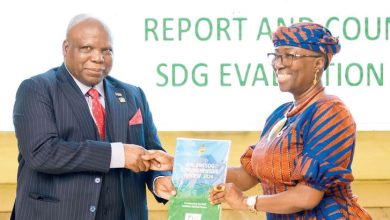
New Speaker of Parliament Sameer Suleman has pledged to preside over the House with fairness, impartiality and respect for all voices, urging the legislators to rise above partisan politics and prioritise national interests.
In his acceptance speech after being declared winner and sworn in by Deputy Chief Justice Lovemore Chikopa at Parliament Building yesterday, Suleman said Parliament must serve the people with integrity, diligence, and sound oversight, ensuring accountability and principled legislation.
The new Speaker, a Democratic Progressive Party (DPP) member of Parlaimeny (MP), secured the speakership with 134 votes, defeating Malawi Congress Party (MCP) candidate Peter Dimba, who garnered 85 votes. Fellow DPP-backed nominees Sandram Scott and Laston Vigaro received no votes, while one abstention was recorded.

In the race for First Deputy Speaker, DPP’s Victor Musowa won with 134 votes, followed by MCP’s Emmanuel Chambulanyina Jere with 60 and UTM Party’s Catherine Mzumara with 24.
Meanwhile, Esther Jolobala of Machinga East (UDF) went unopposed as Second Deputy Speaker after two contestants–Mchinji South MP Owen Malijani (MCP) and Zomba Likangala MP Abigail Bungwe–withdrew their nominations.
The election for Speaker highlighted the tactical use of parliamentary procedure. Under Standing Order 6, only four nominees can contest. To exploit this, the DPP fielded three candidates, effectively blocking serious competition.
Sole legislator for the People’s Development Party Kondwani Nankhumwa had his nomination fall outside the first four received by the Clerk of Parliament, leaving Dimba as the only viable challenger.
Nankhumwa, who is former DPP vice-president for the South, walked out immediately after his candidature was declared void and could not be reached for comment at the time of filing this story.
On his part, MCP legislator Moses Kunkuyu, who nominated Dimba described the process as fully constitutional and procedurally compliant.
He acknowledged the tactical nature of the DPP’s multiple nominations, noting that the party sought to minimise competition by rushing to occupy nomination slots.
“They used the rules to their advantage to push out other candidates, including ours,” Kunkuyu said
Nevertheless, he emphasised that the MCP respects the outcome.
Meanwhile, analysts say the DPP manoeuvre demonstrates sophisticated parliamentary strategy.
“By quickly occupying the limited nomination slots, the party controlled the field and sidelined internal rivals without overt confrontation. It shows political dexterity, though it raises questions about fairness and internal party democracy,” said Benedicto Kondowe, chairperson of National Advocacy Platform.
Born on June 20 1977, Suleman, renowned for his criticism of the immediate-past Malawi Congress Party (MCP) administration in Parliament, was first elected legislator in 2019 on a DPP ticket after twice failing in 2009 on a United Democratic Front (UDF) ticket and in 2014 as a People’s Party (PP) candidate.
From June 2019 to July 2025 when DPP was in opposition, he was chairperson of the Parliamentary Agriculture Committee. He is a businessperson and previously also served as Football Association of Malawi president.
Section 53(1) of the Constitution stipulates that the Speaker of the National Assembly shall be elected by majority vote of the chamber in which s/he sits at the first sitting after any dissolution of that chamber, and that the members shall elect any stipulated number of persons to the positions of deputy speakers.
MEC confirmed results in 224 constituencies out of 229, with five constituencies—Lilongwe City Bwaila, Lilongwe City Mtandire- Mtsiriza, Dedza Mtakataka, Nkhotakota Liwaladzi and Blantyre West—remaining vacant due to nullifications, postponements or irregularities.
Catholic Commission for Justice and Peace (CCJP) of Karonga Diocese has urged Chitipa District Grievance Redress Mechanism Committee members to promote the right to food in Traditional Authority Mwenewenya in the district.
The commission’s national coordinator Lewis Msiyadungu said this on Wednesday during the training of the committee, adding that it will be the first point to receive and resolve matters pertaining to access to food.
“We are expecting all the grievances and conflicts that will arise at community level to be amicably resolved,” said Msiyadungu.
Chitipa District Council director of economic planning and development Phillimon Maseko commended CCJP for training the committee on how to resolve complaints on food access or distribution.
The project, among others, seeks to ensure that people receive relief food items in time or are able to access food without challenges and consume the food the area produces.
Janet Kaira, a community member, said sometimes the area does not or receives relief food late due to poor road network.
“We ask duty-bearers to plan properly when deciding to dispatch relief food to the area. We also ask authorities to ensure fair distribution of relief food,” she said.
Last month, CCJP drilled community members in T/A Mwenewenya to promote people’s right to food as well as embark on nutrition sensitisation activities.
The 30 trainees were drawn from Wenya Community Action Group and Wenya Area Development Committee.
CCJP is running Right to Food Project with support from Weilthungerhilfe.