Women Judges Association of Malawi (Wojam) and the Gender and Justice Unit (GJU) have sealed a five-year strategic partnership to expand access to justice for gender-based violence (GBV) survivors and other vulnerable groups.
The agreement, signed during the commemoration of Human Rights Day in Lilongwe yesterday, commits the two institutions to deepen collaboration through a memorandum of understanding (MoU) that leverages Wojam’s judicial authority and GJU’s expertise in legal empowerment, community mobilisation, digital justice tools and monitoring and evaluation.

not a privilege. | Nation
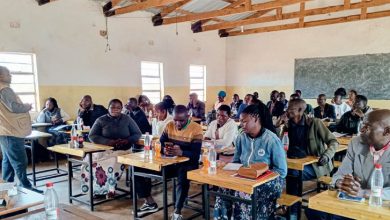
A statement the two institutions issued said the partnership builds on several years of joint programming, including GBV mobile courts and community liaison structures.
It also highlights legal empowerment clinics and digital platforms such as the EmpowerLine toll-free service 4285 and its accompanying mobile app.
Wojam president High Court Judge Jean Kayira noted that the timing of the partnership reinforced its importance.
“On this Human Rights Day, we reaffirm that access to justice is not a privilege but a fundamental right. This formalised partnership with the Gender and Justice Unit strengthens our ability as judicial officers to reach survivors where they are, uphold the rule of law and ensure that justice is accessible, responsive and survivor-centred,” she said.
GJU executive director Sarai Chisala Tempelhoff said the agreement signalled a significant step in linking grassroots justice with formal judicial mechanisms.
She said: “This partnership represents the power of alignment between community-driven justice and judicial leadership. By formalising our collaboration with Wojam, we are creating seamless pathways from legal information and community support to real justice outcomes for survivors of gender-based violence.”
The MoU provides for joint mobile court sessions, coordinated legal empowerment clinics, integration of EmpowerLine digital tools into national referral pathways and collaborative advocacy. It also embeds principles of confidentiality, trauma-informed practice, accessibility, disability inclusion, linguistic equity and gender-transformative justice.