So much has been said about the CDF Constitutional (Amendment) Bill and the powers members of Parliament are striving to arrogate to themselves over the fund. More has to be said, and not for one but many reasons.
The background and what has been widely said is that MPs have given themselves powers to approve the CDF, which from the next fiscal year, will increase from K220 million to K5 billion.
The move has been met with stiff opposition from civil society organisations and other stakeholders, who have labeled the amendment as a move driven by personal and political gain rather than national needs and potentially institutionalising conflict of interest.
On its part, the Malawi Local Government Association argues that development administration is the responsibility of local councils and not legislators. They also argue that the amendment creates parallel structures that erode the mandate of local councils.
The critics’ position is emboldened by the Constitutional Court ruling in May this year. The ruling declared the 2022 CDF and Water Resources Fund guidelines unconstitutional. It ruled that giving the MPs the power to select, implement and monitor projects as well as voting rights in local councils violates the constitutional principle of separation of powers. The court thus ordered that MPs must be removed from these management roles as their primary function should be legislative oversight.
The then Attorney General Thabo Chakaka Nyirenda then filed an appeal with the Supreme Court of Appeal challenging the ruling. The AG also filed for a stay of execution of the High Court’s decision pending the outcome of the appeal. This means that the initial ruling has not yet been enforced.
To date, no date has been set by the Supreme Court to hear the appeal, leaving the legal challenge in a state of administrative limbo. While the appeal is pending, new CDF guidelines for the new K5 billion fund are being developed. They will require Cabinet and Parliamentary approval.
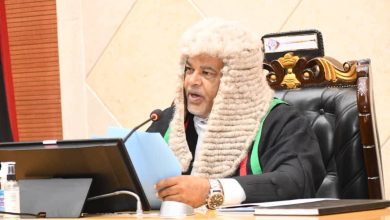
While the matter is still in court (Supreme Court), early last week, Parliament passed the CDF Constitution (Amendment) 2025 Bill designed to constitutionalise the CDF and potentially give MPs constitutional authority over management.
We are moving in a vicious cycle. The Judiciary—through the Constitutional Court’s ruling—slaps the Legislature by barring it from controlling CDF. The Executive—through the AG as government’s chief legal advisor—goes to the appellate court.
But before the Supreme Court adjudicates on the matter, MPs (the Legislature) take the matter back to Parliament where they are now trying to constitutionalise the fund. This is a calculated attempt to overturn the High Court ruling that barred the MPs from managing, or implementing the CDF or water Resources Fund. My layman’s question is: Did MPs or Parliament have powers to discuss the matter in Parliament while it is in court?
What will the Constitutional Court do now? I have a feeling Parliament jumped the gun. It wrested the matter from the Judiciary which was in its jurisdiction to adjudicate on. It is the reason the matter was introduced as a Private Members Bill to bypass the 28-day waiting period for scrutiny.
The Bill will eventually find its way back to the Executive which in the first place took it to the appellate court. By swiftly bypassing the Supreme Court and moving with speed to constitutionalise CDF, we can read MPs’ minds. They think it is easier to sway the Executive (the State President) than the Judiciary.
My last word is that President Peter Mutharika should be alive to the fact that this is the same matter which the Executive (through the AG) took to the Supreme Court to adjudicate on.
Before the Supreme Court is done with the Bill, the matter is back on his table for his signature. He should refuse to append his signature to it and send it back.