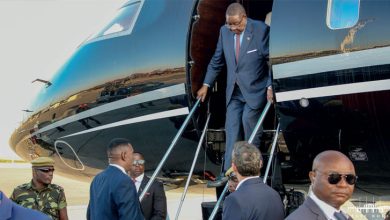
One of the trending issues this week is the no-show of the promised 200 000 metric tonnes (MT) of Zambian maize. The maize is meant to save four million Malawians from the pangs of hunger and starvation during the lean period—October 2025 to March 2026.
On October 16 Malawi signed a $77 million (K135 billion) deal with Zambia to import the 200 000 MT of maize to address the severe food insecurity in the country.
And so with the 25 000 MT of maize from the National Food Reserve Agency, government launched the Lean Season Food Insecurity Response Programme (LS-FIRP) on October 22, 2025.
I f f o r s ix mo n t h s government needed 200 000 MT, it needed half that amount from October to December. It therefore goes without saying that this stock is either depleted or will be gone by the end of this month.
Yet two months after putting pen to paper, the Zambian maize—being sourced from Zambia’s Eastern Province to reduce transportation costs—is yet to come. Reports say there are significant logistical and financial hurdles. Malawi is supposed to remit a 40 percent down payment, or approximately $30.8 million (K53.9billion).
Reports also suggest that (and this is the funny part of the story) Zambia is still mobilizing the maize, ironically some of it from Malawi. If this is correct, the legitimate question to ask is: Should Malawi not have bought some of the maize locally?
The narrative that Zambia is buying maize from Malawi only to sell it back to the country is gaining currency because the Zambian maize is nowhere to be seen.
But the delay could also be because Lilongwe has not remitted the mandatory 40 percent down payment for it to begin uplifting the grain.
All things considered, the primar y reason for the hold-up should be the countr y ’s delay in remitting the $30.8 million to Zambia required under the October agreement. This is despite the World Bank pouring $45 million into the programme.
The critical question to ask is: how soon is the Zambian maize (some of it bought in Malawi) coming to Malawi?
Truth be told. We must admit we are in a precarious situation; and a disturbing one also. Four million food-insecure Malawians are at risk of starvation unless something happens to avert the situation. And happens fast.
The situation calls for government to move with extreme speed to save lives of people who have nowhere else to turn to for their survival other than government for relief food or cash transfers to purchase food.
On the economic side, a further delay in uplifting the maize from Zambia will result in an acute maize shortage of the grain in the country, a development t hat w i l l s h o o t f o o d i n f lation through the ro o f . Fo o d i n f l at i o n significantly impacts other commodities and services through reduced consumer purchasing power, increased production costs, and second-round inflationary effects across the broader economy.
It cannot be more worrying that the maize cannot be uplifted when funding and support for the LS-FIRP has been partly provided by, among others, the World Bank to the tune of $45 million.
But it’s not rocket science. Zambia only wants a 40 percent down payment of the $77 million (total maize import bill) from Malawi for the maize to start flowing to Malawi. The $45 million from the World Bank is 58.44 percent of $77 million or 18.44 percent more than what Zambia wants as down payment. What then is delaying the uplifting of the maize from across the border?
Th i s i s w here t h e nar rat ive that Zambia does not have all the 200 000 MT of maize to sell to Malawi begins to gain more currency.
The ridi cule of the maize deal is coming from lack of transparency in the processes involved to get the maize to Malawi.
snhlane@mwnation.com; Cell: 0888833906