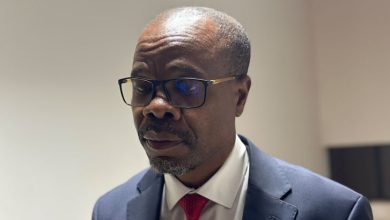
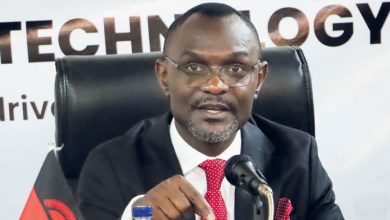
Michael Chiusiwa, who heads the Office of the Director of Public Officers’ Declarations (ODPOD)—a key governance institution managing a transparency mechanism for promoting ethical leadership to prevent ill-gotten wealth—tells an interesting story.
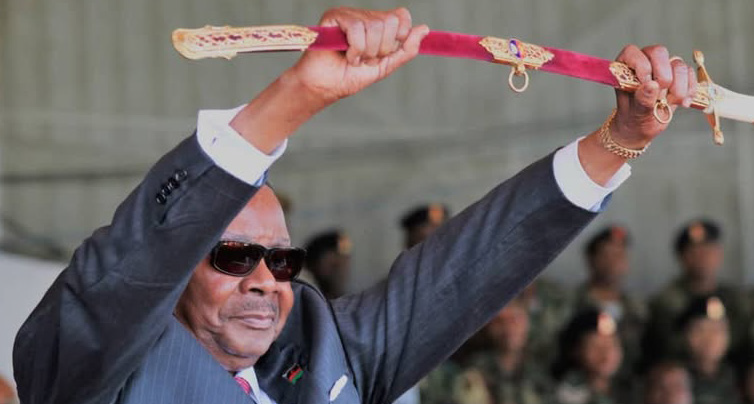
Immediately after swearing in as President, the nation’s newly-minted chief executive officer Arthur Peter Mutharika personally called him for declaration forms to complete in line with the Public Officers (Declaration of Assets, Liabilities and Business Interests) Act.
Chief Secretary Justin Saidi, soon after taking office, sought guidance from ODPOD on how newly-appointed senior officials would declare their assets.
These two actions from the most powerful political office in the land and its highest ranking civil servant made ODPOD experience one of the busiest first 100 days of a new government since the office started operations in 2014 from the embers of the infamous Cashgate.
Since last October, Cabinet ministers, parliamentarians and public officers have voluntarily overwhelmed his office for forms to declare their assets and liabilities, taking APM’s cue.
In leading by example and actually filing his declarations at the earliest opportunity, the President moved beyond the symbolic exercise of power and leadership.
He inherently combined it with substance through a practical action that sets the stage for effective management of the State, policy implementation, enforcement of laws, commitment to service delivery and execution of his Democratic Progressive Party (DPP) manifesto.
In its 2025 election manifesto, the party reaffirmed its commitment to rule of law, describing it as the “bedrock of an enduring constitutional democratic society.”
The party argued that meaningful development cannot be achieved where legal institutions are weakened or justice is selectively applied.
On page 48 of the manifesto, DPP acknowledged that Malawi’s governance system suffered in recent years due to institutional weaknesses worsened by political interference, selective justice and inadequate funding. These challenges, the party noted, undermined good governance and rule of law.
Various observers have been watching Mutharika’s every move during his first 100 days, with judgement of his performance coming into sharper focus now that the honeymoon is over.
The majority opinion—though cautious—among political, governance and legal commentators The Nation talked to, is that the President is largely on course in laying a fairly strong foundation for rule of law and good governance to thrive.
Private practice lawyer and leading good governance advocate Benedicto Kondowe said in his first 100 days, President Mutharika has demonstrated constitutional restraint and respect for the rule of law, particularly by largely refraining from direct interference in key governance and accountability institutions.
This approach, he said, has helped stabilise the institutions and preserved their independence following a politically-sensitive transition.
Kondowe, however, said restraint alone does not amount to decisive leadership in the fight against corruption, urging the administration to send clear reform signals and enforce firm ethical standards.
Wonderful Mkhutche, a political scientist with expertise in governance and public administration also observed visible efforts to respect the independence of key institutions, including the Judiciary, Legislature and the Anti-Corruption Bureau (ACB), suggesting that public confidence in governance may be slowly rebuilding.
Political and governance analyst George Chaima said Mutharika has started well, but expressed the need for a proper balance between good governance and the rule of law.
He observed that while some arrests have followed due judicial process, others, particularly those involving political figures, have not.
Governance and anti-corruption pundit Moses Mkandawire, who also heads Nyika Institute and is a governance lecturer at University of Livingstonia, agreed that Mutharika has done well in bringing accountability institutions back to “normal” and ensuring their independence.
For example, he said, the Mutharika administration has fast-tracked the process of substantively filling the position of ACB director, which has remained vacant since the expiry of Martha Chizuma’s contract in May 2024.
“If this position is filled in a manner that is transparent, open and accountable, then that would be a plus on his administration,” said Mkandawire.
Last November, government appointed Gabriel Chembezi—a man Mkandawire said has strong credentials as a criminal lawyer and impeccable track record of integrity—to replace Hilary Chilomba as acting director. Government has since advertised the position of ACB director.
Minister of Justice and Constitutional Affairs Charles Mhango explained that an independent panel would conduct interviews and recommend three candidates to the President for appointment.
Meanwhile, Leader of Opposition in Parliament Simplex Chithyola Banda said in an interview on Saturday that the President must pay attention to traits that appear to undermine the rule of law.
“It is clear to me that President Mutharika wants to govern well, leave a strong and lasting legacy and help uplift the lives of Malawians. That can be seen in his appointments; he is prioritising competence and technical abilities over political appeasements and that is bringing positive results so far,” he said, citing how the administration is helping to lower maize prices.
Chithyola Banda said Mutharika is also acutely aware that he draws his power to govern from the people who overwhelmingly voted for him and wants to do right by them.
The former finance minister in the Lazarus Chakwera administration cited the President’s decision to veto the Constituency Development Fund (CDF) Bill of 2025, unanimously passed by the National Assembly, as a sign that he has listened to the voices of Malawians regarding constitutional integrity and management of CDF.
Chithyola Banda was referring to the defining governance moment when the President vetoed the constitutional amendment Bill with which parliamentarians wanted to award themselves vast operational powers over the fund.
Legal minds hailed Mutharika for the courageous decision, saying in doing so, the President had reaffirmed the principle of separation of powers; fortified respect for constitutional procedure, prevented legal uncertainty and reinforced the primacy of the rule of law over political expediency.
But Chithyola Banda, a senior Malawi Congress Party official, said the President is under-performing in certain aspects of rule of law.
He cited as red flags the hiring and firing of senior executives of statutory bodies without due process, including bypassing boards of directors and governance arms such as the Public Appointments Committee of Parliament, urging Mutharika to follow the law, not circumvent it.
Human rights activist Gift Trapence agreed with Chithyola Banda, saying “the rule of law is under attack as if we are in a dictatorship”.
National Anti-Corruption Alliance chairperson Michael Kaiyatsa said he was concerned with the President’s decision to hire individuals who are answering to, or have been linked with, various corruption allegations, into positions of public authority.
“They send a contradictory message: while anti-corruption rhetoric is maintained, political actions suggest tolerance or accommodation of impunity,” he charged.
But Principal Secretary for good governance in the Office of the President and Cabinet (OPC) Reinford Mwangonde argued that governance should not just be assessed narrowly through perception, isolated controversies or short-term political noise.
A credible assessment must instead look at institutions, legal architecture, enforcement capacity and respect for due process, he said.
“On these measures, the administration of His Excellency Professor Arthur Peter Mutharika has taken concrete, structural steps that materially strengthen Malawi’s governance ecosystem. The issue facing Malawi has never been a lack of intent, but weak systems. This administration has focused on building institutions that outlive politics,” said Mwangonde.
Asked to demonstrate how the Mutharika administration is so far moving from rhetorical flourishes to actually strengthening governance institutions, Mwangonde said the clearest indicators of governance commitment is whether institutions are empowered to act independently, which he said, the President is diligently executing.
He said the Mutharika administration has reinforced, operationalised, or re-anchored key bodies such as ODPOD, ACB, FIA, DPP, PPDA and PCC.
At ACB, for example, the President, apart from reaffirming the bureau as the lead agency in corruption prevention, investigation and prosecution, has also clearly communicated that the agency has operational independence and should be assured of professional leadership.
The administration also ensured that the bureau received more budgetary allocation during the mid-year budget review to enhance its financial capacity, enabling ACB, for example, to introduce and aggressively implement the vetting of change of ownership of properties.
The vetting is saving government from losing properties and preventing the laundering and cleaning of ill-gotten wealth through procuring of houses, land and cars, according to ACB acting director general Gabriel Chembedzi in a write up made available to The Nation.
The administration has also strengthened FIA as a gatekeeper against illicit financial flows, money laundering and abuse of the financial system.
“The FIA has enjoyed allocation of budget as requested since President Mutharika took over and, recently, an approval by the Chief Secretary has been granted to allow the institution recruit essential human personnel to support the execution of its mandate,” said FIA’s Jean Phillipo-Pelmente.
Director of Public Prosecutions Postino Maelee assured that the Mutharika administration has maintained his office as an independent prosecutorial authority, insulated from political direction in decision-making.
PPDA’s Michael Chiusiwa said the administration has strengthened his institution as a firewall against procurement abuse, particularly in high-risk sectors and public enterprises.
Meanwhile, the new government has increased by K100 million at mid-year the budget for PCC, according to the commission, which is the accountability channel for law-enforcement conduct.
“These are not symbolic gestures. They represent institutional guardrails, the foundation of sustainable governance,” Mwangonde stressed.
Perhaps the clearest signal of Mutharika’s commitment to governance and presidential intent is the creation of the Good Governance Unit within OPC, which Mwangonde heads.
The unit is mandated to collaborate and support coordination of governance related themes in ministries, departments and agencies; strengthen public financial management and procurement integrity; support constitutional and accountability institutions; and ensure coherence and alignment among policy, law and implementation.
By situating the Good Governance Unit in OPC, the administration has elevated governance from a sectoral concern to a public-service wide priority.
Additional reporting by Mathews Kasanda.