It is Tuesday 8 am and business is already in full swing at Chitakale Market in Mulanje District.
However, the soothing aroma of fresh pineapple, mangoes and bananas of the hilly district is overpowered by a stench from waste piling up behind the bus depot along the M2.
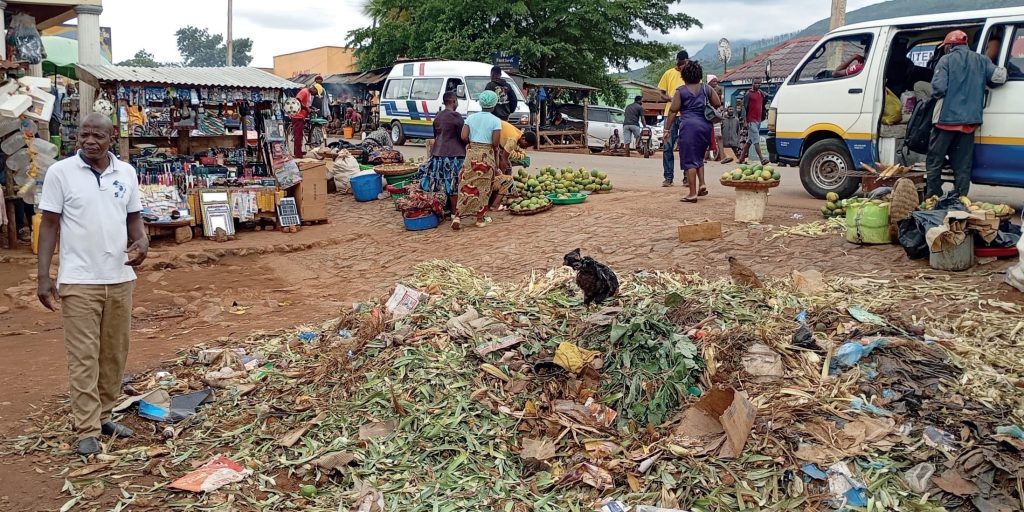
The foul-smelling heap at the heart of the market is dominated by chemical and solid waste that has not been collected for over half a year.
Both sellers and buyers are concerned that Mulanje District Council continues sidestepping the dumps even though it collects market fees daily through its agents.
“Council authorities are swift at collecting market fees, but need several reminders to clear waste,” says Chitakale Market Committee chairperson Wyson Paipi. “This forces us to trade in a filthy environment where many ask: Where do market fees go?”
The question goes unanswered as leftovers and single-use plastics pile up at every turn in the business hotspot near Mulanje Boma.
Paipi says he cannot recall the year the dumpsite at the centre of the roadside market was removed, levelled or halved.
“It’s now two weeks since they removed the waste at the bus stage, but the dumpsite has been overflowing for years,” he states.
The situation puts businesspersons and customers at risk of contracting waterborne diseases, including the cholera outbreak which has claimed one life from 26 patients detected since last December.
The world’s deadliest cholera outbreak killed about 1 700 of nearly 50 000 confirmed between 2022 and 2023, health authorities report.
According to the Ministry of Health and Sanitation, over half of outpatients in the country’s clinics suffer from diseases prevented by insisting on safe water, sanitation and hygiene.
Apart from cholera, the deadly diseases include diarrhoea, dysentery and typhoid.
Like all districts, cities and towns nationwide, the district in the shadow of Mulanje Mountain—Malawi’s highest point and second-top tourist destination—lacks waste collection, treatment and disposal facilities.
The eyesore flashes past in the district’s major markets, including Nkando, Chinakanaka, Limbuli and Muloza.
When asked about the breakdown in market sanitation, Mulanje district trade officer Robert Zingani says the council is committed to improving waste management in all its markets.
However, he blamed the worsening public health hazard on lack of waste collection equipment.
“Our tractor developed a fault last week, but we have sorted it out. We have since resumed garbage collection. We will also construct modern toilets [in markets] because we want to improve sanitation and hygiene in all markets,” he states.
Zingani sent an urgent appeal to the private sector and humanitarian organisation to support the council in improving waste management services in the district.
United Nations Environment Programme ranks Malawi among the countries affected by challenges associated with poor management of chemicals and waste.
The rampant violation of the right to a clean, sustainable environment harms human health and environmental well-being, warns UN Environment.
Studies show an average Malawian, especially in Lilongwe City, generates about half a kilogramme of waste daily.
An assessment by Lilongwe Wildlife Trust shows the capital city generates over 553 tonnes a day while Blantyre, the commercial capital, discards over 435 tonnes.
About 72 percent of this waste finds its way to open dumpsites or are burnt, shows the record which partly swayed the High Court to affirm the ban on thin plastics.
According to the brief, single-use plastics constitute 8.5 percent of waste in the country’s landfills.
Due to the country’s underdeveloped waste management systems and indiscriminate disposal, most unwanted goods go uncollected and end up polluting water, soil and air.
The breakdown in waste handling exposes the country to dangers of hazardous waste from healthcare centres and industrial sites.
Malawi is not party to the Bamako Convention, which bans the importation of hazardous waste and promotes sustainable waste management.
However, the country has laws and policies regulating hazardous waste management, the implementation and systems leave a lot to be desired.
Among others, Section 13 of the Constitution and Environment Management Act require government to protect the environment for the good of people in the country and generations to come.
Centre for Environmental Policy and Advocacy programme officer Haswell Mollande says effective management of hazardous waste is not just an environmental and public health issue but also a governance, accountability and social justice concern.
He states: “Malawi is a party to the Basel Convention on hazardous waste, but hazardous and medical waste are still common in our areas.
“Weak enforcement and absence of comprehensive regulations on emerging waste streams such as e-waste are not effective in achieving sustainable waste management solutions to protect public health and the environment.”