The discovery of gold deposits in the hills near Tilora Trading Centre in Karonga has stirred a hive of risky sex transactions.
Locals in the hilly setting along Lake Malawi are worried about a rising risk of sexually transmitted infections (STIs), including HIV, as condoms fly off the shelves of shops and nearby clinics.
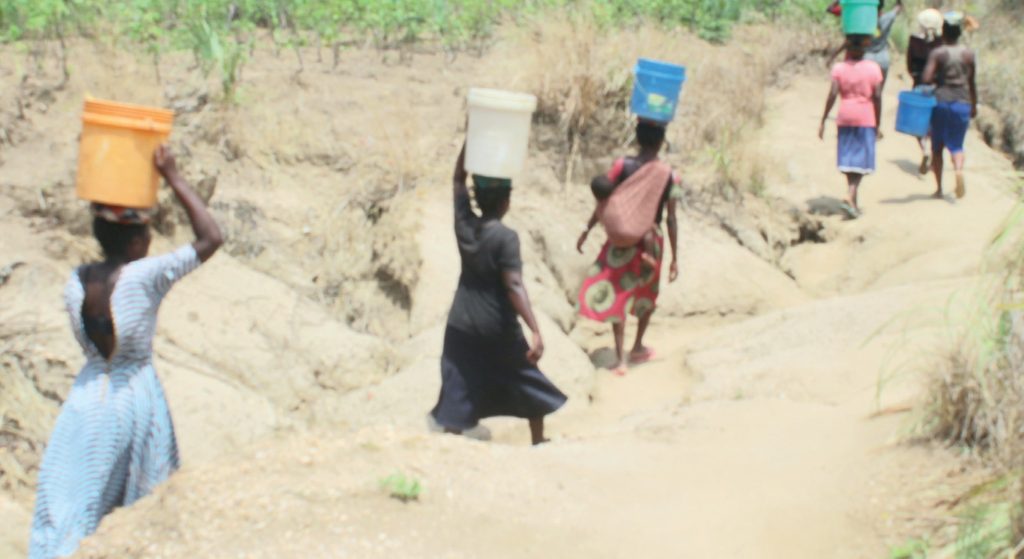
They say health authorities’ response is slow and scanty as unprotected sex flourishes with increased mining activities and an influx of migrant gold miners, merchants and go-betweens.
The gold pans of Tilora and Chisese hills are teaming with people of different ages, nationalities and cultural backgrounds.
The sites have no condom stocks to protect sexually active persons from unwanted pregnancies and STIs.
Some are temporarily migrating to newly-discovered gold fields of Mpata and Nyungwe in the district, but hundreds of men, women, girls and boys keep moving and sifting rocky soil in search of gold and quick riches.
Tilora-Chisese gold mining vice-chairperson Frank Chisale says people from all regions in Malawi and neighbouring Tanzania and Zambia scramble for alluvial gold in the area.
“Where people of different sex interact, a sex web can’t be ruled out. Sadly, we hardly get essential sexual and reproductive health (SRH) services, including condoms and preventive messages,” he says.
Chisale says sex workers have poured into mining sites targeting sex-starved migrant workers and fast cash.
“Health authorities should urgently intervene. We need condoms and information to save the lives of locals and migrants,” he says.
Local residents say schoolgirls, particularly in self-boarding, are trapped in intergenerational sex deals that fuel dropout rates, teen pregnancies, child marriages and STIs.
“Girls from Tilora Community Day Secondary School [CDSS] fall prey to gold miners and merchants in exchange for money. Sex-for-money poses a serious threat to vulnerable girls’ futures and health,” says a concerned mother, who moves soil and draws water for gold panning.
Tilora CDSS headteacher Edward Sambamo says the mining workforce rent huts too close to girls’ informal hostels.
He states: “The migrant miners interact and entice helpless girls with money and other gifts.
“Besides, the dust and chemicals from the mining sites pollute air, land and rivers in our vicinity.”
Female Sex Workers Association (FSWA) Karonga district chairperson Mable Mhango says Tilora, Chilumba Jetty and Uliwa have attracted sex workers from all the country’s 28 districts and neighbouring countries since the discovery of gold deposits two years ago.
She narrates: “Some of the sex workers and their clients have STIs, including HIV. Who knows how many people ae getting infected daily?
“Access to condoms and lubricants can save lives, but healthcare centres only provide 11 to 15 condoms for each female sex worker.”
Mhango says FSWA has registered 134 sex workers—excluding “uncountable street rangers who do not care about the risk of STIs”.
Some sex workers say one can exhaust all the free condoms on a good day—with a few going to those who cannot find any when it matters.
“The risk of unprotected sex and HIV infection is inescapable,” said one.
Chilumba Rural Hospital in-charge MacSpecial Chimbalu said the facility treats 60 to 90 STI cases daily.
He said: “I wouldn’t say that all these clients come from the mining sites. We don’t record such details. We also have fishing hotspots in beach villages.
“The rural hospital distributes condoms via youth clubs, but the choice to use them is entirely the recipient’s.”
Nyungwe Health Centre senior health surveillance assistant Charles Kayuni said the facility handles between 50 and 60 STI patients, mainly due to fishing activities along the shoreline.
The lakeshore hotspots include Ngara, Nomba, Vuwa, Phapha, Thangalang’ombe and Chisese. Coincidently, that’s where gold mining activities also occurs.
“We distribute condoms based on demand and supply, but we cannot force anyone to use them,” he says.
Pamoza Tingakwaniska Youth Organisation supports Nyungwe Health Centre in sharing SRH services and information in hotspots.
Pamoza programmes manager Gomezgani Mhango says STIs are spiking in mining sites.
“Our Fiska Ulato project has scaled up weekly outreach visits where our nurses assist healthcare staff to reduce their workload and reach more clients,” she says.