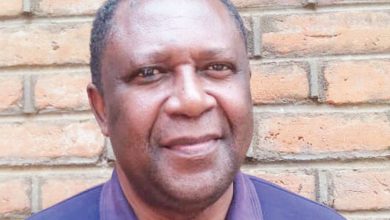
Chief Secretary to the Government Justin Saidi yesterday said the Peter Mutharika administration has cut the number of principal secretaries (PSs) “from over 80 to 38”.
The country’s top civil servant, speaking at an orientation meeting in Lilongwe attended by 32 PSs as six sent apologies, said the reduction aligns senior positions with actual functional needs instead of just inflating the payroll.

The move aims to streamline the civil service, instil discipline and boost performance, according to Saidi.
Additionally, The Nation’s rough calculations show that thanks to lower numbers of PSs, government will also save close to K2.2 billion in salaries and fuel allocations annually.
With two senior PSs yesterday corroborating that the lowest paid PS gets K1.7 million per month in basic pay translating to K20.4 million annually and around K775 million for all the 38, government will save about K857 million from roughly K1.632 billion that was splashed on the 80-plus strong contingent.
Capital Hill is also saving on fuel entitlements. A PS is entitled to 500 litres a month, translating to 6 000 litres a year, which meant the 80 PSs would be guzzling 480 000 litres a year.
At current prices averaging K4, 955 per litre, that comes to nearly K2.48 million per month and roughly K29.73 million per PS annually. For all the 80 officers, that cost would be K2.378 billion annually.
At the same allocation of 500 litres per month, the 38 PSs would need 228 000 litres or K1.13 billion a year, saving the country around K1.3 billion.
And if government were to buy a Toyota Prado TX for each PS as per entitlement at K425 million based on current prices, 80 PSs would cost K34 billion against K16.15 billion that the 38 PSs would spend.
The current administration has stated that it froze the buying of new vehicles as part of austerity measures.
“Previously, some positions were not established. They were created simply to increase the number of PSs. We reviewed the roles and the establishment, and that is why we now have 38 instead of over 80. It is about aligning positions with need,” said Saidi.
He stressed that effective administration requires technically competent officers in relevant portfolios.
“We need people who understand administration, finance and specialised areas such as ICT. To run government, you need people able to do the rightful work,” said Saidi.
In an interview yesterday, Office of the President and Cabinet spokesperson Focus Maganga said some PSs were on secondment from public universities and have since returned to their institutions while others had retired and some held “fake contracts” and were relieved of their duties.
During the meeting, Saidi also warned against a culture of shifting underperforming staff between ministries instead of disciplining them.
“If someone is causing trouble, the controlling officer must address it. Moving them only brings the problem elsewhere,” he said.
The reduction in the number of PSs follows previous attempts to rationalise the civil service during President Peter Mutharika’s first term between 2014 and 2020. During that time, Mutharika cut the number of these top officers from 96 to 35 following reforms. But the Lazarus Chakwera administration went on a hiring spree of PSs, pushing the number to more than 80.
One of the PSs who attended the orientation, Secretary to the Treasury Cliff Chiunda, said the reform comes amid efforts to stabilise an economy inherited in crisis, with high inflation, forex shortages, and an unsustainable wage bill. The government wage bill stands at 90 percent of domestic revenue and more than 21 percent of total expenditure, according to official figures.
“Austerity measures, including curbs on high-value procurement and foreign travel, are already yielding positive results,” he said.
Meanwhile, governance stakeholders have since welcomed the reform as timely.
Political analyst George Chaima said the move signals a government intent on asserting administrative control and aligning the civil service with its development agenda.
“A government operates under a policy aligned with leadership vision. Discipline and performance improve when the civil service delivers results and withstands scrutiny,” he said.
National Advocacy Platform (NAP) chairperson Benedicto Kondowe described the move as bold, noting that a leaner leadership structure can sharpen mandates, accelerate decision-making, and reduce administrative costs at a time of tight fiscal space.
But Kondowe cautioned that success depends on transparent, merit-based implementation.
“Reducing numbers is not an end in itself. What matters is whether this reform produces a competent, accountable and service-oriented public administration,” he said, urging government to communicate criteria clearly and respect the rights of affected officers.