Government’s efforts to enhance its gold reserves are facing challenges, with the Reserve Bank of Malawi (RBM) attributing the problem to smuggling and lack of transparency.
But mining experts countered RBM’s attribution of its unmet targets to smuggling, arguing that everything considered, the informal markets were more competitive than the prices at which the central bank, through its subsidiary, the Export Development Fund, buys the gold.
RBM spokesperson Boston Maliketi Banda said, in an interview on Tuesday, that gold smuggling has impeded the country’s ability to meet its targeted purchase of 1.5 metric tonnes of gold in the past five years, with only 545 kilogrammes acquired since 2021.
Despite the shortfall, Banda noted that the current semi-processed gold, which is at 96 percent purity, continues to attract buyers.
He also revealed that RBM aims to purchase over 200 kilogrammes of gold this year to bolster national reserves and formalize the mining sector.
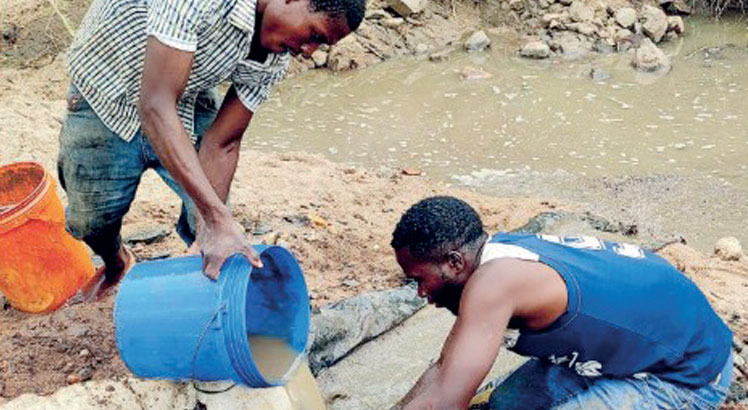
But mining experts also argue that systemic issues, particularly transparency within the artisanal and small-scale mining (ASM) sector, are key obstacles preventing Malawi from reaching its gold targets and if not looked into, the RBM target will remain a far-fetched dream.
Mining specialist Ignatius Kamwanje pointed out that controlling the ASM gold market is a complex challenge, and the government cannot force miners to sell their gold exclusively to the Export Development Fund (EDF) if the informal market is more competitive.
“In a liberalised market, everyone sells at their own point of sale,” he said.
Kamwanje questioned the RBM’s assertion that smuggling is solely responsible for missing targets, arguing that the informal is market’s is more competitiveness.
He further noted that most gold smuggled out of Malawi is sourced from a few ASM operators connected to the black market, with a high volume of foreign buyers making smuggling easier.
Kamwanje also criticised the one-year ban on unprocessed mineral exports, which he said has inadvertently facilitated smuggling and depriving the country of vital foreign exchange earnings in the process.
To address these issues, he recommended that the government should set fair buying prices, conduct mapping of smuggling hotspots, designate specific mining areas and encourage artisanal miners to form cooperatives.
Kamwanje observed that the RBM’s practice of purchasing gold from illegal sources exacerbates the problem and called for more robust government intervention.
He further suggested that pegging gold prices at reasonable levels, streamlining licensing processes, opening up markets at mining sites and sensitising miners on regulations and safety standards could help stabilise the sector, promote local participation and benefit the country’s economy.
Supporting this view, another mining expert, Paul Mvula, said lack of transparency within the sector has prevented Malawi from reaching its gold targets.
He warned that if these issues remain unaddressed, RBM’s ambitions will remain elusive.
Other commentators argue that while RBM offers competitive prices to attract artisanal miners, the informal market remains attractive due to, for instance, immediate cash payments and, in some cases, evasion of regulatory, environmental or tax oversight.
The Malawi Mining and Regulatory Authority (MMRA) said it is aware of illegal mining activities across the country and recognises the revenue losses associated with smuggling.
MMRA public relations officer Tiyanjane Nandie Mambucha, confirmed that the authority is reviewing policies and operational frameworks to maximise benefits from mineral resources.
“In response to these challenges, MMRA has intensified stakeholder engagement, including district officials, traditional leaders, security agencies and local government to collaboratively identify and implement sustainable solutions to curb illegal mining,’’ he said.
He also said the authority has also stepped up public awareness campaigns to educate communities on legal frameworks, the dangers of illegal mining and the importance of compliance.
Mambucha reaffirmed the government’s commitment to strengthening enforcement mechanisms and working with all relevant parties to promote safe, legal and environmentally responsible mining practices.
While the country’s gold sector holds promise, addressing systemic opacity, smuggling and regulatory gaps remains critical to achieving the country’s gold reserve targets and harnessing its mineral wealth for socio-economic development.