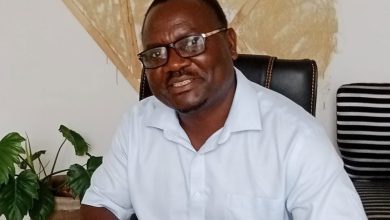
Many people around the world live beyond the reach of justice systems; exposed to violence with limited protection and little hope of accountability. While laws do exist, enforcement often falls short. Our News Analyst WYCLIFFE NJIRAGOMA engaged International Justice Mission (IJM) Chief Programme Officer for Africa and Europe, Simon Manning, to unpack how the organisation works and what its proposed entry into Malawi could signal for strengthening access to justice. Excerpt:

Q: What is IJM and how would you explain its objectives to audiences encountering it for the first time?
A: IJM is an international NGO headquartered in the US. Our core mission is to make justice accessible for vulnerable communities, especially those affected by violence. Globally, more than a billion people live without meaningful access to justice. That means if they suffer a crime, there is often no effective system to protect them or hold perpetrators accountable.
Q: Why does that justice gap persist at such scale, even in countries where laws clearly exist?
A: In many cases, the issue is not the absence of laws, but the inaccessibility of the system. Justice institutions may exist, but for vulnerable populations they are often out of reach. Limited capacity, inefficiencies and lack of trust all play a role. If people do not believe the system will protect them or deliver outcomes, they are less likely to engage with it.
Q: As you assess Malawi’s performance, how would you define an effective justice system and where are the likely pressure points?
A: An effective justice system is one that protects all citizens and responds reliably when crimes occur. No system is perfect, but the critical issue is whether vulnerable people can actually access protection and redress. In Malawi, from what we are learning, the legal framework is relatively strong. The pressure points are more likely around enforcement, consistency and access.
Q: Which categories of crime are shaping your early focus as you explore potential work in Malawi?
A: We are particularly interested in violence against women and children, especially sexual and gender-based violence. These are high-prevalence crimes that disproportionately affect vulnerable populations. The laws exist to address them, but if enforcement is weak, perpetrators can act with impunity, which increases incidence.
Q: You are currently in an exploratory phase. What have your engagements with government and other actors revealed so far?
A: We have seen a high level of openness and willingness to collaborate. We have engaged with the ministers of Justice, Health as well as Gender, alongside police, prosecutors and community actors. There is a clear recognition of the challenges within the system, but also a shared ambition to strengthen it. We have also listened to survivors and their perspectives are essential in shaping any future approach.
Q: If IJM proceeds, how would it position itself within Malawi’s justice system without appearing to taking over state functions?
A: Our role would be supportive and collaborative. IJM does not replace justice institutions. Instead, we work alongside them, bringing technical expertise to strengthen different parts of the system, from investigations to prosecution and adjudication, while also supporting survivors through the justice process. The goal is to enable the system to function more effectively, not to substitute it.
Q: Based on your experience elsewhere, what specific interventions are you likely to prioritise if operations begin?
A: One key area is capacity development, particularly around trauma-informed approaches. Handling cases of sexual and gender-based violence requires not just technical skills but also the ability to engage survivors in a sensitive and effective way. We would also look at improving coordination across the justice chain and supporting approaches that make the system more accessible and responsive.
Q: Malawi already has laws addressing these crimes. Why not focus immediately on legal reform, and how would you tackle barriers like survivors or families withdrawing cases?
A: Our starting point is that Malawi’s legal framework is largely in place. The immediate issue is enforcement and system performance. Case withdrawals are a significant barrier, often driven by economic pressures, stigma or lack of confidence in outcomes. Addressing this requires stronger support systems for survivors, a faster and more responsive process and visible examples of justice being delivered. As confidence builds, engagement with the system tends to improve.