The United Nations (UN) says worsening global disruptions are tightening access to development finance and threatening to reverse decades of progress, especially for the poorest and most vulnerable countries such as Malawi.
In a statement following the publication of the 2026 Financing for Sustainable Development Report, the UN said an increasing number of developing countries are confronting large unmet Sustainable Development Goals (SDG) spending needs amid an overall financing squeeze.
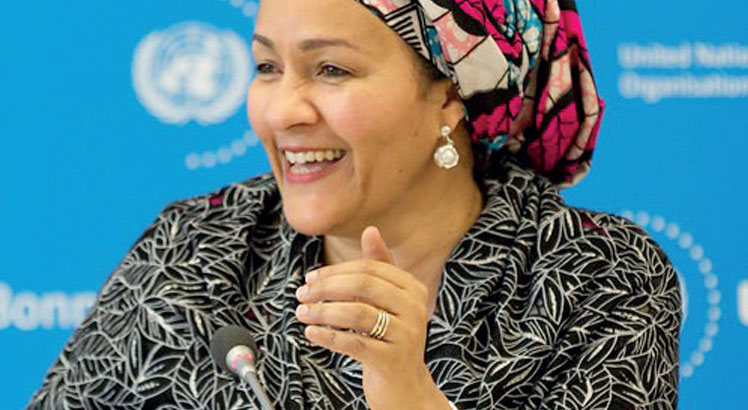
working together. | Courtesy of UN
The UN said that in many areas, progress has not only stalled, but is reversing due to weakened global collaboration, rising trade barriers, increased geopolitical tensions, repeated climate-related shocks and an alarming assault on multilateralism in the face of falling aid, rising costs from environmental degradation and climate impacts, high costs of capital and high debt service.
In the statement, UN Deputy Secretary-General Amina Mohammed is quoted as having said: “Global development requires working together for common goals to avoid reversing the gains of what has been painstakingly built.”
She said implementing the Sevilla Commitment is the best way to demonstrate the global community’s enduring commitment to cooperation and unlock finance needed to keep the promise of SDGs.
The Sevilla Commitment, adopted at the July 2025 Fourth International Conference on Financing for Development in Spain, is a global agreement that seeks to reform the international financial architecture, address debt crises and close the $4 trillion annual SDG financing gap in developing countries.
From 2015 to date, progress across the 17 SDGs has been uneven and fragile, with some goals showing momentum while others stagnate or even regress.
The 2023 SDG Acceleration Report supported by United Nations Development Programme and the annual progress report for Malawi 2063 (MW2063) First 10-Year Implementaiton Plan (MIP-1) identifies goals number two, three, six and 14 as registering substantial progress while goals number five, seven, eight, nine, 13 and 17 are at moderate levels.
However, Malawi continues to lag in SDGs one, 10 and 15, which shows little or no progress and faces persistent data gaps for SDGs 11, 12 and 16, making monitoring difficult.
The purpose of the SDGs, which have a deadline of 2030, was to provide a universal call to action to end poverty, protect the planet and ensure that all people enjoy peace and prosperity by 2030.
Malawi began to domesticate the SDGs through the Malawi Growth and Development Strategy III and later in MW2063, the country’s long-term development plan, currently being implemented under MIP-1.
In an interview on Monday, Economics Association of Malawi president Bertha Bangara-Chikadza observed that there are serious spillovers between failing to attain goals under SDGs and MIP-1.
“When SDGs are off-track, the MIP-1 dashboard, which continues to track progress while showing the reality on the ground, also reveals the reality of the country’s development,” she said.
National Planning Commission director general Frederick Changaya, whose organisation coordinates the implementation of the plan, conceded that Malawi has significant headwinds due to funding constraints and shocks.