The Public Accounts Committee (PAC) inquiry into the K128 billion Amaryllis Hotel pensions fund scandal has ground to a complete halt amid severe legal gridlocks.
The first hurdle is that the Director of Public Prosecutions (DPP) has refused to halt the criminal case against former Secretary to the President and Cabinet Colleen Zamba. Consequently, Zamba declined her parliamentary summons.
Her defence counsel George Kadzipatike argued that his client cannot legally defend herself in two distinct forums simultaneously for the same matter.
Weighing in on the matter, governance commentator Moses Mkandawire dismissed Zamba’s claim that she cannot face two tribunals simultaneously, labelling it “non-credible”.
He argued that parliamentary inquiries and criminal proceedings are entirely separate, noting that courts establish criminal liability while legislature evaluates administrative and political accountability.

Mkandawire suggested that Zamba’s argument is merely a stalling tactic.
Regarding the seller’s non-cooperation, Mkandawire emphasised that Malawi lacks robust legal mechanisms and must adopt South African legislative models.
The Ministry of Justice and Constitutional Affairs confirmed the DPP will not pause judicial proceedings for a legislative probe.
Justice spokesperson Frank Namangale said the DPP will not pause the ongoing criminal prosecutions to facilitate parliamentary inquiries.
Furthermore, Namangale revealed that PAC has not officially petitioned the DPP for a stay of proceedings, leaving the high-stakes financial investigation at a standstill.
When asked if the DPP should cooperate with Parliament, Namangale said the office of the DPP is independent.
However, this legal battle is just one of four hurdles PAC must navigate to deliver a comprehensive inquiry report.
Parliament explicitly ruled that the final report must include responses from Zamba. Beyond that, PAC faces two major obstacles—securing testimonies from National Bank of Malawi plc, which handled a K90 billion pension fund payment, and the hotel seller, Yusuf Investments Limited (YIL).
Tensions peaked on April 29 2026 when YIL chairman Shiraz Yusuf appeared before PAC but demanded a closed-door hearing without media presence. The committee rejected his request. Yusuf walked out, prompting PAC to threaten him with contempt of Parliament charges. Despite the resolution, the committee has yet to take any formal action against him.
PAC requested National Bank of Malawi to disclose details regarding a K90 billion deposit. The bank refused, citing banking secrecy and Section 8 of the Data Protection Act, which bars disclosure of customer data without explicit consent.
National Bank’s head of Legal, Zunzo Mitole told PAC, when a team from the bank appeared before the committee, that the bank could not release customer information to third parties.
Parliament itself also stalled PAC’s progress when its plenary rejected the committee’s initial report, saying it is incomplete as it lacked statements from Zamba and YIL.
First Deputy Speaker Victor Musowa subsequently ordered PAC to expand its inquiry to include both testimonies.
Private practice lawyer John-Gift Mwakhwawa explained in a WhatsApp response on Thursday that the law strictly binds PAC’s hands regarding private entities.
“PAC’s mandate is constrained to public institutions and public officers,” said Mwakhwawa.
“PAC has no power to summon private citizens, natural or corporate, unless they voluntarily wish to attend.”
Mwakhwawa further said the private entities cannot release records without a court order, which requires an active criminal investigation or charge.
Commenting on the way forward on the inquiry, Centre for Social Accountability and Transparency executive director Willy Kambwandira said the inquiry faces a severe credibility crisis rather than outright failure.
He observed that Malawian legislative probes historically act as ceremonial exercises, yielding few results, pointing to PAC’s withdrawing of its initial report following the Speaker’s intervention as an example.
Kambwandira warned that failing to compel witness cooperation establishes a dangerous precedent, allowing politically-connected figures to evade summons with impunity and eroding public trust in legislative oversight.
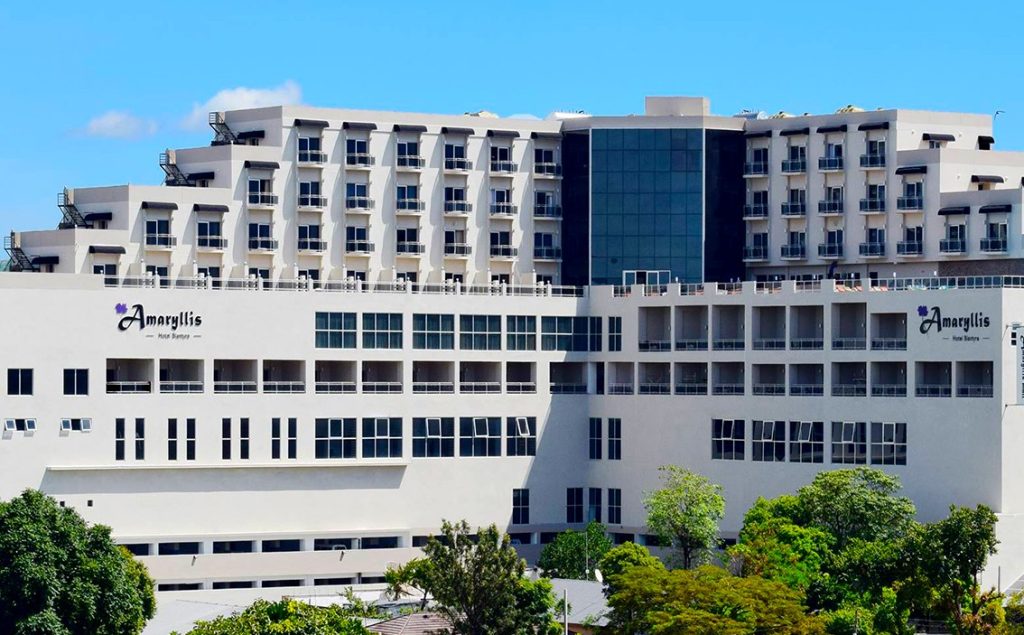
The controversy centres on the Public Service Pension Trust Fund (PSPTF), which manages pension savings for the over 100 000 civil servants. The fund agreed to purchase Amaryllis Hotel for K128.7 billion despite that prior valuations priced the property at between K30 billion and K47 billion.
The fund paid K90 billion upfront but later withdrew from the deal due to ownership disputes flagged by its lawyers.
PAC launched a public inquiry in March 2026. Since then, the Reserve Bank of Malawi traced K72.6 billion tied to the transaction across four commercial banks and froze the accounts.
Although the central bank ordered the PSPTF board to halt the deal, board chairperson Chizaso Nyirongo defended the decision to proceed.
Additionally, the Anti-Corruption Bureau revealed that K5.5 billion in cash was withdrawn from the Yusuf Investments account at National Bank between January 27 and March 6 2026.
PAC chairperson Steven Malondera previously confirmed receiving a medical note from Zamba, which remained unverified but he did not respond to our mid-week inquiries.
Under the National Assembly (Powers and Privileges) Act, PAC can refer non-compliant witnesses to the Director of Public Prosecutions (DPP) for contempt charges, which carry fines and prison sentences.