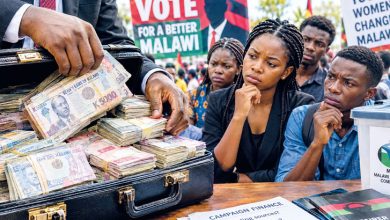
The United Nations (UN) says developing countries, including Malawi are facing mounting challenges to access affordable external financing amid rising borrowing costs and shrinking capital flows.
An analysis on the external flows of financial capital to developing countries and their costs by the UN Conference on Trade and Development shows that external finance remains too costly, volatile and limited, leaving poorer nations struggling to fund growth and achieve the Sustainable Development Goals (SDG).
Although developing countries attracted nearly $1.5 trillion in external inflows in 2024, the amount remains far below what is required to close an estimated $4.3 trillion annual financing gap.
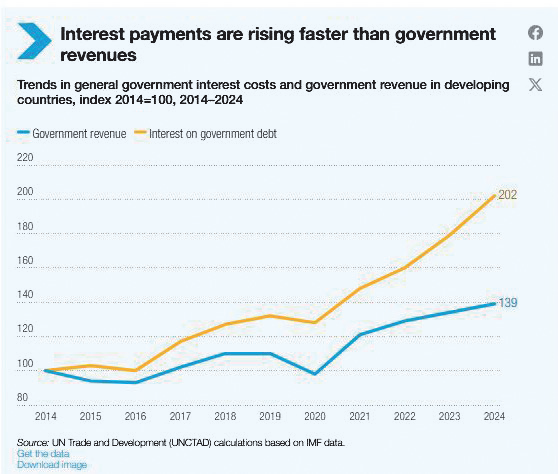
This is because the global financial conditions and structural weaknesses in the international financial system continue to push up the cost of capital for developing economies as interest rates on multilateral, bilateral and private-sector loans have all increased sharply in recent years.
Between 2015 and 2024, multilateral loan rates have more than doubled from 1.9 percent to 4.3 percent, bilateral loan rates have reached a decade high 3.3 percent from 2.2 percent while private creditor loan rates surging from 3.4 percent to six percent in 2024.
Reads the UN analysis in part: “The ability of developing countries to mobilize affordable financial flows in sufficient quantity to support development goals remains a key problem at the heart of development finance.”
According to UK-based charity Debt Justice, across 56 lower-income countries, including Malawi, the average debt payments hit 19.8 percent of government revenue in 2025, an increase of 220 percent since 2010.
Malawi’s public debt has reached levels that should concern every patriotic citizen. When public debt approaches levels of over 90 percent of gross domestic product, we must all recognize that this is not sustainable.
Mzuzu University economics lecturer Christopher Mbukwa said the country’s debt trajectory reflects structural weaknesses in fiscal planning, observing that government is relying too heavily on domestic markets to plug deficits.
National Planning Commission director general Frederick Changaya, whose organisation coordinates the implementation of Malawi 2063, the country’s long-term development plan, conceded that Malawi has significant headwinds due to funding constraints and shocks.
Minister of Finance, Economic Planning and Decentralisation Joseph Mwanamvekha also conceded that debt levels had risen to levels consuming more than half of domestic revenues.
In May this year, the African Development Bank (AfDB) said Malawi’s access to development financing is tightening, forcing the country to rely solely on grants amid deteriorating macroeconomic conditions and rising debt distress.
The AfDB assessment on operational performance in Malawi shows that over the past African Development Fund cycles, Malawi has transitioned from a blend country eligible for both loans and grants to an ADF grant-only country due to deteriorating macroeconomic and debt sustainability indicators.