You may have heard about Duwana Muhammad, the 16-year-old girl who sat this year’s Primary School Leaving Certificate of Education (PSLCE) examination at Mangale Primary School in Mangochi District.
As she wrote the examinations alongside seven boys, the desks once occupied by her fellow girls lay empty.
“I felt lonely as girls quit one by one due to early pregnancies and marriages or lack of examination fees,” says the girl who defied the odds. “I was terrified to sit in a room filled with boys.”
The resilient girl has earned praises from Minister of Education, Science and Technology Bright Msaka and a scholarship from Maranatha Girls Academy.
“I stayed behind to finish what my female classmates left. Every girl must learn until her dreams come true. When I see my female teachers, I know nothing is impossible for girls if we stay in school,” she says.
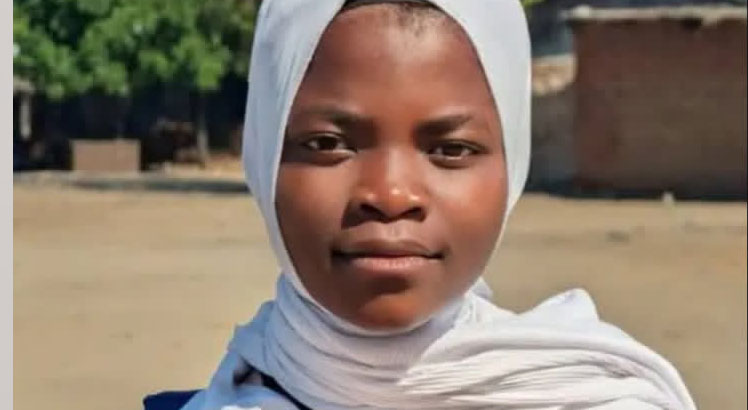
She is the third born in a family of seven children, who study under a paraffin lamp.
PSLCE caps at least eight years of balancing schoolwork with household chores and rebuffing illicit marriage proposals.
Twin challenges
Mangale Primary School headteacher Boniface Gomiwa says 27 Standard Eight girls quit before the national examinations that filter students to secondary school.
“Many girls fall on their way due to early marriages, long distances to school and poverty,” he says, saluting the “determined Duwana”.
Duwana’s story sparked social media debate over national efforts to keep girls in school.
Maranatha Academy managing director Ernest Kaonga praised her for “shattering a year-long cycle of regional dropouts”.
“We cannot stand by and watch a spark of such brilliant leadership go dim. When you educate a girl child, you uplift an entire lineage,” he said.
Last week, Msaka visited Duwana’s school, where only eight Standard Eight pupils sat PSLCE this month.
He said government is developing school infrastructure to ensure every child gets quality basic education and no one drops out due to poverty.
“Figures show that over 50 percent of children in the area are not going to school. As a ministry, we will ensure every child has access to education without exception,” said the minister.
Mangale Primary School enrols about 1 000 learners, but numbers shrink in upper classes.
This year’s enrollment dropped from 378 children in Standard One to 197 in Standard Three and 31 in Standard Seven.
Regional trend
The dwindling numbers mirrors a regional problem in the Eastern Region, where 376 130 pupils enrolled in primary school in 2025, but six percent (about 23 000) drop out.
The brain drain includes 11 508 boys and 11 494 girls.
The six percent dropout rates for both sexes represents a reduction from 10 percent for boys and nine percent for girls in 2024, according to Mangochi District Education Office.
The figures outstrip the national average, 4.3 percent, reported by the Ministry of Education in 2024. This represents 227 102 dropouts— 112 311 boys and 114 791 girls.
Malawi Government targets to reduce dropout from 13.35 percent to eight percent by 2030, but dropout rates remain high in Mangochi, Chiradzulu, Lilongwe, Rumphi North and Karonga due to poverty, risky sexual activity and harmful cultural practices.
“Whenever families face financial burdens, many choose to educate a boy child at the expense of the girl child. This is bad,” says Traditional Authority Chowe of Mangochi.
Mangochi Nkungulu member of Parliament Aisha Adams (United Democratic Front) grew up crossing rivers before sunrise to get to class.
She says: “As a woman born and raised here, I know what long walks to school mean.
“Unlike boys, girls are given household chores after school, which demotivates them.’’
Closing the gap
To close the gaps, Mangochi District Council invests Constituency Development Fund, District Development Fund and Governance to Enable Service Delivery (Gesd), to build school blocks, girls’ hostels, laboratories, libraries and teachers’ houses in constrained primary and secondary schools.
Each classroom houses up to 151 learners, up from 147 two years ago. Some teachers serve 85 learners, surpassing the required minimum of 60.
As Duwana awaits her PSLCE results with a scholarship in hand, over 250 000 of her peers who sat the national examinations this month count on free secondary education.