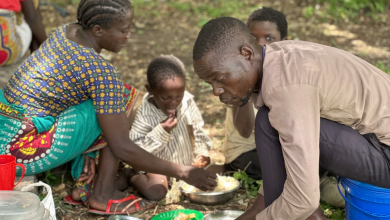
The images emerging from South Africa are painful to watch. Thousands of Malawians crowded into temporary deportation centres, families sleeping in the open, frustrated migrants clashing with police, women giving birth in makeshift camps and busloads of our compatriots making the long journey back home under the shadow of deportation.
For many, the instinctive response will be to blame those who crossed into South Africa illegally. Others will focus on immigration laws and the fact that those being deported will not be allowed back into South Africa for the next five years.
But while legality is one issue, there is a bigger and more uncomfortable question that Malawi must confront.
Why were thousands of our citizens willing to leave their homes, families and communities in the first place?
The answer is simple. Most Malawians trekking to South Africa are not leaving because they hate Malawi. They are leaving because circumstances have convinced them that survival is becoming increasingly difficult at home.
The decision to leave one’s family behind in pursuit of an uncertain future in a foreign country is never easy. It is often a desperate choice made when every other option appears exhausted.
What is particularly striking is that most Malawians who risk everything to reach South Africa are not seeking executive positions, government jobs or high-paying corporate careers. Many end up doing menial work in farms, factories, construction sites, restaurants and informal businesses.
These are jobs that could easily be created here if Malawi’s economy were functioning as it should.
Malawi may not possess South Africa’s industrial base or financial muscle, but it is by no means a poor country in terms of potential. We have fertile land, abundant water resources, a youthful population and a strategic geographic position. What has been lacking is the discipline and commitment required to transform these advantages into meaningful economic opportunities.
The first step must be to deal decisively with corruption.
Corruption continues to drain resources that could otherwise support industrialisation, infrastructure development and job creation. Every kwacha lost through theft, inflated contracts and abuse of public resources is a kwacha stolen from a young Malawian who is desperate for employment.
Government must also implement austerity measures not merely in speeches but in practice. Citizens are making sacrifices every day through rising prices, stagnant incomes and declining purchasing power. They expect the same seriousness from those entrusted with public resources.
At the same time, Malawi needs a deliberate strategy to build productive industries that create jobs at scale. Manufacturing, agro-processing, mining and value addition cannot remain campaign slogans. They must become national priorities backed by investment, policy consistency and accountability.
The South Africa deportations also expose another urgent challenge: what happens when thousands of returnees arrive home?
The country cannot simply receive them and hope for the best.
Idle young people who return to communities already struggling with unemployment may become vulnerable to crime and other social problems. This is not a criticism of the returnees. It is simply recognition of the economic pressures many will face.
Government must move quickly to create pathways for reintegration. Interventions such as small-scale enterprise development, vocational skills programmes, cooperatives and community projects that absorb returning migrants into productive economic activity can restore hope. They can help people believe that their future does not lie hundreds of kilometres away in a foreign country but within Malawi’s borders.
More importantly, government must begin delivering tangible improvements in the daily lives of ordinary citizens. People want an environment where businesses can grow, jobs can be found, and basic services can be accessed without paying a bribe.
The deportations from South Africa should, therefore, not be viewed merely as an immigration issue, but as a loud warning bell for Malawi’s political leadership. Indeed, the ambitious promises that dominate political campaigns must now translate into visible benefits for the common person.
The determination demonstrated by those who travelled to South Africa should not be underestimated. The journey itself requires courage, resilience and extraordinary sacrifice. Such energy should be powering Malawi’s economy rather than being exported elsewhere.
The danger is that if growing frustration and economic hardship continue unchecked, public discontent may eventually reach a breaking point. History offers many examples of what can happen when citizens lose faith in the ability of institutions to respond to their struggles.
From where I stand, the deportations from South Africa are more than a humanitarian story. They are a mirror reflecting Malawi’s economic failures and untapped potential.
Government must act, and act with speed.