To leave her Chibwana Village in Traditional Authority (T/A) Chikumbu, Mulanje for South Africa in January this year, 22-year-old Tadala Chiphaka had a dream to build a house and make life better for her parents.
All was rosy for her from January 10 when she arrived in Nigel, a town in the Gauteng Province, southeast of Johannesburg, where she was doing menial jobs, earning R100 (about K10 000) a day.
The single woman was working for 10 days in a month.
However, the dreams are shattered as the xenophobic attacks have forced her to seek refuge at the Malawi Consulate in Sandton from where she granted us an interview on Thursday.
“The situation is bad. I don’t know where any of my friends are. It was every man for himself when we escaped. We could only travel by night and I spent four cold nights before getting to the camp.
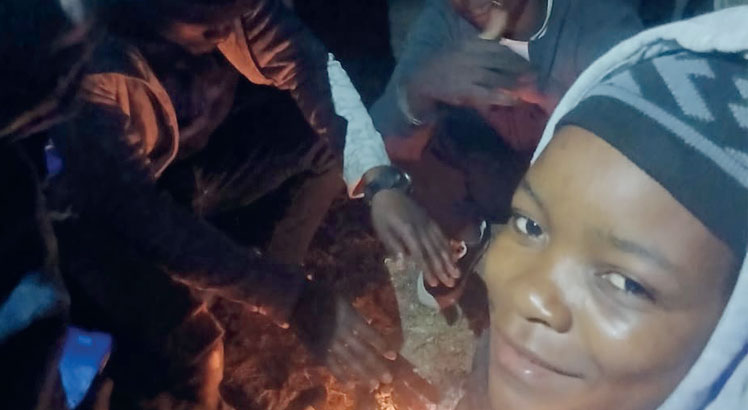
“I look forward to getting back to Malawi, although I have not finished paying back the K200 000 usury I borrowed to travel to South Africa,” she said.
A Machinjiri resident (name withheld) was stuck in a shack along the Gita Road in Lotusville, Pietermaritzburg, figuring out how to get to the consulate, 500 kilometres away.
“The situation is dire. Men with machetes and rods are hounding us from door to door. I am worried about my uncle who stays in an area called France. His phone can’t be reached. We can hear gunshots outside,” he said.
Back at the consulate, Grivin Theu from Thyolo District is lucky they have had some bread and tea. To keep warm, he sits by a bonfire with Chiphaka.
“They are killing us like dogs. We are lucky to have escaped. We are queuing up to board the foreign affairs vans we normally run away from, being illegal immigrants. I would rather be taken to Lindella and return home,” he said.
Theu observed that not all South Africans are inflicting pain on foreigners.
Some, such as Mukoni Ratshitanga, advisor to that country’s deputy president Paul Mashatile, on Thursday night, served tea and donated warm clothes at the Malawi Consulate in his personal capacity.
When we start the interview by thanking him for what he is doing, he cuts us short.
“Thanking me for what? These are not foreigners. They are my fellow Africans. What I am doing is nothing, really,” said Ratshitanga, who previously served as a spokesperson for the then South African president Thabo Mbeki.
A journalist by profession, he said he discovered the Malawians’ plight by chance on Wednesday as he was driving past the consulate, along the 4 Dodge Street.
“I just saw a lot of people inside and outside the compound. When I came around this morning, I found there was no tent. I sourced one. There are a number of pregnant women, so I sourced some clothes for the unborn babies. The Muslim Council is doing a lot to feed the people,” he said.
Ratshitanga’s gesture personifies his thought, if his 2019 article in The Citizen is anything to go by.
He wrote that without addressing the economic and political push factors that account for internal and external migration at a national, regional and continental level, South Africa would not stem the tide of migration into the urban areas and a relatively better-off – in real and notional terms in South Africa.
“Hardly anything is said about skilled professionals such as medical doctors [who are working in South Africa]. What then should happen to nationals of countries whose scarce skills are being put to use to serve and develop SA and other countries?” he wondered.
As vigilante groups such as Dudula and March on March continue attacks on foreigners, Department of Disaster Management Affairs (DoDMA) commissioner Wilson Moleni on Friday said government has repatriated 21 000 citizens from South Africa, surpassing the 15 000 earlier anticipated.