A dusty wooden table placed at the entrance of Blantyre Flea Market captures the attention of passersby.
On it are plastic bottles filled with water mixed with herbs that have turned it yellow. On the same table are powdered mixtures. Papers labeling them are placed underneath.
The contents are tseketseke, mvunguti and gondolosi, locally produced sexual enhancing herbs and mixtures being accessed by both men and women, which have become the frontline of modern intimacy.
While others prefer to purchase them from retail pharmacies where they are classified as prescription pnly medicines (POMs) by the Pharmacy and Medicines Regulatory Authority (PMRA), others prefer to purchase them from the streets due to their easy accessibility.
In separate interviews during the week, users gave different reasons for using the sexual enhancing herbs and mixtures, especially those locally made.
For a 37-year-old user who preferred not to be mentioned, the herbs have saved his family.
“My nine-year marriage was on the verge of collapsing. I was getting weak in the bedroom,” he said. “I was frustrated and my wife was unhappy.”
The user, who married at 28, said he learnt about the sexual enhancing herbs and mixtures when he confided in a work colleague amid frustrations about his bedroom performance.
When he used it at first, he noticed his performance changed; hence, his wife became satisfied. He made subsequent purchases and has been using them from age 34.
“My wife knows and she is fine with it,” he said.
On the flipside, a woman user had a similar account.
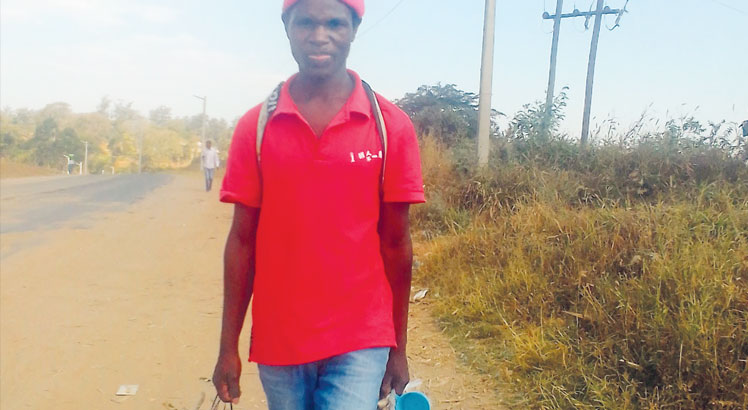
I Francis Chamasowa
“I feared my husband would be getting sex elsewhere when he openly expressed dissatisfaction with our bedroom life,” she said. “So I started using the powdered mixtures.”
The woman, 32, who got married at 27, said usage of the mixtures does not depend on class, claiming most of her working class colleagues also use it.
A research article titled Herbal Aphrodisiac Use Among Male Adolescents and Teenagers in Rural Area of Blantyre District in 2015 found that many herbal therapies show some potential benefits in improving men’s sexual function.
But the article, authored by Fanuel Lampiao, Stanford Miyango and Harry Simkoza, warned that adequate studies on the specific benefits and health risks associated with their use are needed.
Lampiao is a biological sciences researcher while both Miyango and Simkoza are pharmacists. At the time of the research, Miyango and Simkoza were working at Kamuzu University of Health Sciences’ department of pharmacy while Lampiao was working in the department of basic medical sciences.
Reads the article: “We, therefore, recommend that young people, especially in the rural areas, should be sensitised about the dangers of using unprescribed herbal aphrodisiacs by experienced herbalists.”
The article further observed that a large percentage of adolescents and teenagers using the aphrodisiacs got the prescription from friends, stating it becomes worrisome on the basis that such practice may amplify health hazards.
But Robertson Mussa from Makhetha Township, who sells the locally made products, challenged that his herbs and mixtures are safe for use.
“They work beyond sexual satisfaction as they also clean the body of infections,” he said.
Mussa said his customers have never complained about any side effects.
While it is easier to access the sexual enhancing herbs from the streets, accessing drugs from retail pharmacies as per PMRA’s guidelines require an individual to be thoroughly assessed by a qualified medical practitioner, following which a valid prescription is issued.
Psychological perspective
From a social and psychological perspective, experts say increasing use of sex enhancing drugs and herbs cannot be viewed only as an individual choice, but rather, cultural and societal factors that contribute significantly to such behaviour.
In an interview during the week, Blantyre-based House of Therapy psychologist Peter Chasanga said in many communities, a man’s sexual performance is often linked to his masculinity, status and worth.
He said some cultural beliefs and peer discussions promote the idea that a ‘real man’ must last for a long time, or satisfy multiple expectations from a partner during sex, stressing such beliefs create pressure on men, regardless of their age.
“It is particularly concerning that the use of these products is no longer limited to older men to boost their masculinity,” said Chasanga.
“While some older men use sex enhancing substances in an attempt to hit hard [sex] with younger partners or to compensate for age-related changes, an increasing number of young men are also using these products.”
Chasanga said a majority of young men are influenced by pornography, friends, social media content and exaggerated expectations about sexual performance which is always discussed among peers.
As a result, he said some begin using drugs or herbs even when they have no medical problem at all.
He said: “Psychologically, this leads to what we call a distorted self-perception, where an individual begins to doubt his natural abilities and believes he must depend on a substance to prove his masculinity or satisfy a partner. Over time, confidence becomes attached to the drug rather than to the individual himself.”
Chasanga said some men are influenced by conversations that glorify sexual endurance and performance, creating the impression that one must constantly outperform others.
He said unfortunately, this encourages risky behaviour and the use of unregulated substances whose contents and effects are often unknown.
Public health threat
Kamuzu University of Health Sciences professor of epidemiology and public health Adamson Muula said taking such herbs and drugs, especially those that are not legit, puts users at risk.
“The challenge is that an individual does not know how his or her body will react to the herbs and drugs being consumed,” he said. “Some have underlying health conditions which might not go together with the unlawful herbs and drugs.”
On the other hand, Muula said those who use prescribed sexual enhancers are overusing them, which is gradually becoming a problem.
“It is like a competition; taking more doses within a short space of time,” he said.
Following reported deaths allegedly linked to use of the sexual enhancing drugs and herbs, on June 18 this year, PMRA issued a public statement, describing the situation as troubling.
PMRA director general Charles Chimenya said in the statement that the particular POM’s are specifically indicated for the management of specific diagnosed disease conditions following a thorough clinical assessment.