Budget priorities favouring consumption over productivity-enhancing investments threaten Malawi’s ambition to transform agriculture into a driver of economic growth under Malawi 2063 (MW2063), a new study has warned.
The study by the Centre for Agricultural Research and Develop-ment (Card) at Lilongwe University of Agriculture and Natural Re-sources (Luanar), commissioned by the Civil Society Agriculture Network (CisaNet) and funded by Oxfam in Malawi says current public spending is not aligned with government’s agriculture, tour-ism, mining and manufacturing (ATMM) strategy.
In the K10.978 trillion 2026/27 National Budget, government allo-cated K931.1 billion or 8.5 percent to agriculture, below the African Union’s target of at least 10 percent.
But the report, authored by Card director and agricultural economist Innocent Pangapanga-Phiri says the bigger concern is that most of the allocation is absorbed by the Farm Inputs Subsidy Pro-gramme (Fisp), leaving limited funding for irrigation, research, ex-tension services, mechanisation, value addition and market devel-opment.
The findings come as Malawi faces mounting fiscal pressure, with Treasury data showing debt servicing now consumes about 43 per-cent of domestic revenue, leaving fewer resources for productive investment.
Presenting the findings at a dissemination conference in Lilongwe, Pangapanga-Phiri said the priority should be ensuring agricultural spending drives structural transformation.
“When you go inside it, you find that most of that money is going to Fisp, forgetting very critical components that are supposed to trans-form the agriculture sector. Here we talk about large-scale farming, research, extension, markets, value addition and mechanisation,” he said.
Pangapanga-Phiri described the continued concentration of scarce resources on fertiliser subsidies as “a wasted opportunity”, especially as Malawi prepares for another El Niño season expected to heighten climate risks.
The report concludes that heavy spending on input subsidies is crowding out investments needed to improve productivity, com-petitiveness and resilience.
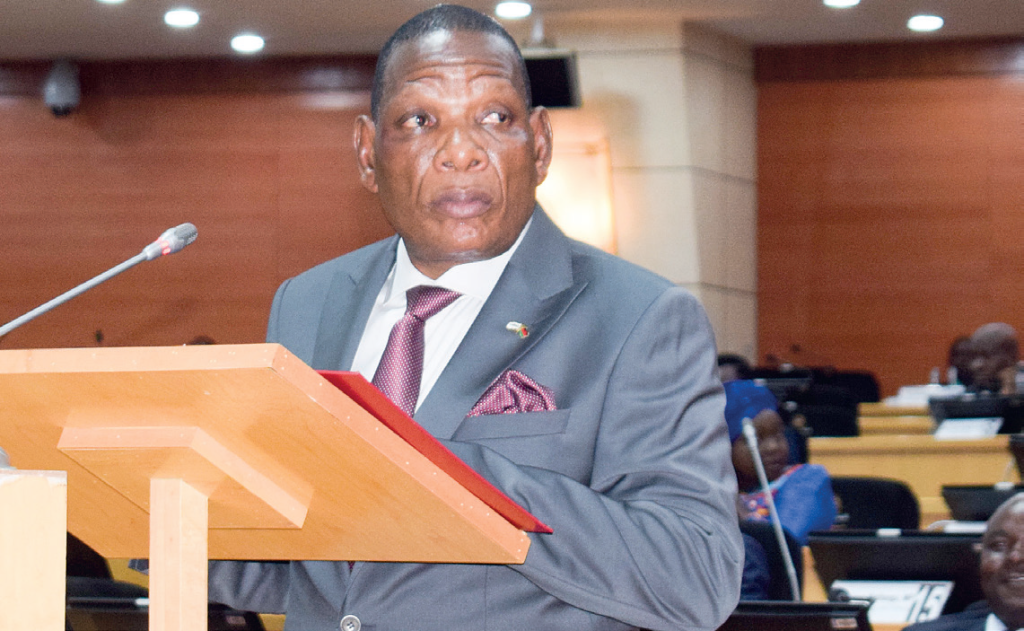
Parliamentary Committee on Agriculture chairperson Andrew Kamoto acknowledged the concerns, saying current spending has not delivered the desired results.
“Yes, we have a huge budget going to agriculture, but you find that the amount of money which is going to agriculture and the re-sults which are coming out are not quite satisfactory,” he said.
But Kamoto said Fisp should be reformed rather than abolished.
The study also identifies the expanded Constituency Development Fund (CDF) as a potential source of financing for agricultural trans-formation.
Although government has allocated K1.145 trillion to the reformed CDF, agriculture remains largely absent from constituency invest-ment priorities, which continue to focus on roads, bridges and other infrastructure.
Pangapanga-Phiri proposed ring-fencing 15 to 20 percent of CDF allocations for irrigation, dams and other climate-resilient agricul-tural infrastructure.
In response to this proposal, Kamoto said Parliament would consider introducing a dedicated agricultural component in future CDF al-locations.
CisaNet Programme Subcommittee chairperson Dyborn Chibonga said the organisation was engaging Parliament’s Agriculture and Budget committees to push for greater investment in agricultural productivity.
“Even the 8.5 percent that is going into agriculture, the majority of that money is going towards Fisp. Therefore, other very important sectors like agricultural research, extension, livestock development and agribusiness are being neglected,” he said.
The report also warns Malawi is inadequately prepared for the an-ticipated El Nino season and calls for greater investment in climate information, extension services and irrigation to strengthen resili-ence before disasters strike.