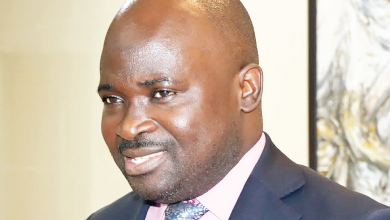
Post-mortems of the 2025 General Election reveal trust issues with the use of electronic devices for credible outcomes. Why do people trust technology with their money, but not their votes? As preparations for 2030 elections, our Staff Writer JAMES CHAVULA put the question to Malawi Electoral Commission (MEC) spokesperson Sangwani Mwafulirwa. Excerpts:

Q: When do preparations for the September 17 2030 general election start?
A: They have already started. MEC has been reviewing the 2025 elections and engaging political parties, civil society, government institutions, the media and other stakeholders. We are consolidating the findings and will soon share the final post-election review report with stakeholders. These findings will inform an operational plan covering activities, timelines and reforms ahead of 2030. Importantly, preparations are not the responsibility of MEC alone. All players should also start preparing now. Electoral readiness is a shared responsibility.
Q: Why did MEC introduce new technologies such as the election management device (EMD) and the biometric voter verification device (BVVD) during the 2025 elections?
A: The objective was to improve the integrity, efficiency, accuracy and credibility of electoral processes. The EMDs supported voter registration, while biometric verification helped confirm voters‘ identities and reduce risks such as duplicate registration and impersonation. The technology improved data management, reduced manual errors and made processes faster.
Q:The new technology stirred an uproar, especially from then opposition parties. Why do people seem to trust technology with their money, but not with their votes?
A: People trust technology with money because financial transactions provide immediate feedback, can be traced and, where necessary, corrected. A person can receive a salary through mobile banking, receive an SMS confirmation and spend the money without ever seeing the physical cash. With elections, voters want assurance that their choice has been accurately recorded, remains secret and is included in the final result. During elections, the stakes are political, collective and highly contested.
Q: What lessons has MEC learnt about technology adoption as Malawi looks towards 2030?
A: The biggest lesson is that stakeholder engagement must start early and continue throughout. Introducing technology is not simply a technical exercise; it is also a confidence-building process. Technology alone does not create trust. It must be accompanied by transparency, stakeholder engagement, proper training and clear communication. Most importantly, technology should address a clearly identified electoral challenge. It should not be introduced simply because it is new. The test should always be whether it improves electoral integrity, efficiency, accessibility and public confidence. Therefore, trust in electoral technology requires transparency, stakeholder participation, testing, independent verification and public education. Technology cannot manufacture trust. An electoral commission can acquire sophisticated technology, but if political parties, candidates and voters do not trust the system, its introduction may undermine rather than strengthen confidence. Ultimately, electoral technology must be understandable, transparent and verifiable.
Q: What were some of the major challenges MEC encountered in adopting technology in 2025?
A: Misinformation and disinformation about the technology. False claims about what the devices could do or could not end up creating confusion and unnecessary fear. Some people even planned street demonstrations, claiming that the EMDs would be used for voting when the commission never said that as one of the functions of the new technology.
Q: What is your take on the feeling that electoral technology, like any other technology, is as good as people who press the buttons and can be manipulated?
A: Such concerns are understandable because elections are highly sensitive and any technology used in the electoral process must be subjected to rigorous scrutiny. Electoral technology is designed with security safeguards from the outset, with measures to protect systems, data and processes from unauthorised access or manipulation.
Before deployment, systems undergo extensive testing, including penetration testing, vulnerability assessments and other security tests, to identify potential weaknesses and address them. Testing is not a one-off exercise; security needs to be continuously assessed because threats and technologies evolve.
Q: After introducing biometric voter registration and verification, does MEC see Malawi moving towards electronic voting?
A: Electronic voting requires careful consideration of the legal framework, infrastructure, cybersecurity, costs, stakeholder confidence and national consensus. Namibia once adopted electronic voting, but decommissioned the system and reverted to manual voting after litigation of stakeholder concerns over transparency. Therefore, any future discussion on electronic voting in Malawi would require broad national dialogue involving political parties, civil society, technical experts, and citizens.
For now, Malawi continues to use paper-based voting and counting, which stakeholders understand and can observe directly. Electronic voting is not for immediate use, the immediate focus is on strengthening technologies that support electoral administration, including voter registration, voter verification, results management and information systems. The key principle is that technology must enhance public trust in elections, not weaken it. Ultimately, the success of any electoral system depends not only on technology, but also on public confidence in democratic institutions and processes
Q: Could internet-based voting improve access and turnout, particularly for people in the diaspora?
A: It could potentially improve access for Malawians in the diaspora and people unable to reach their designated polling stations because of work, travel or hospitalisation. However, no African country currently uses internet voting for national elections, meaning Malawi would be entering largely untested territory on the continent. It would require secure digital identification, reliable connectivity, strong cybersecurity, ballot secrecy, prevention of multiple voting and independent verification. The financial and logistical requirements, together with Malawi‘s digital divide, could outweigh the benefits. Most importantly, there would be a mammoth task of winning stakeholder confidence and trust in the system.
Q: Should stakeholders expect new technologies ahead of the 2030 elections?
A: Stakeholders should expect MEC to continue assessing and exploring technology where it can improve electoral processes. However, new technology should not be introduced simply to modernise the system. Before adopting any technology, the commission must consider its benefits, risks, cost, security, legal requirements, infrastructure and impact on public confidence. There may be further technological innovations before 2030, but only where there is sufficient evidence that they will make elections more credible, secure, efficient and inclusive. The objective should not be to have the most technologically advanced election, but an election in which technology strengthens public confidence rather than becoming a source of uncertainty or mistrust.