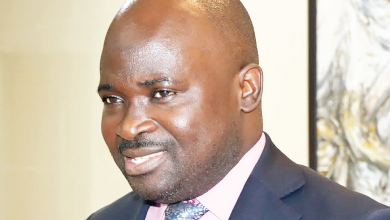
A recent study has lifted the lid on the whopping cost members of Parliament (MPs) might have paid in the September 16 2026 General Election. On average, ‘The Cost of Politics in Malawi’ shows a candidate blew K88.8 million, up from K14.8 million in 2019. The hidden price tag fuels corrupt and hidden agendas at the expense of deserving women and youthful candidates. In this interview, our Mzuzu Bureau Supervisor JOSEPH MWALE engages United Democratic Front (UDF) secretary-general Genarino Lemani on the joint survey by Institute for Policy Interaction and The University of Texas. Excerpts:

Q: What does your party make of the amounts that aspirants spend to represent their parties on the ballots?
A: This is worrisome. UDF believes that leadership should be determined by the quality of ideas, integrity and commitment to public service—not by the size of one‘s financial resources. While campaign costs have risen significantly across the political landscape, we recognise that this trend disadvantages women, young people and capable citizens who may not have substantial personal wealth.
Q: What measures has UDF put in place to reduce the cost of contesting primaries and make nomination accessible to women, youth, and candidates without personal wealth?
A: As a party, we are reviewing our internal processes to ensure that our primary elections remain as fair, transparent and affordable as possible. We support reforms that reduce unnecessary campaign expenses, strengthen issue-based campaigns and create a more enabling environment for women, youth and persons from diverse economic backgrounds to compete on equal footing. As a young party secretary-general, I believe the future of our democracy depends on widening participation rather than restricting it to those with financial means.
Q: Does your party have internal rules or spending limits for aspirants during primaries and general elections? If not, why? `
A: The UDF encourages responsible and ethical campaign conduct among all its candidates. We believe campaigns should be driven by engagement with voters, policy proposals and community outreach rather than excessive expenditure. As the national conversation on campaign finance reforms gains momentum, the UDF is open to reviewing its internal guidelines to strengthen accountability and promote reasonable campaign spending. However, any spending limits introduced should be practical, enforceable and applied fairly across all political parties to ensure a level playing field.
Q: UDF is often blamed for popularising the culture of handouts when it was in power. How is it enforcing Section 41(1) of the Political Parties Act, which outlaws political handouts to prevent vote buying? In the September 16 2025 General Election, the Registrar received 162 complaints in 2025.
A: The UDF is aware that public debate has, over the years, often associated the party with the issue of handouts. However, political campaigning in Malawi has evolved across the entire political spectrum and this is no longer an issue that can fairly be attributed to one political party alone.
Our position today is clear: the UDF respects the Political Parties Act and does not encourage the use of handouts as a means of influencing voters. We believe elections should be won on the strength of ideas, policies, leadership and a candidate‘s record of service. The party continues to remind its members and candidates to comply with the law.
Where credible evidence of misconduct is presented, our disciplinary structures are available to investigate and recommend appropriate action in accordance with the UDF constitution. We also believe that enforcement of the law must be consistent, impartial and applied equally to all political parties and candidates, because selective enforcement undermines public confidence in the electoral process.
Q: Can your party commit to publicly disclosing major donors to parliamentary candidates and requiring audited campaign expenditure reports, as required by the laws that regulates political parties?
A: Campaign financing is an important issue that requires greater transparency across Malawi‘s political system. The UDF supports constructive national dialogue on strengthening campaign finance regulations, including improving disclosure mechanisms, provided the rules apply equally to all political parties and candidates. Transparency promotes public confidence in the democratic process. At the same time, reforms should strike an appropriate balance between accountability, privacy and practical implementation so that compliance is achievable for all candidates.
Q: What mechanisms does your party have to monitor MPs after election to ensure they do not loot or abuse public resources to recoup campaign spending? `
A: Public office is a position of trust and should never be viewed as an opportunity to recover campaign expenses. The UDF expects all elected representatives to uphold the highest standards of integrity, accountability and service to the people.
We support stronger institutions, effective oversight and robust anti-corruption measures that ensure public resources are used solely for the benefit of Malawians. Ultimately, the fight against corruption is not only about laws but also about leadership, political will and a culture of accountability. As a party, we remain committed to promoting ethical leadership and strengthening democratic governance.
Q: Looking forward, what lessons can the nation draw from the 2025 elections?
A: The lesson is that electoral laws must be clear before elections take place. We cannot wait until campaigns are underway to start debating what the law means. Stakeholders, including political parties and electoral authorities, need certainty. That is why the regulations must be properly developed, debated and approved well before the next electoral cycle.
Q: What should Malawians expect as we look forward to credible future?
A: We expect government to bring the regulations back through the proper parliamentary process. The Legal Affairs Committee will have to scrutinise them and the plenary will have to approve them. The goal should be to produce regulations that are practical, enforceable and aligned with the Constitution. We all want to address the problem of political handouts, but we must do so in a way that strengthens democracy and respects the rights of citizens.