When Cyclone Ana ripped through Southern Malawi in 2022, floods buried hydropower stations in mud, knocked down transmission lines and left communities in the dark for days.
For Cathy Banda, a food seller at Muloza market in Mulanje District, the blackout spoiled her fish, meat and business prospects.

“Electricity means business,” she says. “When electricity goes, those who sell fresh foods make losses.”
Four years on, Malawi is betting on a $20 million (about K35 billion) Battery Energy Storage System (Bess) to reduce costly blackouts.
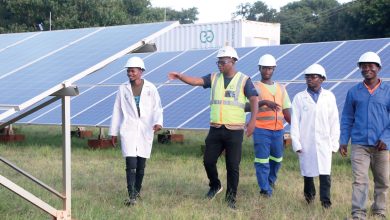
In July 2025, the Malawi Government and the Global Energy Alliance (GEA) embarked on the country’s first utility-scale energy storage system with a 20-megawatt (MW) capacity.
It is one of the first in southern Africa where climate change is making fragile grid power more unreliable.
Power dynamos on the Shire River generate about 70 percent of the country’s power, making the grid prone to frequent flooding and drought worsened by climate change.
Without storage, every weather shock becomes a power shock—lengthy load shedding, business losses and wasted vaccines in clinics.
“This project is…a signal of what the future of energy in Africa can look like,” says GEA vice-president Carol Koech. “Reliable power is about jobs, functioning hospitals and businesses that can grow.”
The lithium-ion batteries will charge when solar and hydro are producing excess power, usually midday. They will power the grid at night, during peak demand or when a plant trips offline, preventing blackouts and giving the Electricity Supply Corporation of Malawi (Escom) critical hours to restore service.
South Africa, Kenyaand Zambia already have similar systems, but Malawi’s breakthrough came through a $20 million catalytic grant structured to de-risk the project enough for private investment to follow.
“For decades, we have been at the mercy of the clock and the weather, but today we begin an era of energy independence on our own terms,” said Minister of Energy Jean Mathanga when she launched “the engine of our development”.
The power storage system is designed to withstand heat, humidity and flooding, with a lifespan of up to 12 years.
Escom chief executive officer William Kayipa says the immediate benefit will be grid stability as more solar energy come online.
The battery-storage system can respond in milliseconds, faster than a hydro turbine can ramp up.
“For years, grid instability forced us to curtail renewable energy we had already generated and to fall back on costly diesel generators at the expense of our consumers and our climate commitments,” says the engineer. “By storing and deploying power instantaneously, we are stabilising feeder voltages, reducing system losses and unlocking about 100 MW of renewable generation that was previously constrained,” says Kayipa.
However, Malawians at the receiving end may wonder: Will my lights stay on?
Partly.
At full discharge, the 40MW-hour system can supply about 10 000 households for four hours or keep critical loads running much longer.
For every business, even a few hours of averted outage matters.
“If this battery means the electricity will be stable and my job won’t be disrupted, I can finish more jobs every week and provide for my family,” says Lilongwe-based welder Gift Gondwe, who loses revenue when blackouts hit mid-job.
Environmental activists say such projects do not come without risks as batteries degrade faster in heat—with Malawi’s temperature averaging 30 degrees Celsius.
Koech says the cooling system and indoor housing will protect the cells, but long-term performance will need monitoring.
The batteries will require recycling or safe disposal when they expire, but the country does not have any electronic waste management plant.
Koech says the brains behind the 20MW pilot project considered all environmental factors.
Malawi needs about 200MW or more of storage in the next decade—plus more solar and transmission upgrades—to truly cushion the grid against climate shocks.
Back at Muloza market in Mulanje, Banda cannot wait to discard a petrol-guzzling generator that frequently breaks down.