They call it mob justice, but it is one of the tolerated injustices in a world where even the worst offender is presumed innocent until proven guilty by a court of law.
It often starts with hasty conclusions or hidden agendas. Then comes a crowd-puller—“Wakubayo! [Thief!]”. As the scream echoes in the air, crowds pour in, tying and beating the purported thief senseless. Onlookers will happily provide petrol or strike a match, burning the accused without any recourse to justice.
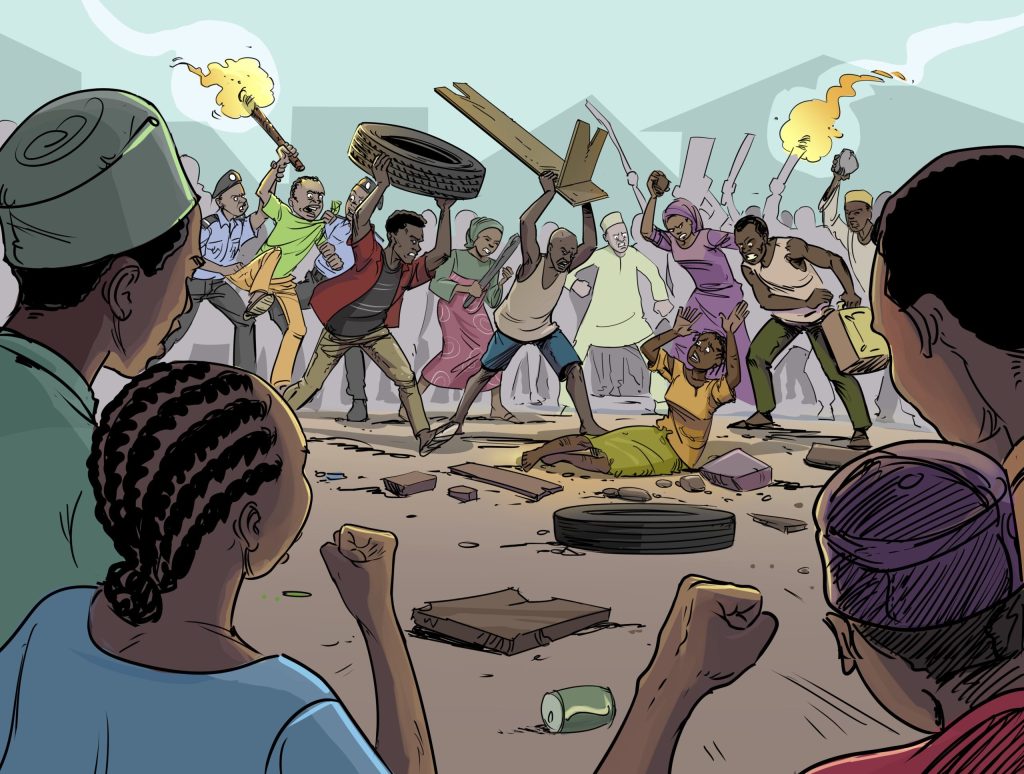
“Waba wekha! Usalire!” they chant, leaving the accused dying in flames.
Unverified charges. That is all it takes to get a death sentence in the court of public opinion where stones, bricks, petrol, burning tyres and beatings replace justice.
Fire! Ashes and silence. The police often arrive too late to put out the flaming tempers.
The sequence played out multiple times across Malawi last month, when some Lunzu residents in Blantyre burned Fixon Menyauti, 35, after mistaking him for a motorcycle thief.
His wife and child were waiting for him, only to receive a phone call to go and identify a body in ashes.
Police report that he was not the motorcycle thief despite paying an irreversible penalty.
Similarly, villagers in Dedza District assaulted Precious Kadzandira, 38, accusing him of stealing potatoes.
The accused died while receiving treatment.
Then came Ntchisi District, where villagers searching for 13 stolen cattle beat Yusufu Lingisoni Sitoro, 30, to death and burned his body. They also set on fire a vehicle he was using and the cattle already slaughtered.
In Nsanje, the accused survived, but the crowd vented its anger on the police who rescued the man suspected of stabbing someone, the mob smashed a police vehicle’s windscreen.
These incidents illustrate what happens when people take the law into their own hands, as did Lower Shire residents who murdered eight men suspected of mysteriously stealing their sexual organs.
Malawi Human Rights Commission (MHRC) principal civil and political rights officer Monica Namonde explained that mob attacks violate the right to life, equal protection under the law and freedom from torture, cruel, inhuman or degrading treatment.
“It also strips suspects of the right to a fair trial and the presumption of innocence, while undermining the authority of the police and courts, the institutions responsible for prosecuting suspects,” she says.
However, Malawians continue to take the law in their own hands despite repeated dangers.
According to Mzuzu University security expert Aubrey Kabisara, low understanding of the justice system partly fuels mob violence.
He states: “Many Malawians interpret the police granting bail to a suspect as corruption. “As a result, they take the law into their own hands because relying on the formal justice system feels like losing to them.
“Past encounters with crime can fuel anger. When a suspect is caught in a different case, someone who experienced theft before beats them out of the anger they are carrying, assuming it is the same person who stole their property.”
Kasungu resident Kingsley Zimba says some people resort to mob violence due to dwindling public confidence in the justice system.
“Sometimes police release suspects on bail without considering the danger they could pose to society,” he says.
Zimba also blames misunderstanding between the police and the public, as the law enforcers sometimes take days to respond to reported crime.
However, superstition, especially witchcraft suspicion, ignites targeted mob violence against elderly people.
The differing perceptions of mob justice point to the need for studies to understand and address what triggers people to take the law into their own hands.
National Police deputy spokesperson Alfred Chimthere said public dialogue could help establish the main factors and actors while the arrest and prosecution of perpetrators remain important in fighting the practice.
In an interview, he said addressing mob justice also requires an approach that brings together different stakeholders to tackle the root causes.