Mounting institutional debt, severe shortage of foreign currency, structural underfunding and protectionism have brought Malawi’s public healthcare system on its knees with the medicine crisis reaching unprecedented depths, The Nation analysis shows.
The State’s drug procurement agency, the Central Medical Stores Trust (CMST), is locked out of international supply chains due to an $18 million (K31.5 billion) debt to foreign creditors, according to data cited by health rights advocate Maziko Matemba on Tuesday.
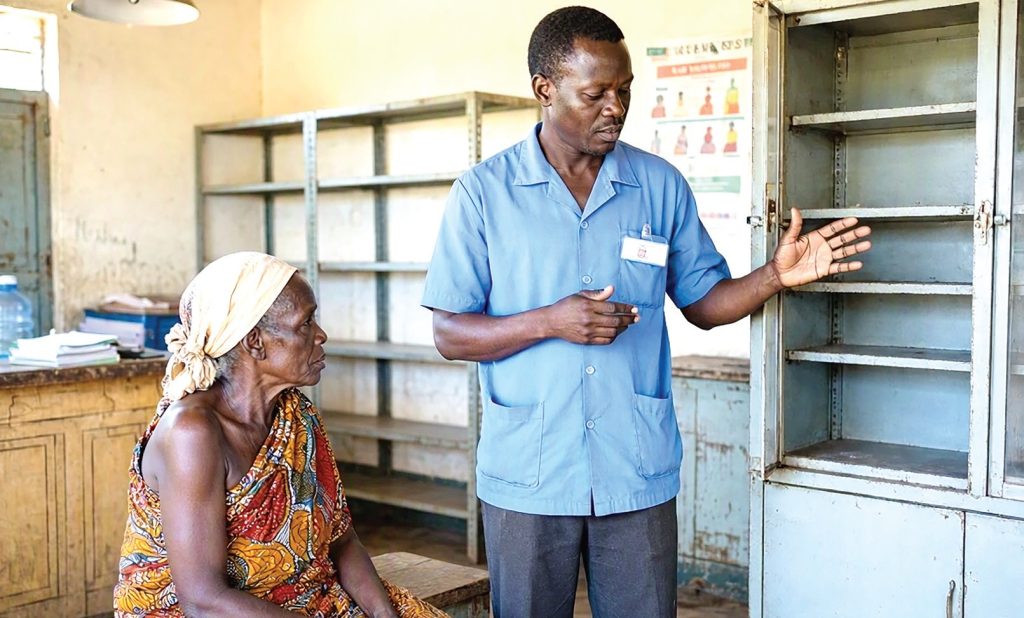
On the other hand, central referral hospitals have run out of 75 percent of essential medicines, he noted, adding that overall national medicine availability hit 40 percent as of September 2026 and plummeted to just 18 percent in central hospitals.
The collapse has sparked heated national debate over medicine procurement, including whether protecting the local pharmaceutical industry to spur self-reliance is easing or worsening the crisis.
At the centre of the collapse is chronic underfunding.
Matemba said Parliament is lobbying government to meet the Abuja Declaration target of allocating 15 percent of the national budget to health, up from the current nine to 10 percent threshold.
The shortfall has left huge arrears. Ministry of Health and Sanitation spokesperson Benedicto Mbewe said in an interview yesterday that CMST had K71 billion in arrears as of October 2025, including a number of them “that are in need of forex”.
He said the Ministry of Finance, Economic Planning and Decentralisation has disbursed about K31 billion to CMST in the past two years while central hospitals have paid K10 billion, but the balance has frozen supply lines.
With most life-saving drugs imported from India, Matemba said forex shortages and the debt backlog remain the main chokehold, forcing foreign suppliers to halt deliveries.
Local manufacturing: a cure or curse?
To bypass the forex scarcity trap, Mbewe said the Ministry of Health and Sanitation would like to see CMST prioritising locally-manufactured drugs that can be bought in kwacha.
The ‘Buy Malawi’ initiative, which he admitted “was interrupted” over the past five years, seeks to boost domestic capacity and reduce import dependence.
To this end, Treasury introduced import tariffs in the current budget on selected products through Government Notice Number 46.
Under the new fiscal amendments, a targeted 20 percent import duty was imposed on Amoxicillin (250mg capsules and 125mg dry suspension). Furthermore, a 25 percent import duty was levied on several widely used basic drug lines, including Paracetamol, Aspirin, Ibuprofen and Artemether-Lumefantrine—the country’s primary first-line malaria treatment.
Treasury spokesperson Williams Banda said the policy rationale for adjusting import duties on selected products was meant to support the development of domestic productive capacity and create a more favourable environment for local pharmaceutical manufacturers.
“This is consistent with the broader objective of promoting domestic production, import substitution and industrialisation,” he said.
But advocates warn of a huge capacity gap.
Matemba said Malawi needs over 330 drug products for basic health needs, yet local firms produce just over 40, leaving a shortfall of about 290 products still dependent on imports.
However, Mbewe argued that local firms are underutilised, with some operating at 30 percent capacity.
“We need to engage the manufacturers to increase their local production and increase the number and types of commodities they are producing,” he said.
The cost to patients
As officials debate industrial strategy, the immediate effects of the stock-outs are being borne by ordinary Malawians.
Matemba highlighted that more than 52 percent of Malawians lack private medical insurance and are forced to choose between buying expensive drugs from private pharmacies and going without treatment entirely.
In some facilities, he reported that healthcare employees are forced to ration doses or explicitly request that patients buy their own basic medical consumables, like syringes and needles, externally.
“Medical practitioners and activists acknowledge that these shortages inevitably lead to worsened health outcomes and preventable loss of life,” Matemba stated grimly.
Compounding the funding crisis is institutional leakage.
Matemba noted that regulatory bodies like the Medical Council of Malawi are actively investigating leakage and drug theft, as government-branded medicines frequently leak into private markets, prompting activists to demand stricter electronic monitoring and stock reconciliation.
To address this, Mbewe stated that government has planned high-level intervention.
He said: “We have planned meetings [among] Ministry of Health, Ministry of Industry and Ministry of Finance to align on policies. We also need to finish the regulations under the PMRA [Pharmacies and Medicines Regulatory Authority], which stalled the past five years. The law was passed in 2019.”
Once enacted, “these regulations would ensure that drug thefts are severely punished, quality of medicines is assured, [and] there is vigilance in tracking the commodities,” Mbewe promised.
Policy review
Faced with mounting public concern, government says it will review its strategy.
Banda said the Ministry of Finance, Economic Planning and Decentralisation is examining the crisis closely and engaging the Ministry of Health, procurement entities and other stakeholders to establish the causes of the shortages.
Said Banda: “Local production should complement, rather than compromise, the availability of essential medicines. Where domestic manufacturers are unable to meet national demand in terms of volume, product range, quality or delivery timelines, imports remain necessary.
“In light of the concerns raised, the government will review the implementation and effects of the affected tariff measures.”
Scotland-based economist Velli Nyirongo said blaming the new 20 to 25 percent duties alone “risks confusing an immediate policy mistake with a much deeper structural failure,” but added that the newly-imposed duties are not helping either.
“The country’s pharmaceutical crisis did not begin with the 2026/2027 National Budget. It reflects years of foreign exchange shortages, weak procurement systems, mounting supplier arrears,” he said.
Nyirongo said stocks will not recover unless forex supply is restored and suppliers are paid, but argued government still bears responsibility as the tariffs raise landed costs and squeeze patients.
“Taxing essential medicines without demonstrating that domestic production can reliably replace imports is difficult to justify. Fiscal policy must support, rather than undermine, access to essential healthcare,” he said.
Nyirongo urged government to review the duties against their actual revenue gains, health costs and impact on availability.
In a report dated September 22 2026, CMST said 62 items, representing 18 percent, are fully in stock while 23 items or seven percent are at low levels, highlighting the worsening availability of essential medicines across public health facilities.
The medicine availability has steadily declined during the 2026/27 financial year, falling from 51 percent in April to 40 percent in September, well below CMST’s target range of between 55 and 65 percent.