Our contributor LYSON MAPANGA reports how Malawi’s reformed Constituency Development Fund (CDF) guidelines have sidestepped or erased persons with disabilities from its deliverables.
It is a painful paradox. In 2024, Malawi made history when it enacted the Persons with Disabilities Act to make the African Disability Protocol work.
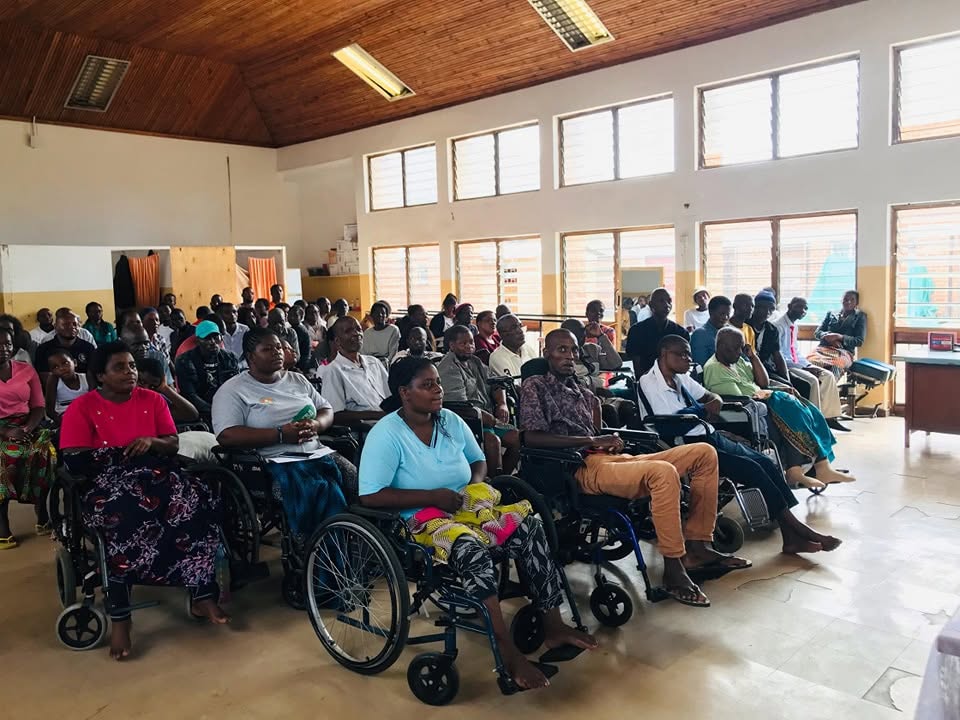
The law was widely hailed as a progressive beacon for inclusion as the country proudly chant ‘leaving no one behind’, the global mantra of the Sustainable Development Goals.
Yet, the situation on the ground looks different. Away from the high-level meetings where policymakers recite a litany of laws and policies crafted instead of action taken to achieve the desired effect, persons with disabilities are forgotten in the very structures that decide development at constituency level.
This is the reality of the new Constituency Development Fund (CDF) guidelines, designed to deliver K5 billion per constituency.
The CDF rules, unveiled by the Ministry of Local Government earlier this year, has stirred a backlash from disability rights campaigners.
A critical analysis of the guidelines shows a well-structured inclusion plan for other groups, except those with special needs that puts them at risk of being left behind.
The guidelines require each of the 229 constituencies to allocate K100 million for youth entrepreneurship and another K100 million for women’s empowerment.
However, not a single tambala is explicitly mentioned or reserved for persons with disabilities.
Even more disturbing, persons with disabilities have no guaranteed representation in the Constituency Development Committees (CDCs) that decide which projects are funded, who benefits and how the money is used.
In a country where 229 constituencies control K1.145 trillion in public funds, this omission appears to ‘otherise’ persons with disabilities, effectively making them invisible in local development decision-making, code-named decentralisation or mphamvu ku anthu (power to the people).
Federation of Disability Organisations in Malawi (Fedoma) executive director Simon Munde warned against State-sponsored exclusion in the reformed CDF implementation.
He asks: “How can a government that ratified the African Disability Protocol and enacted the Persons with Disabilities Act two years ago produce a development blueprint that erases about 11 percent of its population?
“Allocating K100 million to the youth and K100 million to women while giving zero recognition to persons with disabilities is not just an oversight; it is institutional discrimination. This violates the spirit of our laws.”
Munde argues that the blind spot in CDF regulations violates Section 20 of the Constitution, which outlaws all forms of discrimination.
Besides, Article 4 of the African Disability Protocol provides for equal treatment, explicitly stating that State Parties shall ensure that persons with disabilities enjoy all human rights without discrimination.
At grassroots level, Ntcheu District Disability Forum (DDF) chairperson Henderson Golombe says the “so-called reformed CDF guidelines are a personal heartbreak”.
“We are concerned with this development. Every day we sensitise our members to participate in development. Now government itself has told us we do not belong to the CDCs. How do we benefit from CDF if we are not at the table where decisions are made? We are Malawians too,” he laments.
Some authorities have been quoted stating that government contribution to the Disability Trust Fund created by the Persons with Disabilities Act will cover the gap.
However, Munde says the Disability Trust Fund money is not enough to justify sidelining persons with disabilities in CDF management.
“The Trust Fund cannot build all the roads, schools and clinics in 229 constituencies. CDF is for all Malawians at constituency level. Inclusion is not about a separate fund; it is about being part of the main development agenda,” he says.
Disability rights experts say what is happening with CDF could be symptomatic of a broader pattern of inclusion: progressive laws on paper, but tolerated discrimination in implementation.
Persons with disabilities continue to face barriers in employment, education and access to social protection despite a robust laws and policies.
Meanwhile, Malawi envisions becoming an inclusive, industrialised upper-middle-income economy by 2063.
With 24 years to the Malawi 2063 deadline, the question remains: Can the country become a developed, prosperous and better place for all when it systematically excludes its own citizens from the very fund meant to bring development closer to the people?
Fedoma urges the Ministry of Local Government and Rural Development to swiftly revise the CDF guidelines, ring-fence a percentage for disability-inclusive projects and ensure persons with disabilities have representation in all CDCs.
“Otherwise, leaving no one behind’ will remain a beautiful slogan on paper and high-level meetings while persons with disabilities continue to be sidelined,” he says.