Mismatches between ambitions to connect more households, businesses and industries to the national grid and electricity generation have thrown Malawi in a dilemma that has instead resulted in unstable power supply.
The Electricity Generation Company (Egenco) has conceded that it is struggling to meet the growing demand for electricity in the face of lack of expanded access.

In a written response yesterday, Egenco spokesperson Moses Gwaza said that the company’s available generation capacity stands at 370 megawatts (MW) against installed capacity of 454.67MW.
Peak demand stands at 451.61MW, according to Electricity Supply Corporation of Malawi (Escom).
Gwaza said Egenco acknowledges efforts to expand access to electricity through projects such as the Malawi Electricity Access Project (Meap), Malawi Rural Electrification Programme (Marep) and the Accelerating Sustainable and Clean Energy Access Transformation (Ascent) Programme.
“While grid expansion is essential for improving access and supporting national development objectives, there is an equally important need to invest in new generation projects to ensure that supply keeps pace with the growing number of consumers connected to the grid,” he said.
Egenco has previously touted projects such as the 40MW Salima Solar Phase II, 50MW Combustion Gas Turbine, 80MW Chasombo and Chizuma hydropower plants on the Bua River and the 300MW Kam’mwamba Coal-fired Electricity project as critical to increasing sustainable electricity generation. However, progress has been slower than anticipated.
But Gwaza said the long-term sustainability of the electricity sector depends on balancing generation, transmission, distribution and demand growth.
In a separate interview, Escom chief public relations and communications officer Pilirani Phiri said current peak demand is around 451.61MW, including approximately 66.85MW of load-shedding while low-demand periods generally record about 250MW.
“Task teams have been established to fast-track the integration of embedded generation projects and increase the amount of power available to the national grid,” he said.
Phiri said Escom is also implementing load-shedding mitigation measures, including demand-side management, load shifting and encouraging power conservation during peak periods.
“The commissioning of the Battery Energy Storage System [Bess] at Kanengo is cushioning the system during periods of peak demand, particularly in the evening, thereby reducing pressure on the grid and mitigating load-shedding,” he said.
Far-reaching consequences
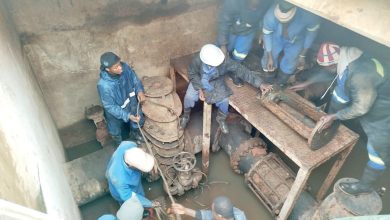
The generation shortfall is already affecting the economy, with frequent blackouts disrupting households and businesses, in the process increasing the cost of doing business.
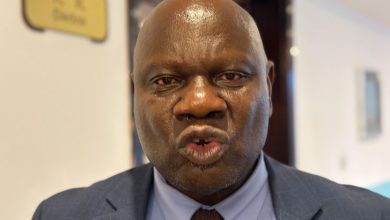
In an interview yesterday, Scotland-based Malawian economist Velli Nyirongo said increasing connections without a corresponding rise in generation creates an imbalance between supply and demand, with serious implications for households, businesses and the wider economy.
Consumers Association of Malawi executive director John Kapito said successive governments have failed to fulfill promises to increase electricity generation, arguing that if the promised projects were implemented Malawi would have had close to 2 000MW by now.
The financing challenge further complicates efforts to address the problem.
A Japan International Cooperation Agency (Jica) Energy Sector Position Paper published in May showed that the energy sector faced a financing gap of about K447 billion in the 2025/26 financial year as Treasury allocated K21 billion against a requirement of K468 billion.
The paper also said financial challenges had slowed Marep Phase 9, particularly in rural areas where electricity penetration remains below two percent.
Last month, Renewable Energy Industries Association of Malawi president Brave Mhone said the financing-access gap exists because much of the funding maintains the ageing grid instead of expanding it.
What now?
Nyirongo urged government to create an investment environment capable of attracting private capital, development finance and strategic investors while strengthening the energy sector’s financial and operational capacity.
Mzuzu-based social commentator Isaac Cheke-Ziba said Malawi must continue investing in generation, transmission and distribution infrastructure while encouraging independent power producers and renewable energy development.
Minister of energy Jean Mathanga is on record as having stated that the government is banking on Independent Power Producers (IPPs) and the Malawi-Mozambique (Moma) Power Interconnector project to achieve the 1 000MW power generation mark by 2030.
However, Malawi’s experience with IPPs has so far been mixed with at least 11 IPPs projected to add 343.26MW to the national grid by 2023/24 missing their deadline.
About 25.9 percent of the population has access to electricity, including grid and off-grid connections, with rural access much lower. This remains far below the Government of Malawi’s target of 70 percent access by 2030.
Malawi has total installed capacity of 564.2MW, comprising 401.8MW from hydro, 51.4MW from diesel and 111MW from solar sources as produced by Egenco and other players, according to Escom data.