Ministry of Industrialisation, Business, Trade and Tourism has acknowledged that Malawi’s small and medium enterprises (SMEs) continue to face a difficult operating environment marked by limited access to affordable financing, foreign exchange shortages and persistent power outages.
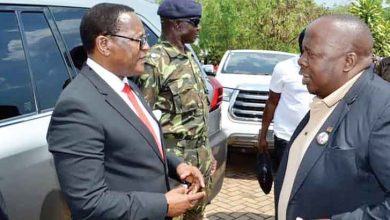
Deputy Minister of Industrialisation, Business, Trade and Tourism Edgar Tembo said the challenges remain major obstacles to SMEs growth despite ongoing government efforts to support the sector, which accounts for about 40 percent of gross domestic product and 24 percent of employment.

In his remarks on Thursday during the launch of the 2026 Mzuzu SMEs Expo and Farmers Market, he said access to concessional financing remains a key concern for most small businesses.
“We are engaging on how we can help SMEs so that loans can be manageable and acceptable for them to thrive,” said Tembo.
He said recurring blackouts, foreign exchange shortages and limited access to emerging technologies such as artificial intelligence continue to constrain business operations.
Tembo urged SMEs to increase production for export markets to boost foreign exchange earnings and called for greater value addition to reduce reliance on imported goods that can be manufactured locally.
As part of efforts to ease trade barriers for small businesses, he cited the Simplified Trade Regime signed between Malawi and Tanzania in February, which allows small-scale cross-border traders to move goods valued at less than $1 000 (about K1.7 million) duty-free or with minimal documentation.
In an interview, Malawi Confederation of Chambers of Commerce and Industry chief executive officer Daisy Kambalame said the exposition is a platform for SMEs to learn ways of resolving trade challenges they face.
He said: “One of the highlighted issues is to do with exporting to generate more forex. Forex generation requires sending high quality products through value addition and we have Malawi Bureau of Standards and Malawi Revenue Authority to help with certification.
“SMEs can schedule and plan their operations to use alternative power sources such as solar and methane during blackouts while MCCCI tries to find other ways of helping them.”
Kambalame said Malawi’s economy can only thrive if SMEs import more of their products and generate forex which can support all sectors.
Meanwhile, Roroea Essentials marketing manager Enerst Banda said his business usually faces forex challenges to import skin care products from the United States.
He said: “We specialise in dietary supplements and skin care products all from the US, but it usually takes long for forex to be approved to the point that by the time it is approved, our suppliers in the US have already increased prices or sold the stock we ordered.”
“Sometimes we are forced to source forex from the bureau de change at a much higher rate just to keep the business running and this affects our profitability.”
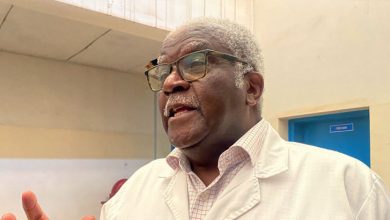
University of Malawi economics lecturer Edward Leman said in an interview that based on several risks that have remained, it is difficult to remain particularly optimistic about the business outlook.
He said the inflation rate, currently at 20 percent, is not enough to create much room for monetary easing, which coupled with structural issues such as forex scarcity and energy challenges, have made it difficult to sustain some of the gains during the quarter.
Said Leman: “Blackouts have resurfaced while fuel queues have reappeared, creating additional uncertainty and raising the cost of doing business.
“This combination of inflation, forex shortages, unreliable energy supply and expensive credit has made the operating environment particularly challenging.”
Malawi Union of Small and Medium Enterprises president James Chiutsi said while 20 percent inflation rate and 24 percent policy rate are already too high for SMEs, diesel and forex scarcity have knocked them out.
Minister of Industrialisation, Business, Trade and Tourism Simon Itaye earlier said “government is targeting to curb foreign exchange leakages as part of immediate measures to ease shortages affecting the economy”.
He said addressing the leakages is a short-term intervention while in the long-term, government is focusing on import substitution.