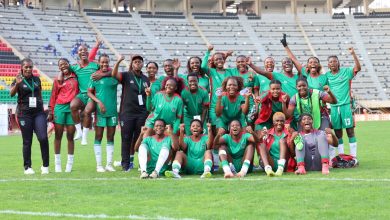
There is a disturbing tendency to place the Flames and the Queens side by side whenever either national team secures qualification for a major continental or global tournament.
On the surface, the comparison appears logical.
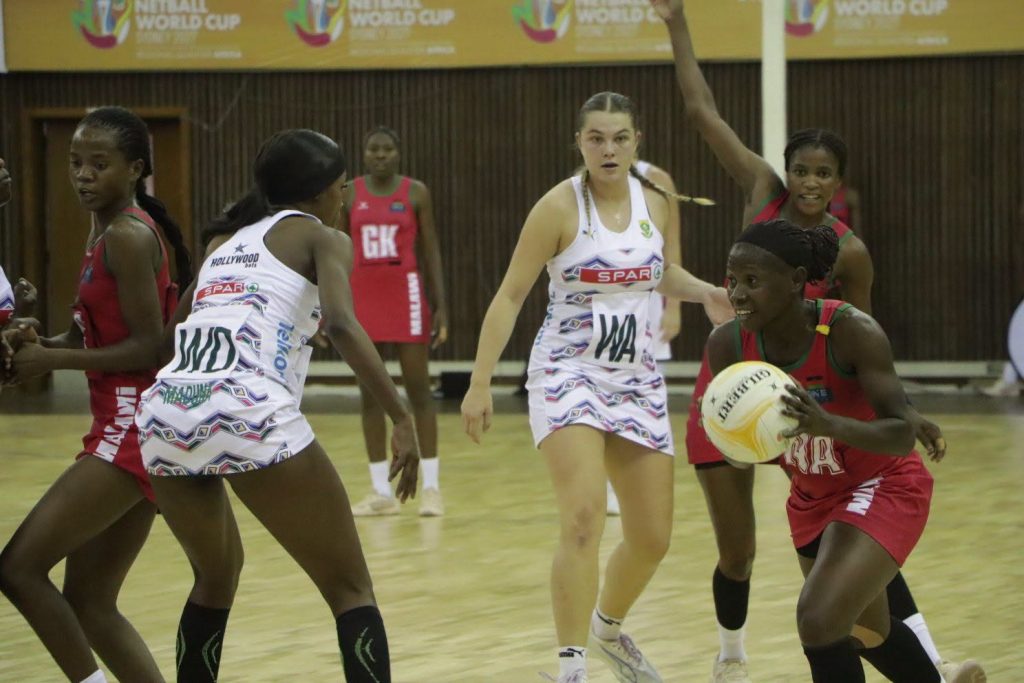
Both represent Malawi. Both compete internationally. Both carry the national flag and qualification for a major tournaments is an achievement.
But the comparison becomes problematic when qualification itself is used as the measure.
The routes travelled by the two teams are fundamentally different.
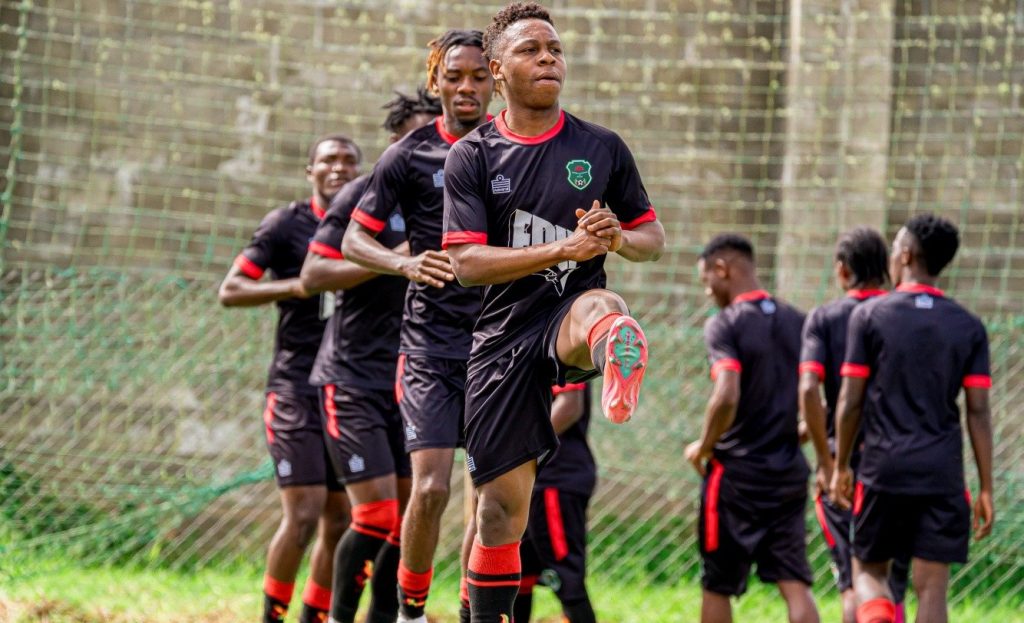
In football, qualification is built around a large-scale elimination system in which a substantial proportion of African nations compete for a relatively small number of places.
For the 2026 Fifa World Cup, teams entered the main Confederation of African Football (CAF) qualifying competition and were divided into nine groups of six, with each team playing home and away against every group member.
Only the nine group winners qualified directly while the four best runners-up entered another play-off.
This means a football team can be required to negotiate a campaign stretching for two years, play up to 10 matches to earn a place at the Fifa World Cup.
In the last edition, the Flames finished fourth in a pool which Tunisia won, with Namibia second and Liberia third.
Equatorial Guinea and São Tomé and Príncipe finished fifth and sixth, respectively.
The same applies to the CAF Africa Cup of Nations (Afcon).
Afcon qualification is another competition altogether.
CAF introduced a qualification phase in 1962, initially using home-and-away direct elimination before moving to a group-stage system in 1992.
The Afcon finals themselves have expanded from just a handful of teams in the early years to 24 since 2019.
To qualify, the Flames have to battle other teams in the qualifying groups.
The modern Afcon consists of 52 matches, beginning with the group stage before progressing to the knockout rounds.
The Africa Netball Cup does not mirror that system.
Teams do not battle for qualification to the finals in the same way.
Out of 54 African countries, only 10 opted to compete at the Africa Netball Cup, while in football, all the countries on the continent compete for qualification for the 24 available Afcon places.
In other words, the Flames have historically had to negotiate two distinct roads.
The last time the Flames qualified for the Afcon finals, in the 2021 edition, they finished as runners-up in Group B, behind group winners Burkina Faso and ahead of Uganda and South Sudan.
Netball, on the other hand, operates differently.
The latest African qualification pathway for the 2027 Netball World Cup, the Africa Netball Cup, involved 10 teams.
However, two of those teams, South Africa and Uganda, had already secured their Netball World Cup places through the World Netball ranking system.
Malawi’s qualification for the 2027 Netball World Cup was confirmed after the Queens reached the semi-finals of the African qualifier.
World Netball explicitly stated that, because South Africa and Uganda were already qualified through the rankings, Malawi and Namibia’s advancement to the semi-finals secured their invitations.
There is nothing wrong with that system.
It is the system governing international netball.
But it demonstrates why simply saying, “The Queens have qualified for the World Cup,” does not tell the whole story.
The achievement has to be understood within the context of the route taken.
The Flames’ campaign for Fifa World Cup and Afcon qualification generally involves a prolonged continental elimination campaign involving dozens of nations and a limited number of places.
The Queens on the other hand, can reach the same destination through a regional tournament in which some of the strongest teams have already qualified through rankings.
That is not an argument for diminishing the Queens’ achievement.
It is an argument for giving each achievement its proper context.
Consequently, using a simple equation, the Queens qualified for this, the Flames failed to qualify for that, therefore, one is better that the other ignores the competitive architecture behind each sport.
The better questions are: How many teams were competing? How many places were available? How many matches had to be negotiated? And was qualification automatic for some teams?
Those questions produce a much more meaningful comparison.
The Flames and the Queens should certainly be celebrated.
But celebration does not require pretending their qualification journeys were identical.
Instead of turning national teams against each other through simplistic comparisons, Malawi’s sporting conversation should recognise what each team actually had to overcome.