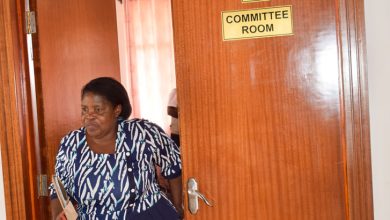
Minister of Agriculture, Irrigation and Water Development Roza Mbilizi has said the country’s five water boards got approval to increase tariffs on condition that they will improve service delivery and guarantee consumers safe water.
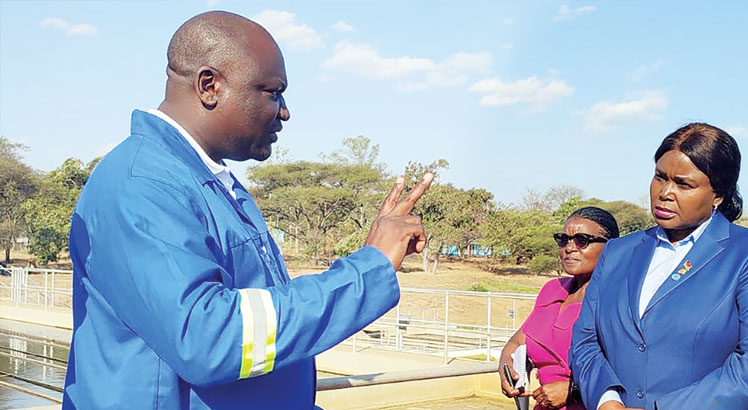
The minister, speaking in an interview yesterday after touring the Blantyre Water Board (BWB) water intake at Walker’s Ferry in Nkula, said that President Peter Mutharika was equally concerned about the inefficiencies in water boards and initially rejected the tariff hike proposal.
“That adjustment came with a lot of monitoring, key performance indicators for management, including the CEOs [chief executive officers] to make sure that they reduce non-revenue water because non-revenue water is very high,” she said.
Earlier this month, the Ministry of Agriculture, Irrigation and Water Development approved upward tariff adjustments ranging from 11 percent to 69.99 percent for the country’s water boards.
Central Region Water Board (CRWB) had the highest increase, with its domestic tariff rising by 69.99 percent while Southern Region Water Board (SRWB) increased by 50 percent. Northern Region Water Board (NRWB) raised its kiosk and domestic tariffs by 36.32 percent and 35.64 percent respectively while BWB increased its domestic tariff by 36 percent and commercial and industrial tariffs by 60 percent. Lilongwe Water Board (LWB) increased its tariff by 20 percent.
Mbilizi said the boards committed to reduce non-revenue water from the average 34 percent, improve operational efficiency and strengthen cost controls.
But consumers protested the tariff hike, noting that the water boards were pushing their inefficiencies to them.
During yesterday’s visit, Mbilizi expressed concern that water supply to Blantyre City and surrounding areas remained erratic, saying the situation undermines public confidence in government.
“We [the government] can do everything good, but if those people don’t have water, there is a problem. You have all the knowledge and training, but the facility is not allowing you. That is not on,” she said.
The minister also engaged BWB employees to hear their concerns and discuss possible solutions to the challenges facing the institution.
BWB mechanical technician at Walker’s Ferry Aubrey Kayange said BWB had planned to establish a solar power plant and develop new water intake projects about 10 years ago as part of efforts to improve its revenue base. However, he expressed concern that the projects were not implemented a decade later.
“If these projects were implemented, we would have boosted our revenue base and we couldn’t have been experiencing such challenges,” he said.
BWB Limbe Zone manager Owen Malhon said some of BWB’s main pipelines had exceeded their lifespan by about 20 years, making major maintenance necessary.
He said although the World Bank-funded water and sanitation project is expected to improve water supply in Blantyre, it would not benefit all residents because its implementation is currently focusing on Kabula and Soche zones.
In June this year, BWB chief executive officer Yeremia Chihana said the utility is operating at a loss because current tariffs are not cost-reflective. He said BWB spends approximately K4 500 to produce one cubic metre of water, but was selling the same at an average of K600.