Still dreaming of a ‘Dream Leader’: the case of Malawi 62 years on

When eminent legal mind Patrice Nkhono endorses a book on leadership by cementing his belief in the conventional wisdom that “societies thrive or sink on the basis of the leadership they get,” one ought to pay attention.
Writing in the foreword to the book The Dream Leader, by Bishop Geoffrey Eliot Matoga of Faith of God Church, Nkhono notes that while Malawi’s turbulent history might suggest its experiences are antithetical to good leadership, that assumption is entirely wrong.
The availability or glaring absence of attributes such as patriotism, national transformation, vision-casting, anti-corruption resolve, servant-hearted humility, and succession planning might initially provoke a weary “we have heard this all before” reaction. Yet, after 62 years of false starts, Malawi’s political history suggests that the nation is disappointingly failing to graduate from an experimental stage where it occasionally appears to move forward, only to rapidly decelerate.
The Dream Leader offers a refreshing perspective. Far from relying on religious bigotry, the well-researched text uses a biblical prism, particularly the model of Moses, to outline eight foundational qualifications for high-quality leadership.
Written through the combined lens of a retired University of Malawi senior lecturer in applied physics and an overseer of The Faith of God Church, Matoga confronts the painful reality that being a self-proclaimed “God-fearing nation” amounts to nothing if leadership fundamentally misunderstands patriotism.
Voting for a leader alone does not guarantee successful stewardship. As the book warns, “the person chosen may not necessarily be the one God qualifies by His choice… such leaders become impostors who mislead the nation and cannot fulfil the destiny of the people for that season and generation.”
In short, the country is still searching for a leader who will move the nation forward by leading by example and infusing a deep sense of integrity into its citizenry.
“When a leader demonstrates high levels of integrity, the followers do the same,” Matoga argues.
Disappointingly, citizens have often behaved like wayward heirs rushing to ruin a happy home, feeling entitled to plunder the national inheritance simply because a technicality or political affiliation plucked them from poverty and gave them a claim over State resources.
Sixty-two years later, leaders across every sector have repeatedly failed to carry out the specific mandates demanded of competent stewards. “A competent leader understands the position of a nation, spiritually, socially, and economically, and works towards their destiny,” the book emphasises. Without such stewardship, Malawi continues to grapple with severe systemic poverty: more than half the population wallows below the poverty line, six in 10 lack basic needs like potable water, electricity, and nutritious food, and the healthcare system continually collapses under the severe shortage of drugs and essential equipment.
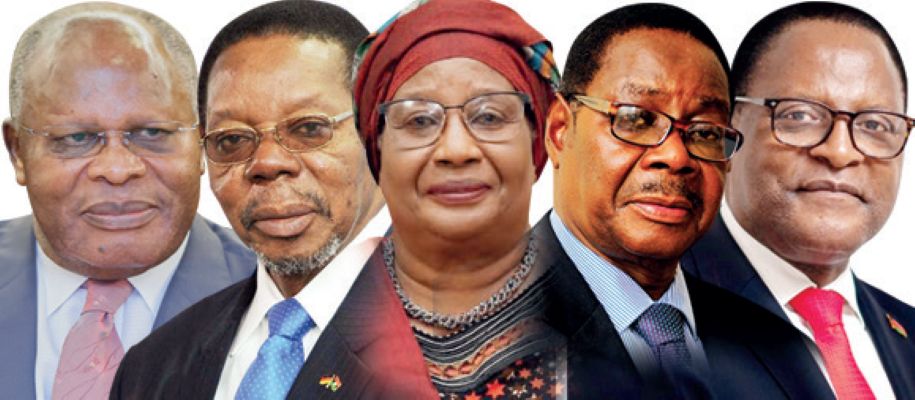
Malawi’s presidential history, as Matoga observes, illustrates this cyclical disillusionment clearly. Hastings Kamuzu Banda pioneered early national development, but eventually consolidated absolute power and lost touch with the populace.
Bakili Muluzi helped architect Malawi’s multiparty democracy, yet his administration was undermined by weak economic policies.
Bingu wa Mutharika achieved a remarkable 9.7 percent gross domestic product (GDP) growth rate during his first term from 2004 to 2009, only to lose his political compass and economic discipline in his second term.
Former Vice-President Joyce Banda assumed power during a volatile transition and adopted strict donor-led economic recoveries, but her brief two-year reign was severely dented by the devaluation of the kwacha and the Cashgate corruption scandal.
Her successor Arthur Peter Mutharika championed the national philosophy of “patriotism, lntegrity, and hardwork,” yet his administration’s actions were widely judged to have fallen short of those values.
Between 2020 and 2025, Lazarus Chakwera, who assumed power after the book was already published, campaigned on the promise of leading the nation to a “Canaan” of prosperity, but many citizens feel his administration instead delivered an “Egyptian wilderness” of economic hardship.
“The experience in Malawi during the democratic era is that corruption at the highest level has not been punished. And this practice encourages middle managers to abuse their positions… democracy was expected to improve the economy through discipline, hard work, and patriotism of the leaders,” he argues.
To break this cycle, Matoga champions a transformational leadership model that designs home-grown economic policies tailored specifically for Africa. He draws on Andrew Watuwanashe’s Dear Africa, who argues that transformational African leaders must stop burning their energies parroting oversubscribed Western political themes. Instead, they must draw creative inspiration from the rich social, cultural, and political heritage of indigenous African consciousness.
All these years, the country has been crying out for a patriotic leader, but evidence suggests the search is not over. Malawi has looked for a godly leader, yet all it has received are those who profess more in words than in deed. Matoga argues that it is only a corruption-free, humble, and success-conscious leader who can move the country forward.
Sadly, he notes that there has never been a genuine tradition of political succession in Malawi since independence, with successive failed leaders demonstrating an inability to promote institutional continuity. Who should succeed Chakwera, Mutharika, Atupele Muluzi or Dalitso Kabambe within their respective parties remains a question nobody wants to tackle.
Ultimately, Matoga issues a passionate call for a visionary leader, one who “shall not multiply horses for himself,” as Deuteronomy 17:16 commands, but who, in the timeless spirit of principled governance, refuses to exploit public resources for self-enrichment, choosing instead to serve the genuine needs of the people.
Having wandered in the wilderness for the past 62 years, it is time the country stepped out of mediocrity to develop “leaders who empower others and benefit the general group, empathetic leaders who make the problems of the people their own and take responsibility to solve them together with the people,” and above all, leaders whose character successfully passes the tests of appetite, fame, pride, and power.