Our Staff Writer EDWIN NYIRONGO examines how an underreported court ruling exposes the hypocrisy of colonial-era laws that penalises sex against the order of nature eludes State scrutiny when it involves sexy men and women:
Courts often reserve maximum sentences for the worst offenders and legal wisdom has it that the worst offender is not born.
However, Blantyre Magistrate’s Court broke tradition on May 10 2010 when Magistrate Nyakwawa Usiwausiwa, now deceased, sentenced Tionge Chimbalanga and Steve Muonjeza to 14 years for gross indecency and having carnal knowledge “against the order of nature”.
In his reasoning, the late Usiwausiwa imposed the maximum sentence to deliver a “scaring sentence” and protect the public, stating, “Malawi was not ready to see its sons getting married to its sons”.
The country’s first confessed same-sex couple was arrested a day after their public engagement ceremony in Blantyre.
The implied gay sex activities loomed large throughout their trial that left tongues wagging about “sex against the order of nature”.
The offence is prohibited by Malawi’s colonial-era laws that fuel violence and discrimination against sexual minorities.

Section 153 (a) of the Penal Code prescribes 14 years imprisonment for “sex against the order of nature”, but the State selectively cites the felony against perceived gay couples.
The said acts against the order of nature went on trial when police in Mangochi District detained and stripped transgender sex worker Jana Gonani for sleeping with a man.
In his ruling, senior resident magistrate Michongwe explicitly stated: “In legal interpretation, sex against the order of nature is classified not only in homosexual activity, but in heterosexual activity [sex between people of opposite sex] as well.
“Anal sex and oral sex even in heterosexual act fall in this category because they are considered sexual acts against the order of nature. The mouth and anus are not sexual organs. Only the penis and testicles in men and vagina in women are.”
The court noted that acts against the order of nature remain offences “even when they are consensual, between adults and conducted in private”.
Last year, the Constitutional Court affirmed Section 153 until Parliament amends the Penal Code.
However, Michongwe’s underreported ruling—Case number 547 of 2021—amplifies calls for an end to selective justice against sexual minorities.
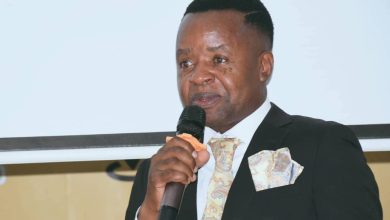
Recently, Nyasa Rainbow Alliance programmes and operations manager Ousmane Kennedy told journalists in Blantyre the judgement unpacks the broad implications of the “archaic law” often restricted to lesbian, gay, bisexual, transgender, intersex and queer persons.
“Many people think that the law only applies to homosexuals, but the fact is that heterosexual couples also practice anal or oral sex. Why are they not being arrested because they are committing crimes contrary to Section 153?” asked the lawyer.
He urged law enforcers against stripping suspects to ascertain how one enjoy sex—as did Gonani’s captors—citing violations of human dignity and right to privacy.
Centre for Human Rights and Rehabilitation executive director Michael Kaiyatsa lamented fundamental flaws in the popular interpretation of Section 153.
He states: “If any sexual activity that does not involve penile-vaginal intercourse is against the order of nature, then the law cannot logically be understood as targeting only homosexual conduct.
This is precisely where the problem of Section 153 lies. It uses an archaic and inherently vague concept without clearly defining what sexual conduct falls within or outside the order of nature.”
According to the campaigner, criminal offences must be sufficiently clear and precise for ordinary citizens, law enforcers and courts to reasonably distinguish prohibited conduct regardless of what they consider natural or moral.
He warned against selective justice, which undermine the rule of law.
“If oral or anal sex is criminalised because of the nature of the act itself, the law should, in principle, apply irrespective of the sexual orientation of the people involved,” Kaiyatsa said.
To lawyer Benedicto Kondowe, Section 153 brings question marks over the interpretation of laws, constitutional rights and how far criminal law should regulate private consensual sex between adults.
He reckons the court ruling that extends criminal liability to popular sexual partnerships “remains open to debate, particularly because the law itself does not expressly define what constitutes sex against the order of nature”.
To Kondowe, the occurrence of similar sexual practices in the widely approved man-woman partnerships raises questions about the democratic principle that everyone is equal before the law.
He argues: “From a constitutional perspective, criminal offences must be sufficiently clear, certain and applied equally before the law.
“If consensual sexual acts between adults are criminalised, the law must do so in a manner that is consistent, non-discriminatory and justifiable under the Constitution.”
Kondowe, however, says the debate requires careful consideration of constitutional values, human dignity, privacy, equality before the law and how State agents regulate private consensual behaviour.
“Courts or lawmakers may need to provide further clarity to ensure the law is applied consistently and predictably,” he said.