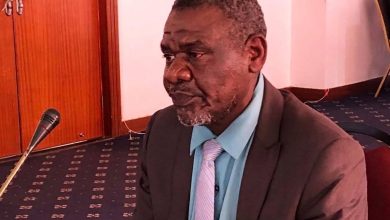
In October 2013, Lazarus Chakwera—then Leader of Opposition in Parliament and newly elected president of the main opposition MCP—stood in the House and presented his party as a vehicle for renewal.
He spoke of a reformed MCP ahead of the 2014 elections and assured all Malawians that a better and more prosperous country was possible under his presidency. The backdrop was the Cashgate scandal, which had rocked the Joyce Banda-led government and brought it to its knees a year later.
Chakwera accused JB’s administration of allowing public officials and businesspeople to enrich themselves while ordinary Malawians suffered. Instead, he claimed that his party had a multi-faceted approach to preventing, detecting and dealing with corruption. He even bragged that good governance would be its mantra.
He didn’t stop there. In December 2016, he also declared that Malawi’s problem was not merely ‘challenges’, but ‘failures’, adding that most of those failures were failures of leadership by President Peter Mutharika of DPP, who succeeded Banda. Chakwera blamed him for failing to take responsibility for the country’s economic problems. He attacked the government over corruption, taxation, electricity shortages, public appointments and the cost of living.
Again and again, Chakwera returned to the same line—this is a failure of leadership. He even challenged Mutharika that he was living in a ‘Mutharika country’, different from the one ordinary Malawians inhabited.
But four years later, in 2020, Chakwera himself was elected President, and suddenly some of yesterday’s finger-pointing made room for explanations and defence. Under his watch, there was widespread corruption and selective anti-corruption enforcement, nepotism, tribalism, cluelessness, failure to uphold merit-based appointments and indecisiveness on important issues of national interest under his watch.
To be fair, the MCP leader inherited a country carrying serious economic problems. There were droughts, external shocks, declining aid and structural weaknesses that no president could simply wish away. But that is precisely where the test of leadership begins. When you are in opposition, it is easy to point at the problem. When you are in government, the question is what you do about it.
And the Tonse Alliance was the only political vehicle that carried Chakwera into the State House, after nine parties calculated that they needed to work together to defeat Mutharika and his deeply entrenched DPP ‘system’ in 2020. They succeeded, but governing together proved considerably harder. MCP tricked all its partners out, including UTM led by former vice-president Saulos Chilima, which was the second-largest partner. This is the basis of an apology by MCP spokesperson Jessie Kabwila two weeks ago. In part, she admitted that the party made mistakes in the way it treated its alliance partners from 2020 and 2025. She strangely also invited them back into opposition cooperation ahead of 2030.
But here is my problem. Who made the mistakes Kabwila rumbled about? For sure, MCP was the senior partner and Chakwera was its president. So, when MCP says it has learnt its lessons, Malawians are entitled to ask whether the lessons include the leadership of the government itself. After all, an apology is not a post-mortem.
A proper post-mortem must tell us what went wrong between MCP and its alliance partners, who was responsible, what was learnt and what has changed. Otherwise, the party could be apologising for the last journey while preparing to put the same driver behind the wheel for the next one and make even worse mistakes.
We heard MCP’s apology, but what has Chakwera himself learnt after losing power? Kabwila cannot be telling us that the party learnt from its past mistakes while avoiding the leadership question at the centre of those five years. This is why I say that MCP’s biggest problem lies in its head, where Chakwera operates from.
Is it not the same Chakwera who challenged JB and Mutharika that their leadership was disastrous, daring them to take responsibility? He even said that Malawians did not need excuses about “challenges” when what they were experiencing were “failures” of presidential leadership.
Those words were powerful then. And they remain powerful now. The only difference is that the person being asked to answer them is no longer Mutharika or JB. It is Chakwera!